
Beyond the Wrapper: The Story Behind Easter Eggs

After extensive, but not wholly onerous research, I have found that the must have luxury chocolate Easter egg for 2024 is the Grande Easter Egg from Betty’s in Yorkshire. Your £395 will allow you to acquire over five kilos of Grand Cru Swiss chocolate made from Venezuelan criollo cocoa beans. Your egg will be applied with iced Spring flowers including narcissi, primroses, pansies and lily of the valley all with hand piped stems. Betty’s have been producing these hand crafted edible masterpieces for over a hundred years.

However, the history of eggs at Easter goes back many centuries. In the 1290 household accounts of Edward I ‘one shilling and sixpence for the decoration and distribution of pace eggs.’ ( Pace being a dialectical term for pashe or pascal.) These were hens’ eggs which had been dyed or coloured and were distributed to members of the Royal household. These eggs would have been wrapped in onion skins and then boiled, when the onion skin was removed the eggs looked as though they had a mottled gilding. The Scandinavians had a similar tradition also using flowers and leaves to produce a pattern.

Throughout Europe eggs were dyed and painted; and eggs were in plentiful supply. Although Shrove Tuesday saw the using up of eggs to make pancakes prior to Lent, no-one told the chickens that eggs were off the menu for the next forty days, so they continued to produce them, resulting in a glut of eggs by Easter. Throughout Europe and beyond the decorating and distributing of eggs has been part of Easter celebrations for hundreds of years.

The White House has a traditional Easter Egg Roll. In 1878 the President Rutherford B Hayes allowed the White House Grounds to be opened on Easter Monday and children were allowed to bring along Easter eggs and roll them on the lawn with a long handled spoon. Today it is a huge event and children can enter a public ballot to attend.

The ultimate Easter egg tradition is that of the Fabergé eggs. Jewelled eggs had been gifted at Easter before 1885. However, Grand Duke Vladimir Alexandrovich, brother to Tsar Alexander III suggested that Peter Carl Fabergé be commissioned to create a Royal egg. The egg, known as the ‘Hen Egg’ was given to the Tsarina, who was thrilled with it. It opened to reveal a golden hen sitting on golden straw and inside the hen was a replica of the Imperial Crown and a ruby pendant. Fabergé had triumphed and Alexander named him ‘goldsmith by special appointment to the Imperial Crown’, placing an order for another egg the following year. The eggs became more ornate and elaborate year after year. The designs did not have to have Royal approval, the only prerequisites were that each should be unique and contain a surprise. The eggs made for the Russian Royal family are known as the Imperial eggs.

A few notable figures, including the Rothschilds commissioned eggs of their own, but these were not numerous. The revolution in 1918, inevitably saw an end to this tradition, although Fabergé in its more recent incarnation still produces egg themed jewellery. Should you wish to purchase your own Fabergé egg pendant this Easter, the 18 carat gold, diamond and enamel Palais Tsarkoye Selo turquoise egg containing an enamel and diamond locket, can be yours for £13.920.

The popularity of gold and silver eggs with novelty surprises may have begun with Fabergé but has been taken up by others. In the 1960’s and 70’s the English silversmith Stuart Devlin acquired a large following for his eggs. They are still popular today and one sold at auction in 2024 with Dreweatts at a hammer price of £1,100.

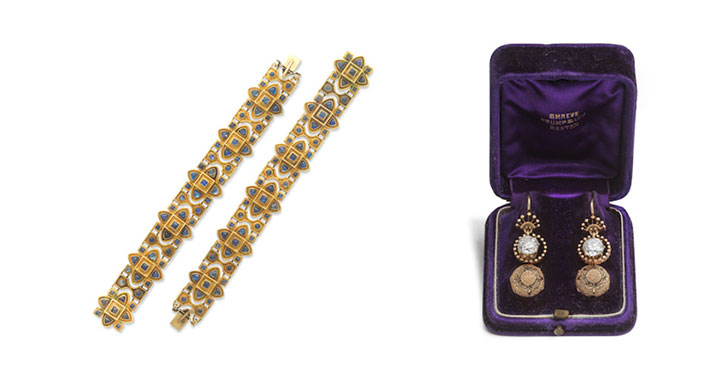
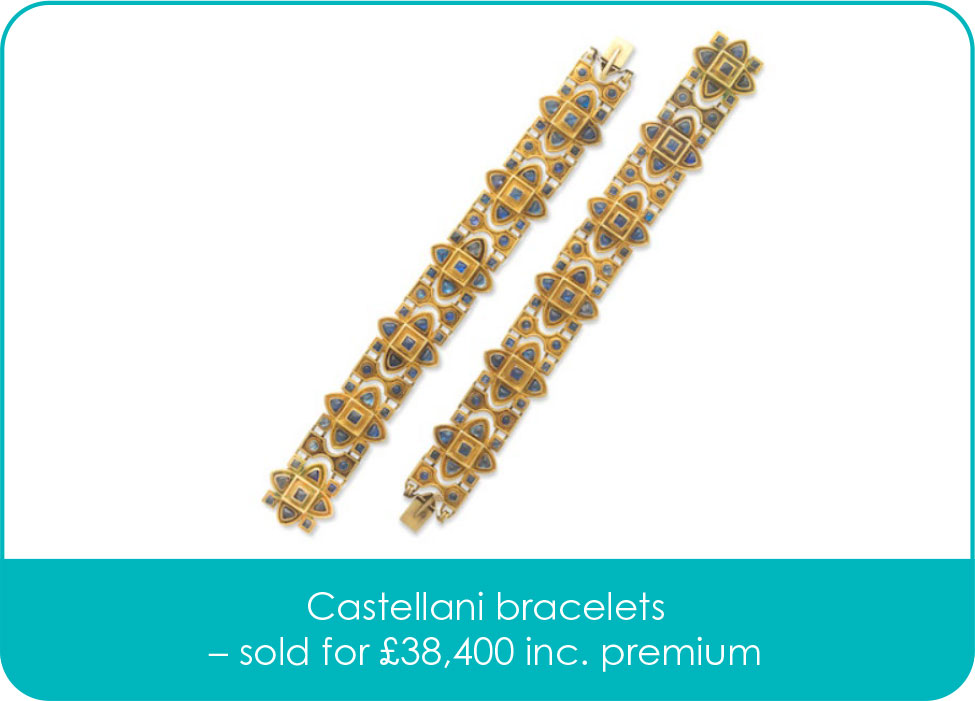
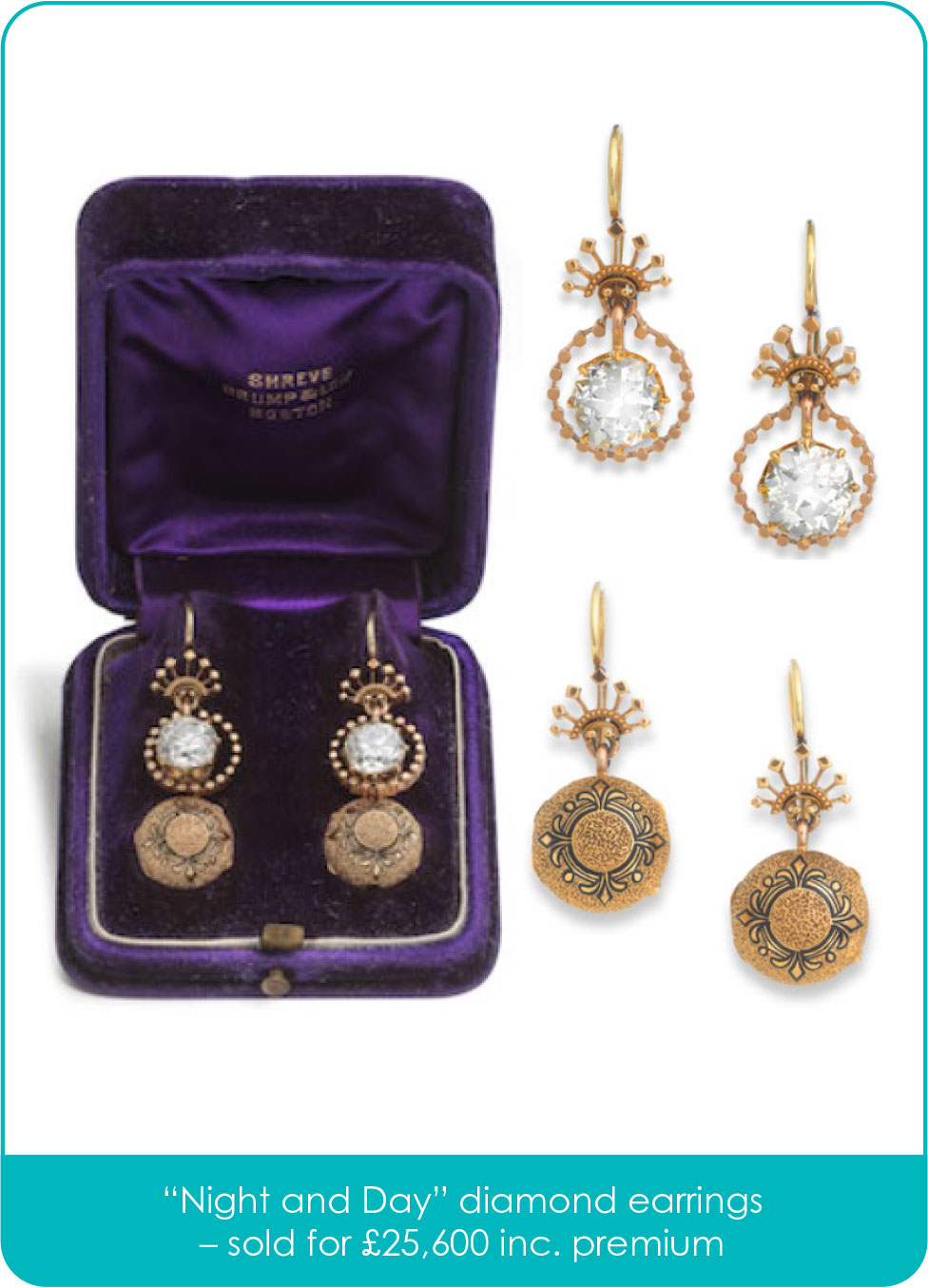
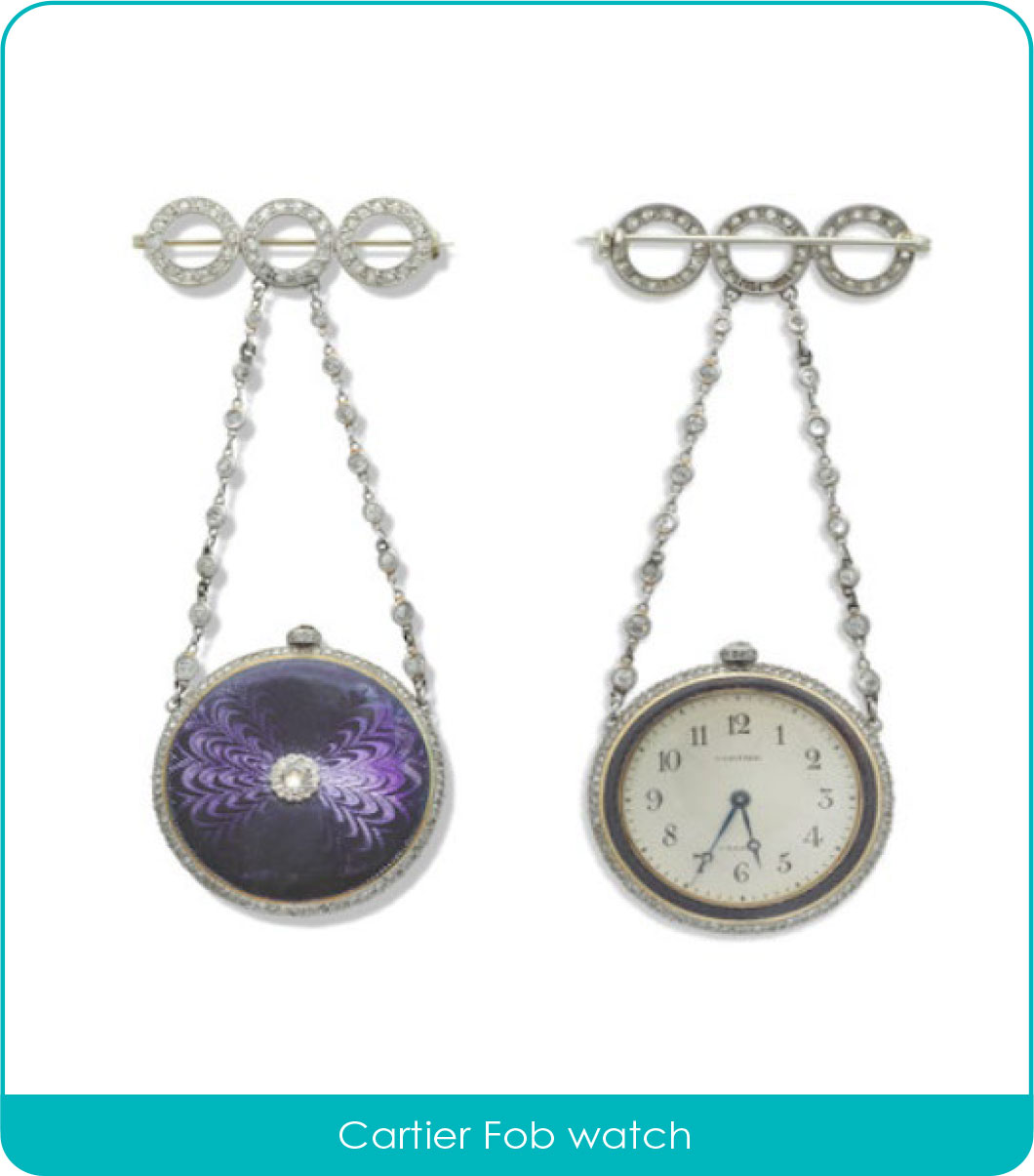
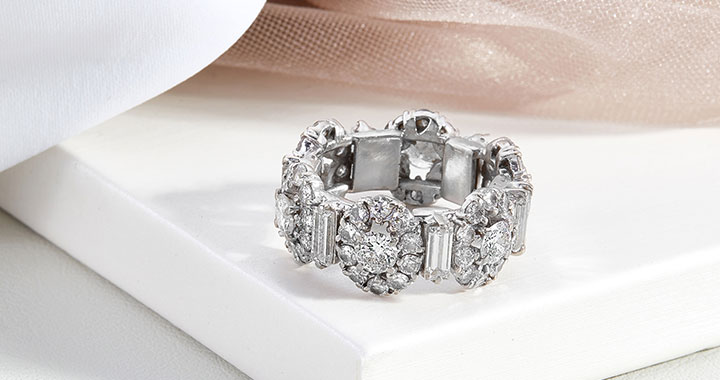
A longchain suspending numerous French, Austrian and Hungarian egg pendants sold in 2022, as seen in the adjacent images. The finesse of the manufacture, the frequent use of colourful guilloché enamel and the cute novelty surprises inside, helped Bonhams reach a hammer price of £28,000.

If this all seem a little overwhelming perhaps it’s time to consider the more modest Cadbury’s creme egg. Initially sold as the Frys’s creme egg, it became part of the Cadbury family in 1971. They are still only available from New Year’s Day until Easter Sunday and in recent YouGov poll they were ranked as the UK’s most famous confectionery.

We hope that the Easter bunny will bring you your egg of choice and Doerr Dallas wishes you a very happy Easter.

how to tell silver from silver plate

Not all marks are hallmarks: How to tell silver from silver plate

If you want to know how to tell silver from silver plate, you are not alone. Many clients confidently separate their “silver” from their plated wares, only to discover that some of the pieces are not solid silver at all. The marks can look convincing, but appearance alone is not proof of precious metal.

It is easy to see how the mistakes occur; both hallmarked silver, and silver plate marks can appear similar. Both can include shields, letters, symbols and maker’s marks, even pseudo hallmarks that look convincingly official. However, whilst they may appear similar they tell very different stories.

The crucial thing is to be able to spot the differences with confidence and understand why the superficially convincing ‘hallmark’ may be a plate mark posturing as it’s more valuable counterpart.

From the mid-18th century onwards, silver plating became increasingly sophisticated. Manufacturers wanted plated goods to look luxurious and respectable, and by the 19th century the rise of an affluent middle class created a strong demand for glamorous tableware at an affordable price. There is therefore a wealth of both silver and silver plate. Silver plate appearing as Old Sheffield Plate, electrotype and electroplate, including a proliferation of electroplated nickel silver (EPNS) as methods of electroplating became better and more sophisticated.

To the unwary observer a row of symbols and letters stamped into metal in the same manner as a hallmark might look and feel authentic. But the authority of a hallmark comes not from appearance but from regulation, and once you understand the makeup of hallmarks the process of recognition becomes much easier.

British silver hallmarks form one of the most tightly controlled silver marking systems in the world. With minor variations a full hallmark will contain the following elements:-

Silver hallmarks

The Standard Mark

  • Lion Passant – A lion in profile walking left to right, one front paw raised and tail curled. This confirms the item is sterling silver (92.5% purity). 
  • Britannia – Occasionally used instead, indicating a higher fineness of 95.8%. (When I was a junior trainee, I remembered this because 95.8 was and still is, conveniently, the same frequency as Capital Radio.)

The Assay Office Mark

British assay office marks include:

  • London – Leopard’s head
  • Birmingham – Anchor
  • Sheffield – Crown (later a rose after the Queen’s silver jubilee in 1977))
  • Glasgow – Tree, fish, and bell
  • Edinburgh – Three-towered castle (with a thistle as the standard mark)
  • Dublin – Figure of Hibernia (with a harp as the standard mark)
Assay Office Marks
Assay Office Marks

“Assay” comes from the French essayer, meaning “to test”. This mark guarantees that the metal meets the stated standard. In the United Kingdom, wherever gold, silver, platinum or palladium are sold it is a legal requirement under the Hallmarking Act 1973 to display a specifically approved notice.

The Date letter

A single letter that changes annually, with differing fonts, cases and shield shapes.

These used to be particular to each Assay Office but were standardised in 1975.

Various silver marks and trademarks associated with Maxfield & Sons.

The maker’s mark or sponsor’s mark

Usually initials registered to a specific silversmith or company. Together, these marks form a regulated and coherent system. They may also include a monarch’s head, known as the duty mark. 

Occasionally, special optional marks are added, for example to commemorate the Millennium or The Queen’s Golden Jubilee.

UK commemorative hallmarks

Silver plate on the other hand does not have regulatory marks. They are manufacturer’s marks and symbols, but do not indicate metal content.

Common characteristics of silver plate marks include:

  • Decorative symbols (for example, crowns, stars, animals)
  • Multiple pseudo-shields
  • Words or abbreviations indicating plating, including A1 and EPNS
  • Lack of the lion passant

The date letter trap is where many get caught out; the date letter in silver appears in a distinctive font and shield shape that changes with each cycle of letters. For example, a lowercase “g” in a pointed shield is not the same year as a lowercase “g” in a rounded shield, even though the letter is identical.

Many plated wares include a single letter that looks like a date letter but is not part of any official dating system. These letters may:

  • Represent a pattern number
  • Indicate a quality grade
  • Simply be decorative

Some companies, Elkington being a prime example, had their own regime of marks, which included a system for dates represented in a lozenge; so it can be possible to date silver plate, but not in the same manner as sterling silver.

There are certain marks that are particularly misleading on silver plate. These include

  • Crowned symbols – often mistaken for Sheffield or London marks
  • Multiple marks in a row – designed to resemble a hallmark group
  • Pseudo-animals – easily confused with the lion passant at a glance. However, none of these will ever be a lion passant in the correct stance and proportions used by assay offices.
A set of hallmarks and markings on an antique silver-plated item

Practical tips for spotting the difference between silver and silver plate

Unless it is Scottish or Irish silver look for the lion passant first. No lion means it is unlikely to be English silver.

Remember that hallmarks tell a clear story: maker, place, year, purity.

And finally, examine your piece. Silver plate often shows wear with copper or nickel alloy showing through in places.

Once you have established that an item is silver how do you decode the hallmarks? Not so long ago, every silver valuer carried a copy of a pocket ‘Bradbury’s’, the book of hallmarks. It was a professional necessity, but also a quiet point of pride. Much like a Barbour jacket in the 1980s, the more dog-eared, scuffed, and worn it was, the more kudos it had. A battered Bradbury’s suggested years of dedicated use.

Today, identifying hallmarks is far easier. There are numerous free online resources where both hallmarks and makers’ marks can be checked quickly and reliably. My personal favourite is
https://www.silvermakersmarks.co.uk/index.htm

The importance of distinguishing silver from silver plate has never been more important. With silver bullion prices at unprecedented highs, apparently small differences visually can be huge differences financially. These two tea trays demonstrate the point well. One is a silver-plated tray currently on sale with 1St Dibs for £421, the other a silver tray from A&C Silver is ticketed at £14,450.

Solid silver tea on sale at A&C Silver for £14,450
A silver plated tray on sale with 1st Dibs for £421

In silver, as in life, looks can deceive; what matters is knowing what’s really in your hands.

Birmingham Date Letters
Pandora Jewellery

Pandora Eschews Silver in Favour of Platinum Plating

Pandora Eschews Silver in Favour of Platinum Plating

When the world’s largest jewellery brand by volume speaks up, we have to listen. Earlier this month, Pandora announced that they would be introducing platinum-plated EVERSHINE jewellery, in a bid to reduce their reliance upon silver. In the wake of soaring and volatile silver prices, Pandora hopes to navigate the realities of raw material costs, and present a tarnish-resistant and hypoallergenic alternative.

Pandora Barrel Clasp Snake Chain Bracelet

Pandora Barrel Clasp Snake Chain Bracelet

In a survey with their customers, 78% regarded platinum as a precious metal, compared with 69% thinking the same of silver – they did not in their figures, appear to quiz their customers on their perception of platinum plating. The move to plating will reduce their silver jewellery catalogue from 60 to 20% by 2028.

Platinum plating is not something widely seen in the jewellery industry at present, Montblanc use platinum plated fittings in their pens (clips, caps) although often paired with silver casings, so Pandora’s move will see a redefinition of this plating for jewellery items. 

A standard silver Pandora Barrel Clasp Snake Chain Bracelet currently costs £55 and typically weighs between 13-15 grams. Based on last week’s high of £2.38 per gram, up to 68% of the retail cost was held in the weight of the item, let alone accounting for profit margins, production costs and overheads. On the open market, these bracelets typically fetch anywhere from £10-15 at auction, demonstrating an 80% drop.

Tiffany's Elsa Peretti Bone Cuff

Tiffany’s Elsa Peretti Bone Cuff

However, with more premium silver jewellery, such as Tiffany’s Elsa Peretti or Hardwear collections, these percentages remained lower and therefore weathered the storm – the value being in the name, design and quality. The Elsa Peretti Bone Cuff weighs approximately 55g, and so last week the raw materials factored just 7.5% of the item’s retail value. On the open market last year these fetched from £700-1,400, retaining up to 80% of its retail price. Similarly, a pair of Hardwear Ball Stud earrings factored 4.2% at last week’s high. Again, at auction these earrings retained 56% of their retail value.

Georg Jensen Torun bangle

Georg Jensen Torun bangle

Similarly, Georg Jensen designs such as the Torun bangle see value retention in the middle market. This bracelet retails for £350, and weighs approximately 13g. During the silver spikes, around 8% of this retail price was covered by the silver weight. Similarly, on the open market, this bangle retained around 68% of its retail value.

So, will we see many jewellery brands follow suit and introduce platinum-plated jewellery as a response to silver uncertainty? Is plating the answer? In terms of value retention we would argue not. At the lower end of the market plating may be even more widely adopted instead of sterling silver, particularly with laboratory grown diamond retailers and affordable jewellery lines, but we would stress the enduring value, quality and appeal of signed, silver jewellery. This holds its value and is more insulated to market changes owing to its enduring demand, design and prestige.

Valuation Trends and Risks to Know in 2026

Valuation Trends and Risks to Know in 2026

Valuation Trends are shifting as we move into 2026, shaped by changing collector behaviour, evolving tastes and ongoing volatility across global markets. From jewellery, watches and handbags to art, rare books, silver and collectables, understanding where values are moving and why has never been more important. In this article, our specialists share their insight into the key valuation trends to watch in 2026 and explain what they mean for owners, collectors and those responsible for ensuring assets are accurately insured.

Jewellery

Liz Bailey, Jewellery, Watch & Silver Specialist

“As we have seen in 2025, the price of gold has reached record breaking levels and I can see no slowing of this trend into 2026. With a near 60% price increase last year, it will be crucially important to maintain regular valuations. We would expect to see a stabilisation in the market for natural diamonds, particularly steady in round brilliants under 2ct, and price spikes continuing for elongated fancy shapes and unique cuts over 2ct. In the gemstone market, a continued and constant premium placed on natural, saturated and high-quality gemstones of a favourable origin, which may prove increasingly difficult to source on the international market. Antique, signed, and unique pieces to remain in high demand, and designer price hikes to only push replacement values for insurance. If I could urge clients one thing for their jewellery collection this year, please ensure that you have a comprehensive and up to date valuation that accounts for these market factors – inadequate cover is not a trend that we want to see in 2026!“

9.86ct Elongated Old Cut Diamond Solitaire Ring. Hancocks, POA.

Collectibles & Memorabilia

Stephanie Connell, Senior Valuer & Collector Specialist

“With a new generation evident in the market, acquiring pieces coveted in their youth I anticipate continuing growth in modern collectables. The trend towards objects from the early 2000s is gaining momentum with record prices recently in sports trading cards, and movie memorabilia from this period. With 2026 being a World Cup year football memorabilia may also be one to watch.”

Rare Books & Comics

Richard Fattorini, Rare Books & Manuscripts, Historical Photographs and Maps Consultant

“In 2026 I expect the rare book market to remain resilient and quietly buoyant with steady growth rather than a speculative boom. Auction activity continues to expand, driven by online platforms and new online auction houses specialising in rare books and works on paper that have widened access for collectors. Top-tier works selling for £100,000+ with strong provenance, historical importance or exceptional condition are likely to hold or increase in value. By contrast, more ordinary collectible titles may see flatter prices. A younger, more diverse generation of buyers in the 35-50 age bracket is reshaping tastes, with increased interest in genre fiction, science and books that tell compelling stories rather than simply fitting a traditional canon.

In 2025 the global top 10 books and works on paper sold at auction were dominated by Americana and American sports cards, together with a first Superman comic from 1939, an 18th century Mughal manuscript of an epic based on the Shahnama, and one of four copies of William Blake’s Songs of Experience (1793).

The results demonstrate that there are buyers out there for the best items, and collecting has never been easier with so many online platforms. The challenge for booksellers and auctioneers in 2026, as always, is finding the great material to meet the demands of collectors.”

WILLIAM BLAKE (LONDON 1757-1827) The Tyger, from: Songs of Experience. Sold for £228,600 in December 2025.

Luxury Handbags

Helen Doyle, Jewellery, Watch & Handbag Specialist

“In 2026, the resurgence of the tote is a defining trend. These large handbags have become essential for fashionistas who need a single bag that they can use for the gym, take to the office or on a weekend shopping trip. Chanel continues to offer a great variety of shopping totes, while the Louis Vuitton Neverfull remains a staple and is available in various sizes and designs. Other brands leading this movement are The Row and Saint Laurent, for those seeking ultimate luxury, the bold Hermes Birkin 40 is the standout choice for a high-end tote. These designs can be priced anywhere from £1500 up to £55,000.

2026 also sees a significant revival of old classics, as several iconic handbags from previous decades return to the spotlight. At Celine, Michael Rider has reintroduced Phoebe Philo’s classic Phantom handbag, adding a “smiley” zip to lean into its long-standing nickname. Likewise, we are seeing refreshed iterations of the Lady Dior and the Fendi Baguette, alongside a sharp rise in the popularity of the Chloé Paddington and the Balenciaga City bag.

In terms of aesthetics and materials, specific hardware and textures define the 2026 look. Chains have become a dominant feature across many collections; while Chanel has historically been central to this style, brands such as Ferragamo, Valentino, and Stella McCartney are now heavily incorporating chain details into their newest designs. Additionally, the tactile trends of 2025 are proving to have staying power. Shearling remains a popular choice for added texture, while the colour palette for the year is grounded in sophisticated neutral tones and rich brown suedes.”

Limited edition Hermès Rock HAC Birkin 40 handbag
Celine Flat Cabas New Luggage
Chanel 25 Small Handbag in black crumpled shearling sheepskin and gold-tone metal.

Silver

Jenny Knott, Jewellery & Silver Specialist

“If you’ve been watching silver at all, it feels a little like observing the quiet underdog of the precious-metals family suddenly step into the spotlight. The reliable, understated sibling has started to make the headlines, although it’s not a completely straightforward story.

Over the past five years, silver has shifted from a relatively modest performer to one of the standout commodities in global markets. The spot price – the price at which sterling silver is traded – more than doubled between 2021 and 2025, reaching £50–£60 per ounce by the end of 2025 and then peaking at £73 per ounce last week. By historical standards, this is extraordinary, even when set against previous market surges.

There is, however, a more disconcerting side to the story. While silver’s financial prominence has grown, its role as a domestic commodity, for example, in flatware, tea sets and decorative pieces, has continued to weaken. These uses once formed a central part of silver’s cultural cachet but rising prices and changing tastes have led consumers to step back from buying some traditional silverware.

For those who already own silver, this shift has had dramatic consequences. The intrinsic value of household silver has risen sharply, although this is partly offset by dealers being forced to cut their margins. Put bluntly, a single silver table fork is now likely to contain around £140 in silver value alone.

Therefore, what was a relatively quiet market until around 2023 has become strikingly dynamic. The gains seen in 2025 and early 2026 would once have seemed almost unimaginable outside the gold market. The result is a fascinating intersection of macroeconomic forces and cultural change, making silver one of the most compelling commodities to watch.”

GERALD BENNEY: a silver pitcher London 1967, also stamped GERALD BENNEY, LONDON. Sold for £3,570
Our Choice – Elsa Peretti Tiffany & Co, Medium Bone Cuff in Sterling Silver. £1,925
Elsa Peretti Tiffany & Co, Medium Bone Cuff in Sterling Silver. £1,925

Watches

Alastair Meiklejon, Senior Valuer & Watch Specialist

“In 2026 the watch market has reached the ‘calmly tidying up’ era….prices are well off the post-pandemic peak (about 33% down), but they’ve stopped face-planting at a rate of knots and even crept up 5%(ish) over the last year, but this is only in some markets.

Many watch retailers January 2026 updates back that up – the “Overall Market Index rose +1.1% in December 2025, with Rolex +0.6%”not exactly fireworks, but a lot steadier than 2022–23 vibes when some people were crying into their watch boxes.

Where it still gets spicy is the ‘coloured dial tax’, especially on Rolex. For example, secondary market currently puts the Rolex Oyster Perpetual 41 (124300) at £6500 market vs £4750 retail, so still over list.
And the brighter variants are another level – the yellow dial is £12,500, while the celebration turquoise is £11,500 – so yes, the market’s cooled, but the right dial still makes people forget what retail means.”

Rolex Oyster Perpetual 41 Green Ref 124300

Contemporary Art

Jonathan Horwich, Contemporary Art Specialist

“Looking ahead to 2026, you can expect a continued and growing focus on female artists at auction. This spans all periods, from contemporary practitioners through to Old Masters and 19th-century European painters. Demand is no longer confined to a single category, and this broader interest is already reflected in stronger and more consistent prices.

There is also sustained momentum behind African and regional African art. While figurative work has dominated in recent years, attention is shifting towards abstract painting. This is bringing a wave of new artists to market, supported by increased institutional and collector interest. Given the depth and quality of material available, this area is likely to remain a key growth sector, with valuation levels continuing to evolve as the market matures.”

Amoako Boafo (Ghanaian, born 1984) Self-Portrait 2019 (framed). Sold for £102,000

Antique Furniture

Alastair Meiklejon, Senior Valuer & Watch Specialist

“In 2026, antique furniture is a simple equation – the headline pieces still go bananas, while the everyday stuff stays more price-sensitive. Last year gave us a perfect top end vs. normal world contrast – J.R.R. Tolkien’s Merton College desk made £330,200 at Christie’s which I wrote about not so long ago, and was pure provenance power. And in the broader furniture-as-trophy bracket, François-Xavier Lalanne’s Hippopotame Bar hit $31.4m at Sotheby’s in December 2025, whilst not exactly antique furniture, it does indicate that market changing and becoming just as important…

At the other side of the market, though, it’s much more selective.

Victorian sideboards, mixed-condition dining sets, and ‘perfectly nice’ brown case furniture can still be surprisingly attainable because buyers are picky….

Where people will stretch is for the right, unmolested examples – original surfaces, honest wear, good colour, and clean provenance. Major auction houses these days literally frame desirability around provenance and patina – and collectors are widely wary of heavy refinishing because it strips character and can dent value. So, clients should take note that actually, that stain from 50 years ago, might not have been as bad as imagined….”

A George III mahogany serpentine commode attributed to Thomas Chippendale (1718-1779). Sold for £44,000

With valuation trends moving quickly across multiple markets, regular professional valuations remain the simplest way to stay informed and properly protected. If you would like advice or need an updated valuation, get in touch with our team to arrange a valuation.

Silver & Gold Prices 2025

Rising Silver and Gold Prices: What You Need to Know

The Current Market: Gold and Silver at Record Levels

The recent surge in gold prices has rightly attracted attention, but silver has also seen a significant rise. Although this has received less coverage in mainstream media, the increase is substantial.

To put this into perspective, the spot price of silver on 18 October 2023 was £18.75 per troy ounce. On the same date in 2025, it stood at £38.68, and reached a peak of £40.86 on 17 October 2025. The last major spike was in 2011, when prices hit £26.43. This sharp rise marks a significant shift in the silver market, and experts do not expect prices to return to earlier levels.

Gold prices have seen even more dramatic movement. On 18 October 2023, gold stood at £1,592.60 per troy ounce. Two years later, on the same date in 2025, it had almost doubled to £3,152.51, and as of 21 October 2025, it continues to rise at £3,197.02 per troy ounce.

A Global Perspective on Gold

In January 2025, the World Gold Council reported that jewellery spending had risen by almost 10% in 2024, even though the quantity of jewellery purchased had decreased by a similar percentage. Despite fluctuations in spending and consumption, gold prices continued to break records.

This surge coincided with the return of Donald Trump to the White House in January 2025, when the gold price reached £1,979 per troy ounce. The increase has encouraged many with unwanted gold jewellery to sell their items and take advantage of the market.

Robin Kolvenbach, Co-CEO of Swiss-based Argor-Heraeus (part of the Heraeus Group) and a board member of the London Bullion Market Association, explained that there are no signs of demand weakening. “In periods of crisis, the demand for 10-gram gold ingots tends to rise sharply as it is seen as a refuge placement,” he said.

At the end of 2024, the United States held around 23% of the world’s gold reserves, with 8,122 tonnes, followed by Germany (3,351 tonnes), Italy, France, Russia, and China (each between 2,452 and 2,279 tonnes), then Switzerland (1,040 tonnes) and India (876 tonnes).

Silver and Gold Prices 2025

Countries such as India, China, Turkey, and Poland continue to purchase gold for their federal reserves. However, private individuals have also turned to gold as a long-term safe investment — a status it has maintained consistently over the past 30 years.

How These Changes Affect Collectors and Owners

For clients, these price movements have a direct impact. Replacement costs — whether buying new, on the secondary market, or second-hand — are now much higher due to the rise in base metal prices.

While demand for domestic silver has declined in recent years, anyone needing to replace silver items could find themselves underinsured if their policy has not been reviewed within the past 12 months.

If you own a silver collection, consider how you would replace it in the event of a loss. Your current sums insured may no longer reflect today’s values.

Gold owners face similar issues. The continued rise in gold prices affects both resale and replacement costs. If you haven’t had your gold, jewellery, or other precious items valued recently, now is the time to arrange an updated valuation – particularly as diamond prices have also fluctuated over the past year.

The Jewellery Market: Rising Costs and Considerations

The ongoing price increases have also influenced the jewellery market. For those looking to remodel or upgrade unworn jewellery, the cost of gold purity is a key consideration. Choosing between 18ct, 14ct, or 9ct gold can have serious financial implications.

However, opting for a lower carat does not necessarily detract from a modernised piece’s beauty – especially if it’s set with repurposed gemstones, such as a sapphire from a family heirloom. By substituting 18ct for 14ct or 9ct gold, you can free up funds and potentially expand your updated collection.

For those who prefer not to alter their jewellery, it’s worth noting that the price of gold has increased by 920% between 2000 and 2025. This has prompted many to sell or “scrap” their gold. However, there’s an important distinction between simple gold jewellery (such as chains or gate bracelets) and collectible pieces from designers like Cartier or Van Cleef & Arpels, where value is driven as much by design and craftsmanship as by gold content.

Not all resale prices will rise in line with gold’s value. Collectible and vintage pieces have their own market dynamics and tend to reach a ceiling driven by demand rather than material value alone.

Le Lion Ébouriffé by Van Cleef & Arpels

Modern pieces, however, are directly affected by metal prices. For example, the Cartier Love collection, available in white, rose, and yellow gold, sees annual retail price increases linked to fluctuations in the gold market.

Despite higher retail prices, gold jewellery remains a favourite and reliable investment for consumers – admired for both its lasting appeal and financial stability.

Medium Love bracelet by Cartier, retails for £5,850

A Sensible Next Step

With such dramatic movement in both gold and silver prices, it’s unlikely that values will return to earlier levels soon. Owners of jewellery, silverware, and other precious metal items should review their insurance valuations to make sure they accurately reflect current market conditions.

If your last valuation was more than a year ago, an update is strongly recommended. This ensures your items are properly insured and that you won’t face shortfalls in the event of a claim or loss.

For expert advice or to arrange an updated valuation, contact Doerr Dallas Valuations on 01883 722736, email [email protected].

Michael Baggott Silver

Michael Baggott’s Legacy in Silver

Woolley & Wallis will sell the private collection of the late TV expert and silver specialist Michael Baggott over three auctions at its Salisbury salerooms. Michael was a much-loved expert and TV personality, having starred in BBC’s Flog It! Bargain Hunt, and Antiques Roadshow. He was also the author of An Illustrated Guide to York Hallmarks 1776-1858 (2012) and As Found: A Lifetime in Antiques (2024) as well as writing regularly for the journal of the Silver Spoon Club of Great Britain, The Finial.

My first meeting with Michael was during work experience as a viewing assistant at a provincial saleroom. Fresh out of university and instantly hooked by the excitement of the saleroom, I was eager to help in any way I could. On viewing duty, and placed behind the silver cabinets, I was completely blown away by his incredible knowledge of the subject. This awe very much continued over the years, as I progressed into cataloguing and valuing – I would nervously check his Twitter feed as catalogues went online and sales took place – had I missed anything? Were my group lots really what I had thought them to be – or was he in possession of another of his astutely procured finds, courtesy of my cataloguing? As we know in this incredible industry, there is always something new to learn and Michael in particular left no stone unturned, yet was so generous with his knowledge.

Likely to be the most comprehensive collection of York silver to ever reach the open market, Michael’s collection also features examples from Liverpool, Chester, Dundee, Newcastle, Bristol, Exeter and Aberdeen.

The first part of Michael’s collection was sold on 16th July, with 152 lots on offer, including a large selection of flatware, salvers, nutmeg graters, card cases, snuff boxes, sauce boats and many more unique items, such as medicine spoons, tipstaffs, and a tongue scraper!
The top selling piece unsurprisingly was a York item, a rare George III provincial silver tontine chamberstick and snuffer, by Hampston and Prince, York 1793. Commemorating a Tontine agreement between twelve subscribers, and detailing their names and dates of death. This piece was offered with an estimate of £1,000-1,500, and reached a total of £8,190 (inclusive of Buyer’s Premium).

A rare George III provincial silver tontine chamberstick and snuffer

Another piece from the collection with an extraordinary history and provenance was a George IV silver mounted naval snuff box. This piece was inscribed ‘Made of the wood from Northern Discover Ships by Michael Jones at Deptford, 5th May 1824.’ It is thought that this refers to the 16th century English ships of the same name, sent to discover a northern sea route to Asia. This intriguing snuff box sold for £5,670 (inclusive of Buyer’s Premium).

George IV silver mounted naval snuff box.

Another piece from the collection with an extraordinary history and provenance was a George IV silver mounted naval snuff box. This piece was inscribed ‘Made of the wood from Northern Discover Ships by Michael Jones at Deptford, 5th May 1824.’ It is thought that this refers to the 16th century English ships of the same name, sent to discover a northern sea route to Asia. This intriguing snuff box sold for £5,670 (inclusive of Buyer’s Premium).

Ceremonial silver spade

One of the conversation pieces of the sale was a ceremonial silver spade. Not only for its shape and size, but the assay date letter. Assayed in York anywhere from one to five years after the Assay Office officially closed, this spade has a date letter of a ‘Y’. In Michael’s own notes on the piece, “this is a previously unknown date letter and is arguably one of the rarest pieces of York silver known.”

The spade was made by John Bell of York, and “presented to the Lady Mayoress of York, Mrs W. Fox Clarke, on the occasion of her planting a tree in St. George’s Field in commemoration of the marriage of H.R.H the Prince of Wales with Princess Alexandra of Denmark, March 10th 1863.” Estimated modestly at £1,000-2,000, this piece sold for £4,032 (inclusive of Buyer’s Premium).

George IV silver-gilt sideboard dish by Edward Thomason of Birmingham

Another piece that serves to demonstrate the width and breadth of the collection is a George IV silver-gilt sideboard dish by Edward Thomason of Birmingham, assayed in 1826 and engraved with a scene of The Drunken Silenus given wine by a satyr. This lavishly decorated dish was based on the Drunken Silenus design for the Tazza Farnese circa 1599-1600. This piece totalled £5,040 (inclusive of Buyer’s Premium) against an estimate of £2,000-3,000.

Michael Baggott’s remarkable collection of silver will be split over three sales at Woolley & Wallis, with the final two auctions taking place on 21st & 22nd October and in late January / early February; the date for next year is yet to be confirmed. It certainly will be interesting to glimpse the remaining pieces in this wonderfully curated collection, and undoubtedly witness more fantastic results.

Further Sale Highlights:

A Victorian novelty silver Jester pepper pot by Robert Hennell, London, 1868. Sold for £1,890.
A William IV provincial silver-mounted tipstaff, maker’s mark N?, Chester, 1836. Sold for £2,016.
A collection of eight pairs of antique provincial cast silver sugar tongs. York, various dates and makers. Sold for £1,512.
A Swiss Art Deco silver motor racing trophy cup and cover by Baltensperger, Geneva, circa 1929. Sold for £1,512.
The Open Golf Trophies

From the Course to the Cabinet: Golf’s Most Iconic Trophies

As we look forward to the forthcoming 153rd Open Golf Championship at Royal Portrush Golf Club, we’ve taken the opportunity to look back on last Summer when our silver specialist Fiona Hamilton, along with colleague Alastair Meiklejon, travelled to the prestigious Royal Liverpool Golf Club. Warmly welcomed by the fabulous team there, Fiona and Alastair had the honour of assessing the impressive collection of art and antiques in this historic venue.

Discussions regarding the forming of a new golf club in the area began in 1869. The Royal Hotel in Hoylake was the setting for a meeting hosted by James Muir Downie, and attended by a further twenty one gentlemen. All present agreed to the idea and Dowie was duly awarded the title of the first captain.

The Open Golf Trophies
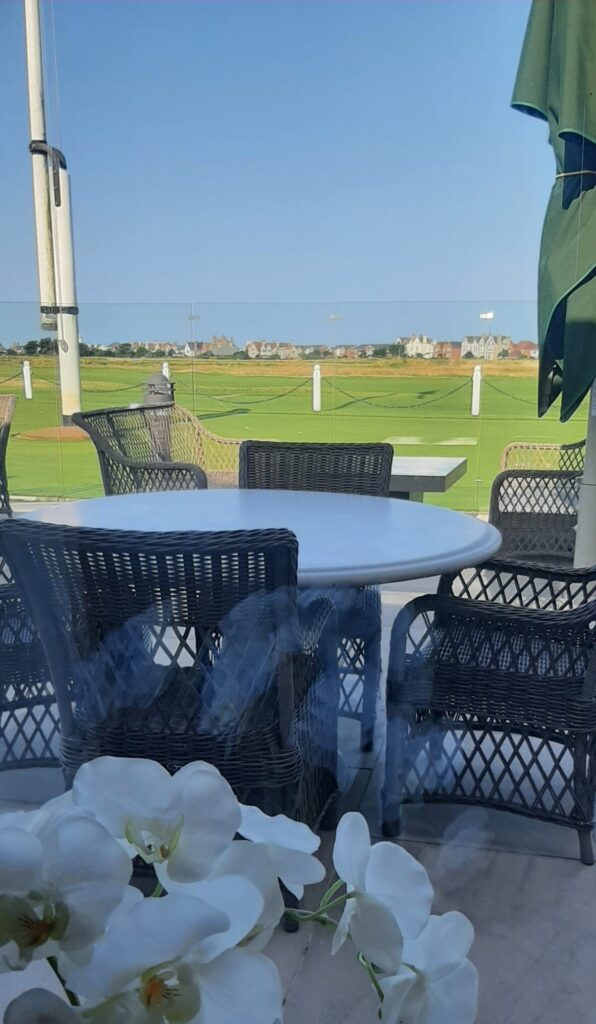
A view over the golf course

George Morris who was the brother of Old Tom, and Robert Chambers the son-in-law of Dowie, were tasked to lay out the original nine hole course in 1869, two years later saw this extended to 18-holes.

In the same year, thanks to the patronage of HRH Prince Arthur, the Duke of Connaught, The Club was granted its Royal designation.

The links land doubled as a golf course and a horse racing track for the first seven years, the legacy of which lives on with the original saddling bell still hanging in the clubhouse, and the names of the first and eighteenth holes being ‘Course’ and ‘Stand.’

Hoylake hosted its first Women’s British Open in 2012, the same year as the London Olympics. Due to the impact that the Olympics had, plans were changed, and The Open was moved to September. Despite miserable weather on the day, South Korean golfer Jiyai Shin was victorious.

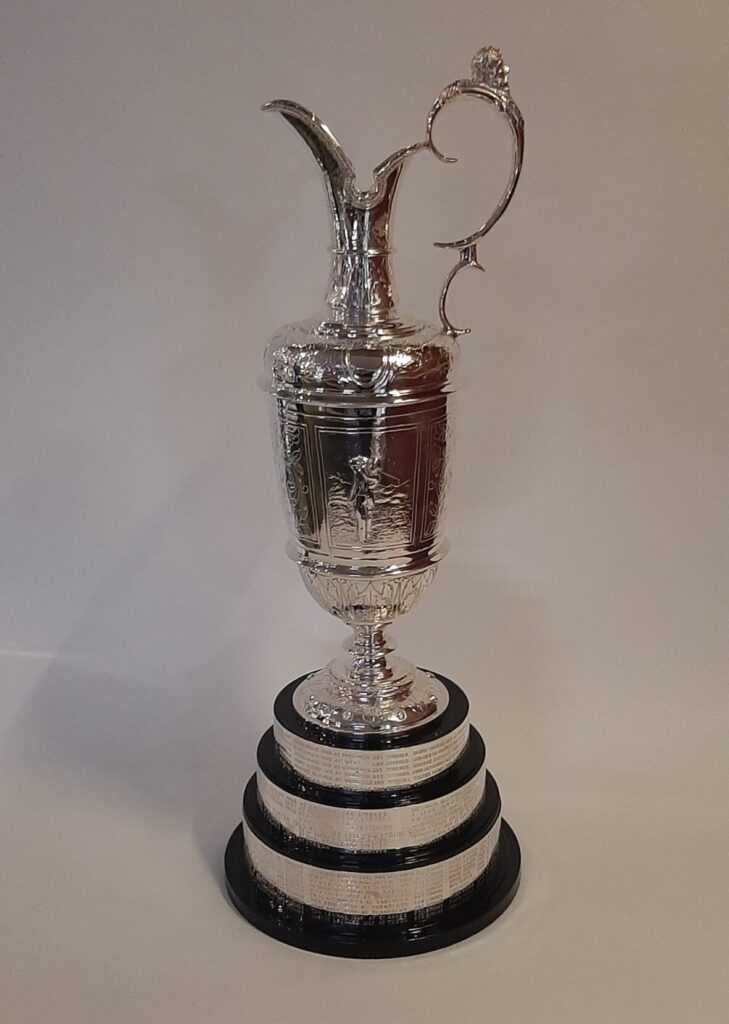
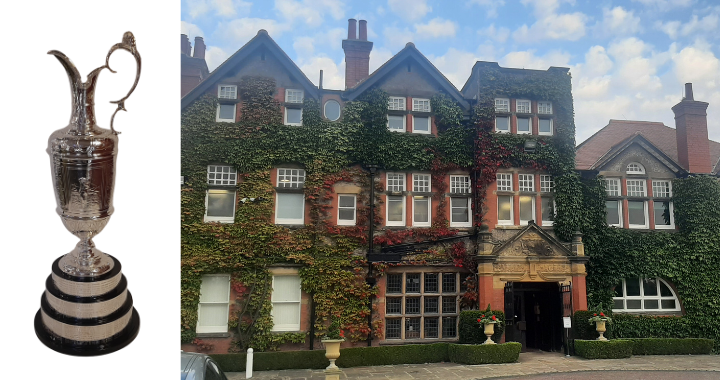
The Open Golf Claret Jug

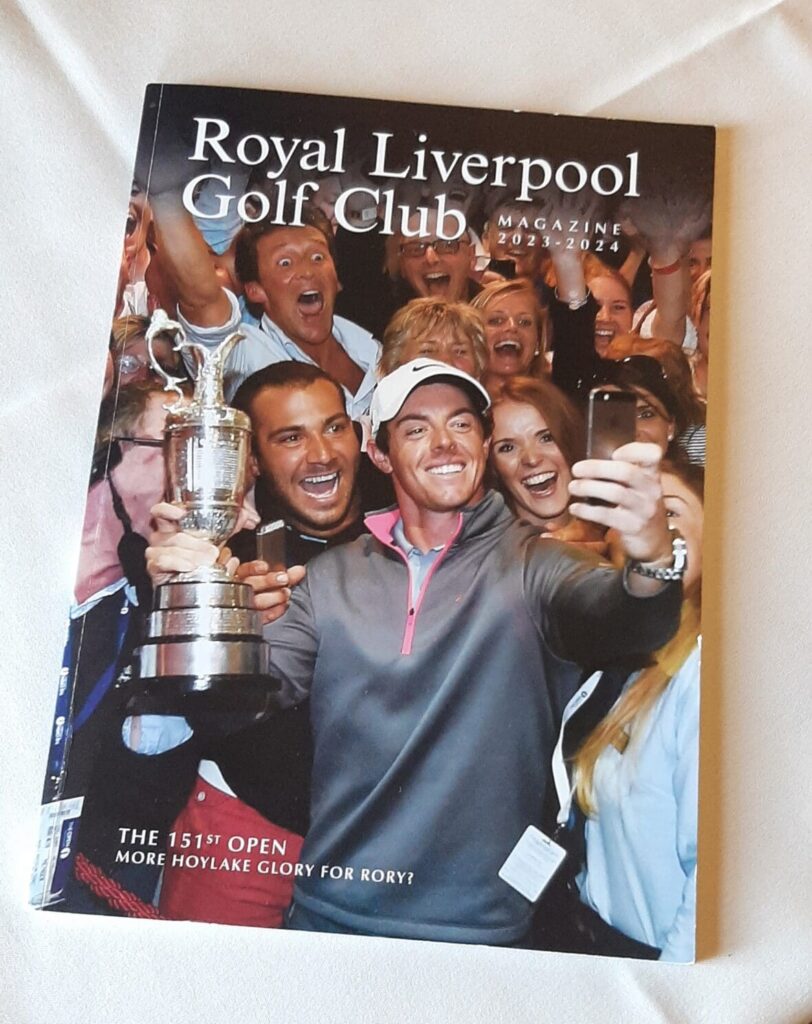
Fast forward to 2023 and the RLGC hosted the 151st Open where American Brian Harman ultimately triumphed at Hoylake to take the title in a thrilling win.

On entry to the impressive clubhouse at Hoylake, one’s eye is immediately drawn to the splendour of the silver cabinets within the lobby. One of the highlights of which must be the replica of the famous Open Championship trophy, which takes the form of a claret jug. Retailed by the renowned firm of Mackay, Cunningham & Co of Edinburgh, and made in London at a scale of 90% of the original, the claret jug depicts a golfer in mid swing within a surround of chased and engraved stylised scrolling foliage and sits on triple plinth with silver plaques engraved with winners.

Before the production of the original Claret jug in 1873, winners were awarded The Challenge Belt. Commissioned by the Earl Of Eglinton in 1860, the belt is made of Moroccan leather with applied emblems and centred by a silver buckle depicting golfers at play.

In 1927 the R&A made the decision to retain the original Claret Jug where it is on permanent display.

Further highlights of the collection of RLGC include;

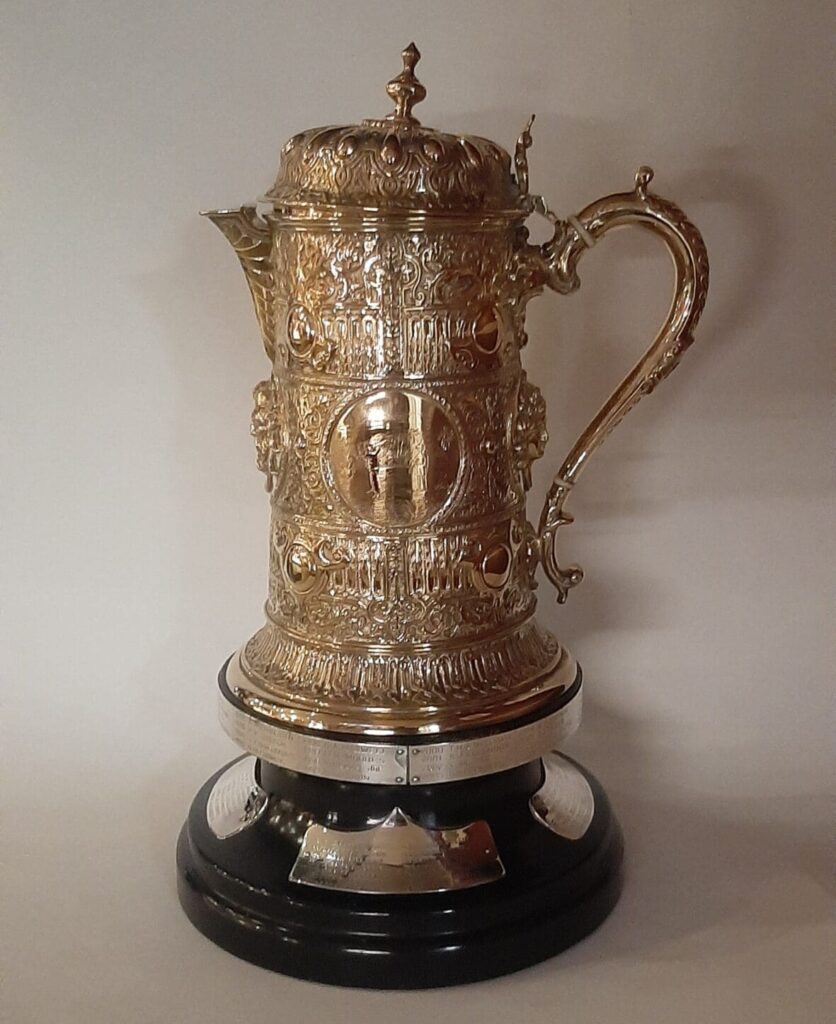
The Bombay Challenge cup

Weighing in at over 2kg The Bombay Challenge Cup, by Martin Hall & Co Ltd, Sheffield 1874, is of flagon form on stepped foot, profusely chased and embossed with scrolls and foliage, and with engraved cartouches.

The Bombay Challenge Cup

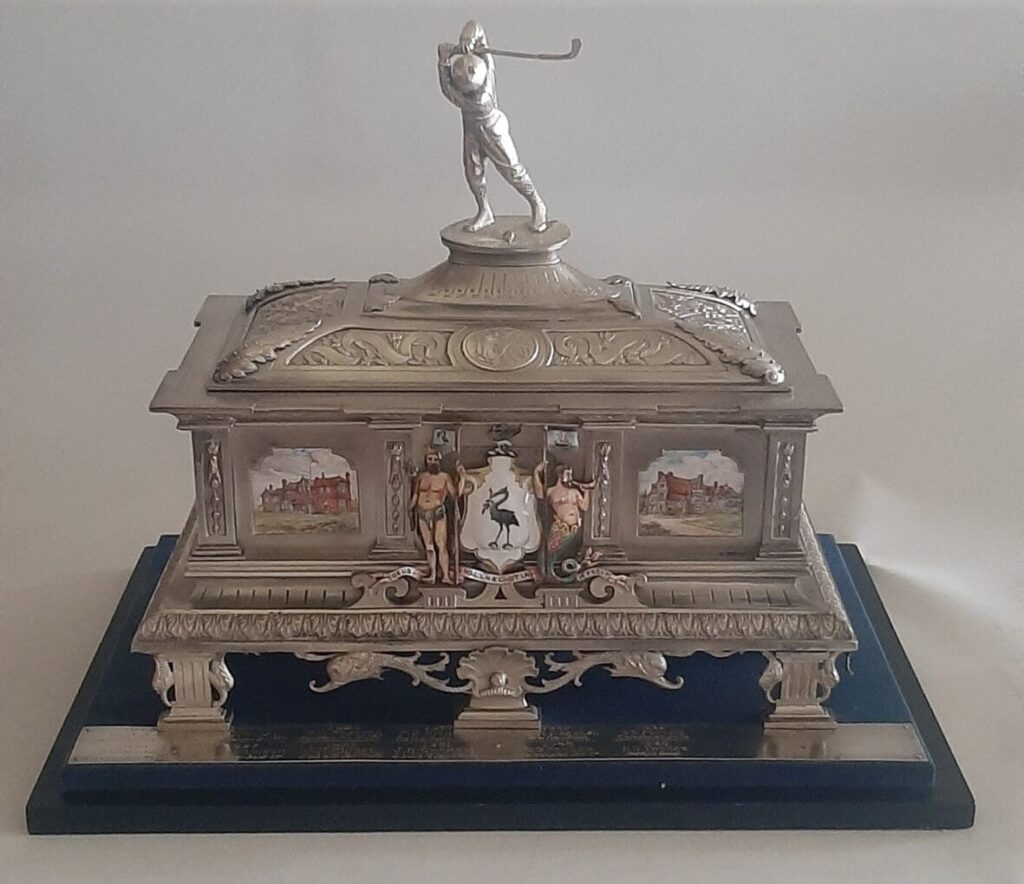
The Liverpool Banking and Insurance Cup

In the form of a freedom casket, The Liverpool Banking and Insurance Golf Tournament Challenge Trophy was made in Birmingham in 1900. The hinged cover has a finial in the form of a golfer in mid swing, the body is painted with various vignettes of the Clubhouses at RLGC, West Lancashire, Wallasey and Formby.

The Liverpool Banking and Insurance Golf Tournament

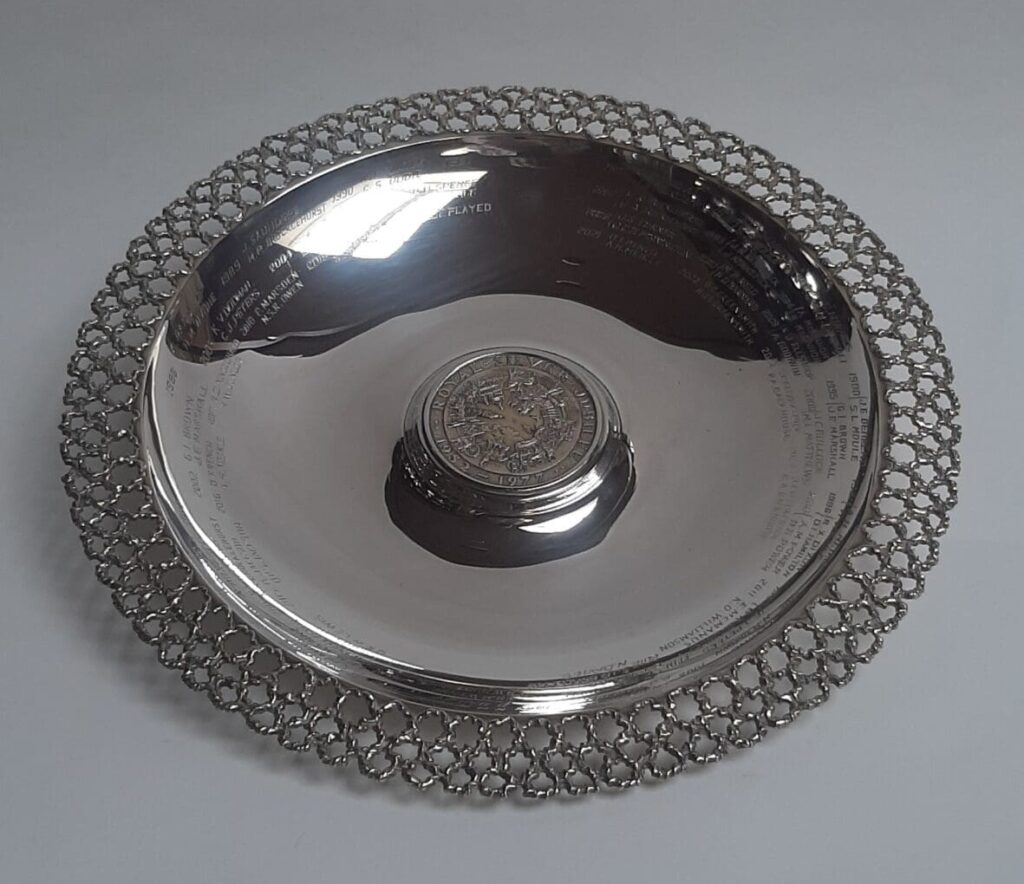
The Queen’s Silver Jubilee Bowl

Representing more modern design is the distinctive Queen’s Silver Jubilee Bowl, by celebrated silversmith Stuart Devlin. Made in London in 1977 the trophy is in the form of a rose water dish, with pierced gilt reticulated border, centred by a boss engraved with winners, and a 360-degree view of the London skyline.

Queen's Silver Jubilee Bowl

The Atlantic Trophy

Enamelled in stunning shades of blue, the fabulous Atlantic Trophy was made by the acclaimed firm Boodle & Dunthorne in London in 2004. Modelled as a vertical scrolling wave, the curve supports a silver golf ball, showing RLGC and USA, to simple silver disc base, the plinth bearing silver plaques engraved with winners.

The Atlantic Trophy
The Atlantic Trophy

From the medals and trophies of the early 1800’s the enduring presence of silver in sports trophies continues to represent the history and prestige attached to major sporting achievements. In addition to their aesthetic appeal, these awards mark the determination and achievement of sportsmen and women at the pinnacle of their careers.

The presentation and winning of the iconic claret jug continues to inspire and motivate and we look forward to celebrating the success of the eventual winner of the 153rd Open Championship.

The 2025 British Open, officially the 153rd Open Championship, will be held from July 17 to 20 at Royal Portrush Golf Club in Northern Ireland.

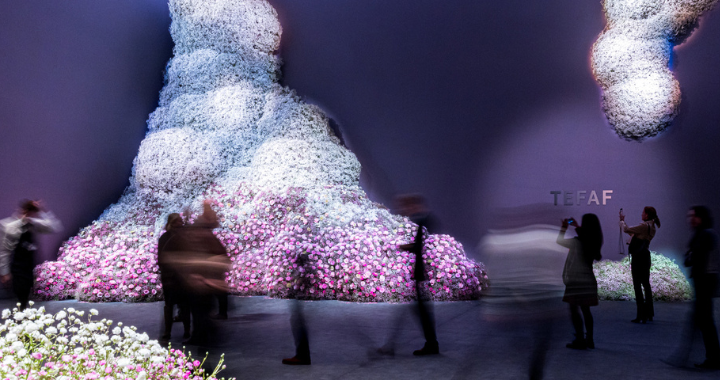
TEFAF Maastricht: The Jewellery & Watches That Stole the Show

The European Fine Art Foundation, or TEFAF was founded in 1988, and holds two major international fairs per year, the TEFAF New York, covering Modern and Contemporary Art and Design, as well as its flagship event, the TEFAF Maastricht, which ran from 15th-20th March this year.

TEFAF Maastricht showcases 7,000 years of art history and provides international dealers and collectors with the opportunity to present and acquire fine and museum quality works, including paintings, sculpture, furniture, collectables, books, and of course – fine jewellery and watches.

If, like me, you have missed your first-class ticket to New York this week, here are my ‘top picks’ of the pieces on display at this year’s fair.

Surely one of the jewellery ‘headliners’ at this year’s fair is of course Van Cleef & Arpels, who were exhibiting around 30 pieces available to purchase from their heritage collection. A collection I would personally love to see, the selected pieces reflect the maison’s impact and excellence in 20th century jewellery design.

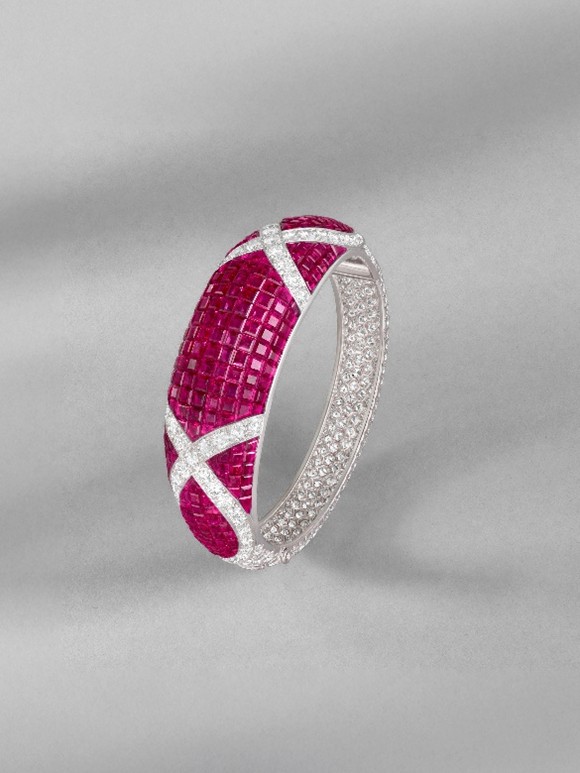
The Orsay Bracelet, a platinum ruby and diamond bangle with VCA’s signature ‘mystery setting’ – an innovation in the 1930s of setting stones with seemingly no metal holding them in place – and a brand hallmark that continues into present collections. This bangle dates from 1994.

Image courtesy of Van Cleef & Arpels

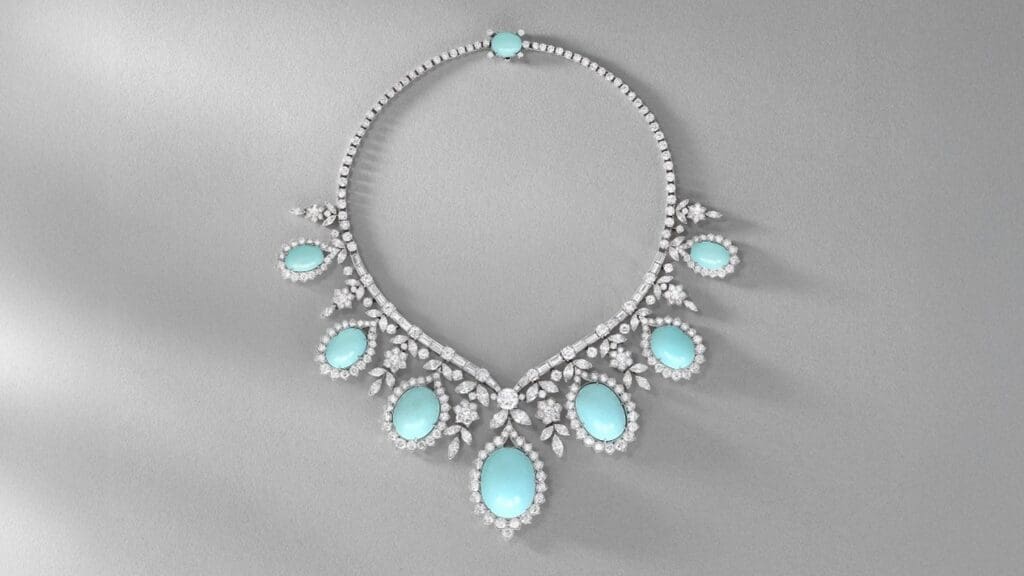
Another masterpiece on display is a platinum, turquoise and diamond necklace from the 1950s. Dating to circa 1955, this exquisite piece reflects the brand’s appreciation for jewellery history, decorated with floral garlands and a graduated design, and of course fine turquoise drops.

platinum, turquoise and diamond necklace from the 1950s
Image courtesy of Van Cleef & Arpels

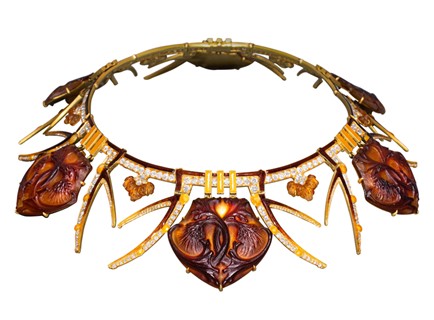
Epoque Fine Jewels from Belgium were also at the fair, exhibiting an incredible Art Nouveau gold, diamond, enamel and glass choker by René Lalique. Dating to circa 1905, this exceptional choker necklace is interspersed with Lalique’s wonderful glass panels moulded with thistle flowers and accented beautifully with a rich yellow gold setting, brown enamel border and sparkling diamond detailing. This was a real treat to see in person!

Art Nouveau gold, diamond, enamel and glass choker by René Lalique

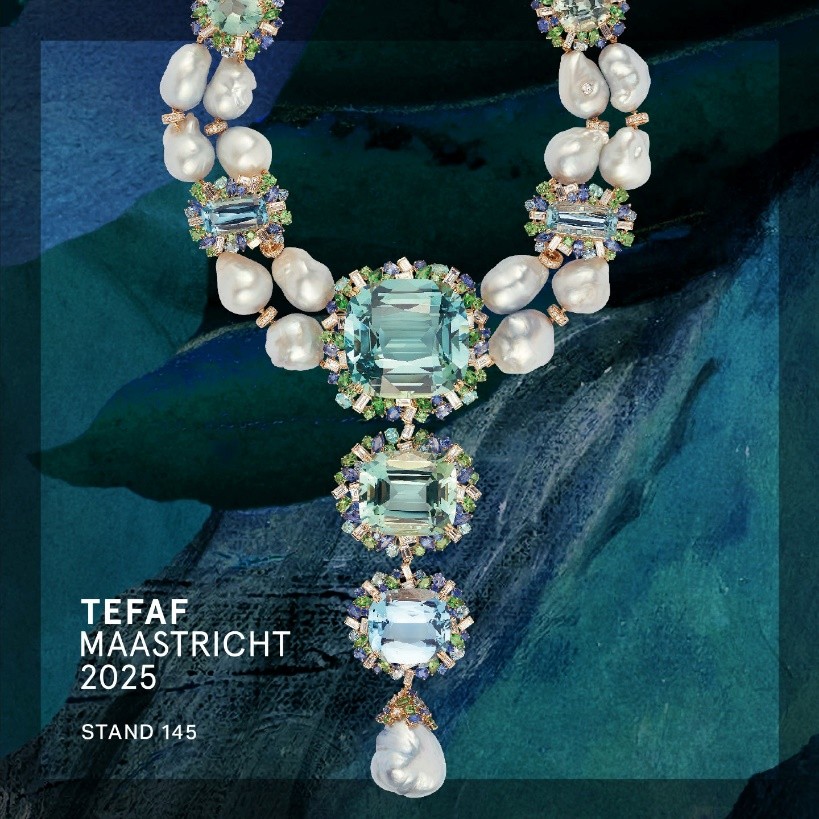
Contemporary jewels to really catch my eye from the fair are on offer from Hemmerle, Feng J and Margot Mckinney. Hemmerle are previewing a pair of beautifully naturalistic pinecone earrings cast in copper and white gold, and accented with natural pearls and diamonds. Meanwhile, Australian fourth generation jeweller Margot McKinney has a typically vibrant, vivid and colourful collection of jewels that encompass a wonderful exuberance and joy- it is hard to pick a favourite!

TEFAF Maastricht

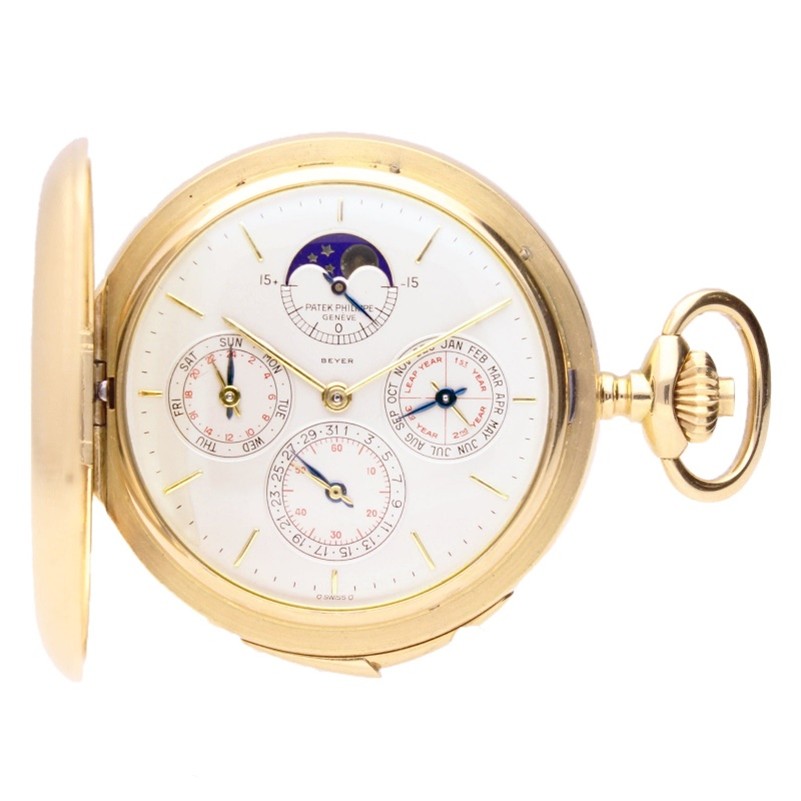
Somlo London of Burlington Arcade have on display two beautiful Patek Philippe pocket watches, each exceptional in their own right, with an option for him and for her.

Patek Philippe pocket watches
Image Courtesy of Somlo London

The first is an 18ct gold Perpetual Calendar hunter pocket watch with equation of time. This fine timepiece dates to 1982, and is double stamped with Patek Philippe, and the retailer of the piece, Beyer of Zurich. A sophisticated, and complicated timepiece, this watch displays the difference between mean solar time, or our conventional time, and true solar time, based on the actual position of the sun. Owing to the Earth’s orbit, this discrepancy can fluctuate throughout the year, and is reflected in the -15 and +15 subsidiary scale to 12 – now how many watches can do that!

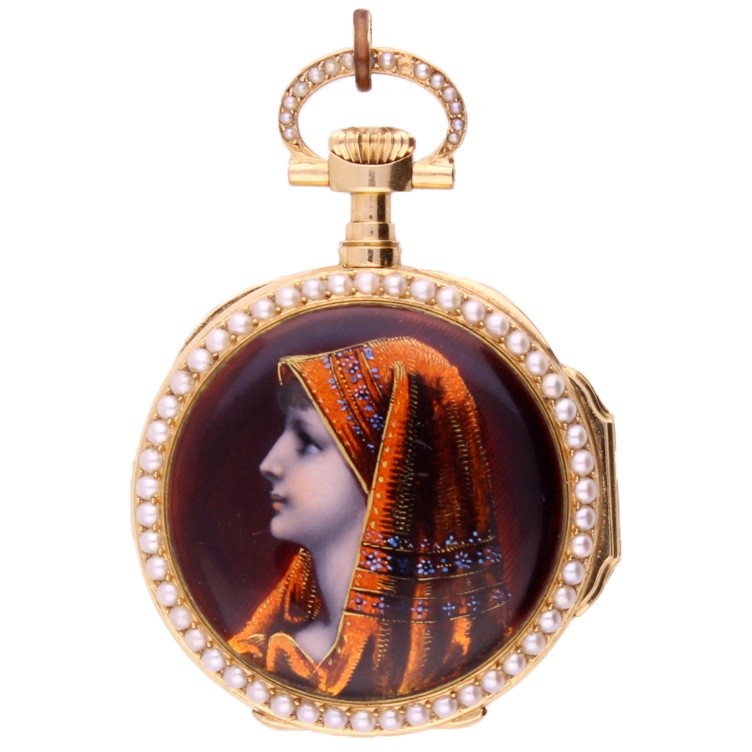
Patek Philippe fob watch, crafted circa 1889.
Image Courtesy of Somlo London

My second selection from Somlo is this beautifully decorated Patek Philippe fob watch, crafted circa 1889. Cased in 18ct gold and detailed with split pearls, this fob watch is hand painted to the case back with an enamel portrait of Saint Fabiola, an early Christian Saint.

So there we have it, my round up of the TEFAF works and exhibitors to keep on your radar, whether you are lucky enough to attend this international event, or, like me, will be looking on enviously! Let us know which pieces have caught your eye!

To arrange a jewellery valuation contact us on 01883 722736 or email [email protected]


The Quaich – A Scottish Symbol of Unity, Trust and Friendship

As the end of November draws closer we look forward to St Andrews Day in Scotland. All across the world those with Scottish heritage celebrate the life of the patron saint, St Andrew. A celebration steeped in history, it is common belief that Andrew became the patron saint in 1320, following the declaration of Scottish independence.

St Andrew was known for his generosity, which is reflected today in the warmth and kindness of the Scottish people. How better to celebrate this occasion every year than with an often raucous celebration with music, food and of course a wee dram!

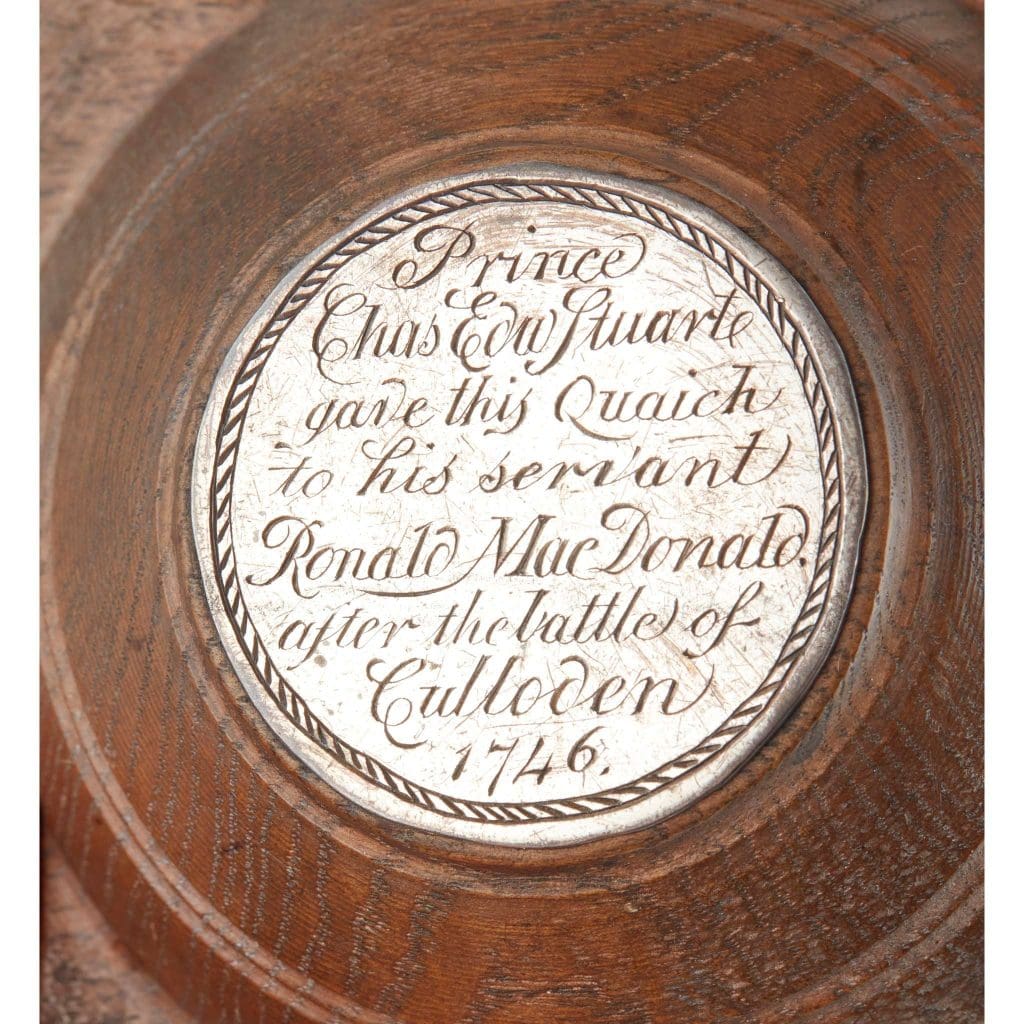
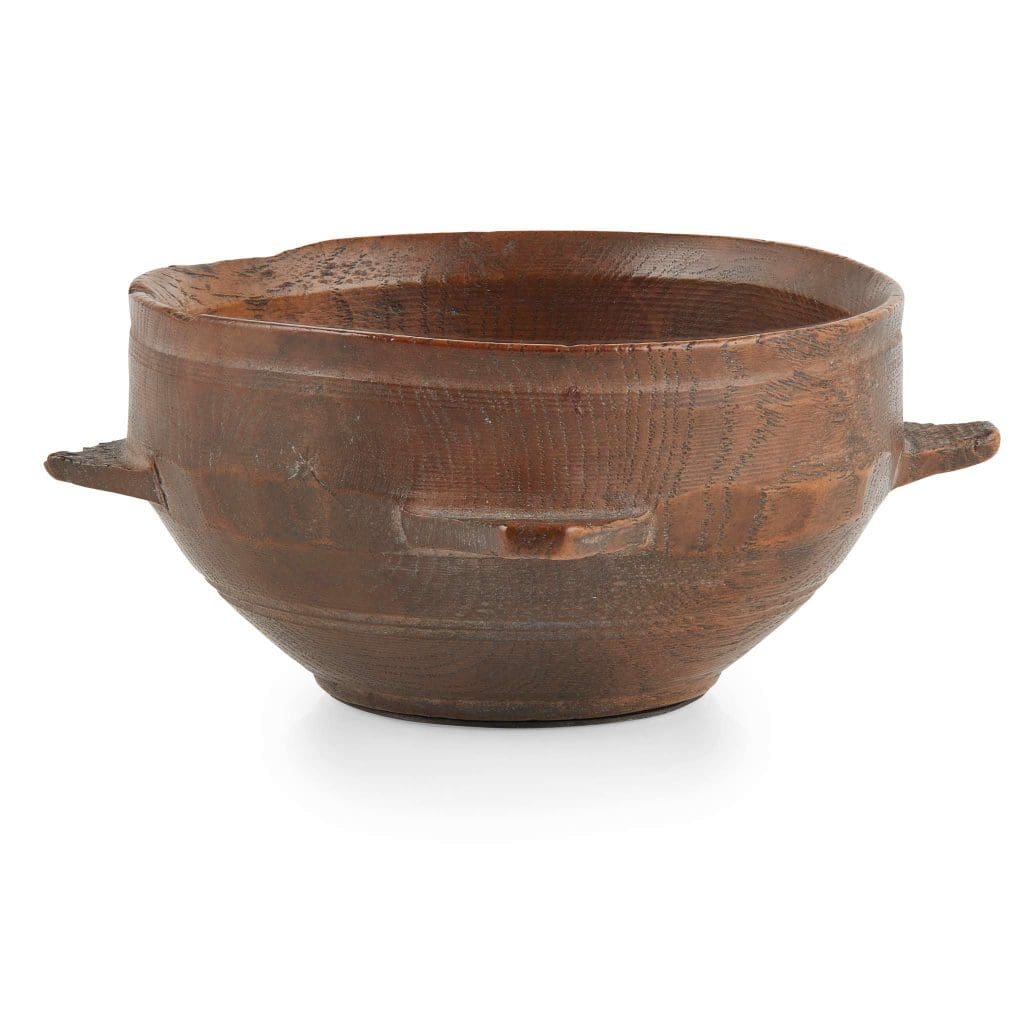
An 18th century wooden Quaich with applied silver plaque of Culloden interest. Sold for £7,560, Lyon & Turnbull, Edinburgh, 16 August 2023.

An 18th century wooden Quaich with applied silver plaque of Culloden interest. Sold for £7,560, Lyon & Turnbull, Edinburgh, 16 August 2023.

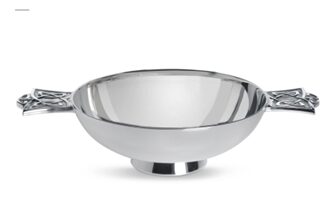
Traditionally whisky would have been taken from the quaich and passed round person to person. Deriving from the Gaelic word Cuach ; cup, this shallow two-lugged bowl originated in the Highlands. Brought out at gatherings, opposing clans would pass the quaich around to inspire trust and toast the beginning of new friendships.

The quaichs of the 16th century were formed of sections of wood, often in sycamore or yew. These staves were bound together with willow (withies) the woods often alternating, sometimes to include laburnum. Due to this method of construction, along with age and use, these rare, early quaichs are usually subject to some damage.

As the years progressed silversmiths began to add silver mounts and handles to these wooden forms perhaps for practical reasons for strength, then as time passed as a show of wealth. The 17th century saw the appearance of quaichs in silver. Harking back to the past, these beautiful examples of craftsmanship were often engraved to simulate the form of the original on which they were based. They can be found chased with vertical lines to imitate the staves and horizontal lines for the bindings. Some finer examples depicted flowerheads, stylised foliage and at times betrothal initials to the lugs.

Two handled silver Quaich by David Mitchell, Edinburgh, 1737 - 1738, inscribed ‘AS 1737 MW’ National Museum of Scotland.

Two handled silver Quaich by David Mitchell, Edinburgh, 1737 – 1738, inscribed ‘AS 1737 MW’ National Museum of Scotland.

It is documented that in the 19th century Sir Walter Scott offered his guests drams in silver quaichs at many of his gatherings. One of the more important quaichs in his collection was the Waterloo Tree Quaich. Constructed in part from wood that had allegedly been taken from the Waterloo Elm, when he visited the battlefield following The Battle of Waterloo. As for personal favourites his most beloved quaich was said to be an example made of seven bands of wood, which is believed to have been in the possession of Bonnie Prince Charlie when he made the gruelling journey from Edinburgh to Derby in 1745.

Contemporary quaichs, often embellished with Celtic knotwork and mythical beasts are still a popular gift to commemorate important occasions in Scotland, indeed following the 2014 Commonwealth Games in Glasgow, a wooden quaich was awarded to each winner.

To this day the quaich holds a special meaning to Scots – as a connection to their ancestors, and a link to their homeland.

Undoubtedly this fascinating vessel will always be remembered for its original purpose as a Highlander’s welcome, a cup to be shared by clan chiefs and crofters alike. The iconic quaich lives on, reminding us of the importance of hospitality, love and friendship.. Sláinte!
Please do contact us should you require an updated valuation of your silver collection.

A contemporary silver Quaich, with stylised thistle detail to lugs. From a selection available at Hamilton & Inches, 87 George Street Edinburgh, £795.

A contemporary silver Quaich, with stylised thistle detail to lugs. From a selection available at Hamilton & Inches, 87 George Street Edinburgh, £795.

Please do contact us should you require an updated valuation of your silver collection by calling us on 01883 722736 or email [email protected].

Silver's time to shine

Silver’s Time to Shine: How Rising Prices and Unique Pieces are Reviving the Market

Over the last few years, the silver market has perhaps been viewed as a rather quiet part of the art market, reliable but somewhat disregarded.

You may remember Woody in one of the later Toy Story movies. Silver, like Woody, is proving that you should never write off something just because it isn’t quite as shiny and new as it used to be. It may well prove to be your best bet as a long-term friend.

It is undoubtedly true that some areas have been stagnant. Life-style changes make it unlikely that we are going to see a revival in the taking of tea from an early 20th century silver tea set, or the use of peppers and sugar casters. However, that only paints a partial picture because nothing is ever completely one-dimensional.
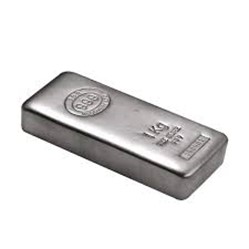
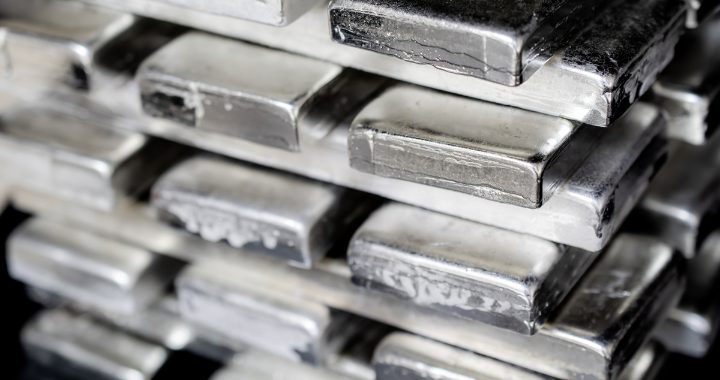
I kilo silver bar.

I kilo silver bar.

An article in The Antiques Trade Gazette neatly summarised the situation thus:-

‘The increase in bullion prices can influence antique silver prices in several ways. It can make owning silver appear more attractive as an investment, it can create a sense of urgency among collectors and enthusiasts as prices rise and lastly it can raise awareness of the craftsmanship, beauty, and historical significance of antique silver over other tangible assets.’

There has been much made of the increase in precious metal prices over the last few years. The price of these precious metals is usually tagged to global financial and political stability. The turbulence of recent years has seen a huge increase in the price of some metals, particularly gold. However, this should be counterposed against a reduction in the price of other precious metals notably platinum and palladium. This is largely due to the decline in use of these metals, along with rhodium. These are collectively known as the platinum group metals – PGMs. Car manufacturers have turned to battery powered electric vehicles which do not need PGMs in catalytic convertors causing a downturn in demand, and consequently the raw metal price. For many years platinum prices tracked or surpassed the price of 18 carat gold; at present both platinum and palladium are worth less per gram than 9 carat gold.
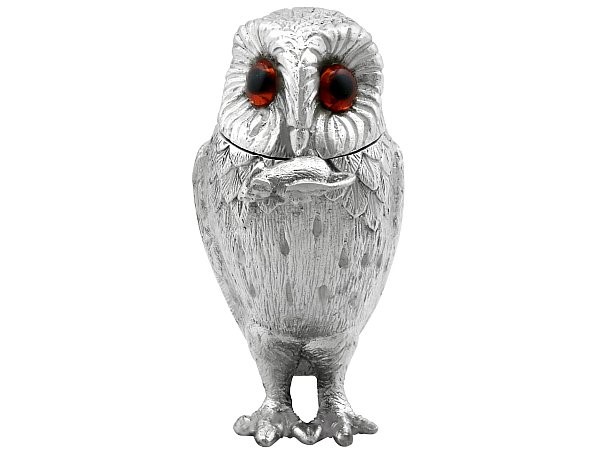
A 1962 silver owl mustard pot on sale for £2250.

How does this affect silver?

In September 2019 silver was trading at about £15 per ounce, and by August 2020 it was over £21.60, and as of today it is trading at £23.28. There is much speculation that the price of silver has a long way to rise. Unlike the PGM group metals silver is still widely used in industry, in medical technology, cameras and in the electronics sector in the manufacture of machinery requiring electrical contacts such circuit boards and semi-conductors. What, you may well ask, has this to do with the valuation of domestic silver?

As one silver dealer put it to me recently, much domestic silver is now scrapped to be used to make 1 kilogram bars of silver which are sold to ‘stackers’. These are people who believe that the price of silver will soar when the increasing global demand far outstrips the annual output. What is far more optimistic is a flourishing of rare, novel, ancient, esoteric and unusual pieces. This has seen some stunning prices at auction recently including a set of rare Scottish late 17th century provincial trefid spoons which sold for £13,000 , against an estimate of £3,000 – £5,000, and a stunning George III candelabra centrepiece which made £44,000 at Dawsons last month. This piece had been found in a suitcase under a bed where it had lived for the last 45 years. This is particularly relevant as the auction house revealed that the last insurance valuation has been conducted in 1987. Dawson’s research had partnered it with a similar pair of four branch candelabra sold by Sotheby’s in October 2022. This undoubtedly helped the piece achieve over twice the higher end of the estimate.

Thus, you have high prices because of the inherently high price of silver at the moment, offsetting the lack of interest in some areas of domestic silver; coupled with even higher prices for anything that is a little out of the ordinary or even very splendid as above.

In terms of making sure that insurance values are pegged to the current market, it is worth considering whether good pieces are adequately insured and whether more modest silver may be over-insured. Perhaps some pieces might be better sold if they are only gathering dust in drawers and cupboards rather than being used and enjoyed.

Whatever you decide to do with your silver it is always worth ensuring that you have the best up to date information to help you make informed choices that are right for you and your family.
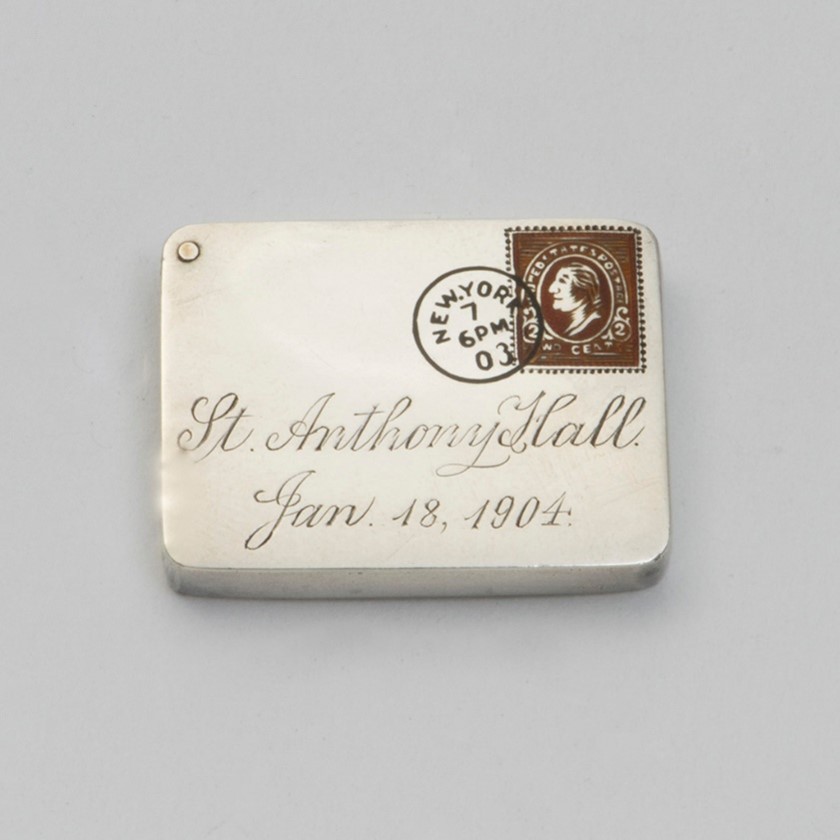
An American novelty stamp box for sale at Peter Cameron for £425
An American novelty stamp box for sale at Peter Cameron for £425