



Dale Chihuly is an Internationally renowned American glass artist known for his innovative and intricate glass sculptures and installations. He was born on September 20, 1941, in Tacoma, Washington, USA. Chihuly’s early life played a significant role in shaping his career as an artist, here are some key points.
Dale Chihuly was raised in a middle-class family in Tacoma, Washington. His father worked as a meatpacker and union organiser, while his mother was a homemaker.
Chihuly developed an early interest in art and began working with glass in the early 1960s while studying interior design at the University of Washington in Seattle. During this time, he had the opportunity to work at the Venini glass factory in Venice, Italy, which ignited his passion for glassblowing.
After completing his undergraduate studies, Chihuly pursued a Master of Fine Arts (MFA) degree in ceramics at the Rhode Island School of Design (RISD).
In 1971, Chihuly co-founded the Pilchuck Glass School in Stanwood, Washington. This school played a crucial role in the development of the American studio glass movement, providing a space for artists to experiment and collaborate with glass as a medium.
Chihuly was influenced by various artistic movements and styles, including the Murano Italian glassblowing tradition, Native American art, and the Studio Glass Movement. His work often combines traditional glassblowing techniques with contemporary artistic concepts.
Dale Chihuly’s early career was spent in experimentation and innovation in glass art, which resulted in the production of his best-known series of glass sculptures, including the iconic Macchia and Persian series.
Over the years, Chihuly’s work has gained international acclaim, and he has become one of the world’s best known and most prominent glass artists. Here are just six of his most famous and widely recognised works and projects.


Chihuly’s body of work extends far beyond these few examples, and his contributions to the world of glass art are extensive and influential.
Here are some lesser-known facts about Dale Chihuly:
Before becoming a renowned glass artist, Chihuly initially pursued a degree in interior design at the University of Washington. His interest in design played a role in his creative approach to glass art and sculpture.
Chihuly has drawn inspiration from indigenous art and cultures around the world. In particular, he has been influenced by Native American art, and some of his works incorporate elements reminiscent of Native American basketry and design.
Chihuly is known for his innovative techniques in glassblowing. He introduced the concept of the “team approach” to glassblowing, where he works closely with a team of skilled artisans who help bring his intricate and large-scale designs to life.
In 1976, Chihuly was involved in a car accident in which he lost vision in one eye after being struck by a metal rod. Despite this life changing injury for any artist working in any medium, he continued to create glass art and adapted his techniques to accommodate his visual impairment.
Chihuly’s work can be found in some unexpected places. In addition to galleries and museums and private homes his glass sculptures have been displayed in unique locations such as botanical gardens, casinos, and even underwater. For example, his glass installations have been featured in underwater settings like aquariums and also Venice during his “Chihuly Over Venice” in 1996, see 5 on previous page.
After looking at some of the images of Dale’s huge installations and projects you would be forgiven for thinking that owning a piece is only possible for the elite collector with deep pockets and lots of space! Happily, Dale makes some beautiful table size and smaller single pieces that all use the exact same wonderfully uplifting ‘hot’ colours and flowing shapes. The first Exhibition of Dale’s work I saw was at the Halcyon Gallery London in January 2108. I remember being blown away by the vibrancy of his colours and the sheer energy and scale of the larger pieces and the gem like qualities of the smaller works which were all beautifully displayed in elegant glass display cases.
Chihuly’s works come up at auction fairly regularly and also appear on the art selling sites, Artsy and 1st Dibs, I have made a small selection of auction sales with prices and estimates as a guide and some currently available pieces for sale on these two main selling sites, which I hope will further wet your appetite for works by the master of glass, Dale Chihuly.


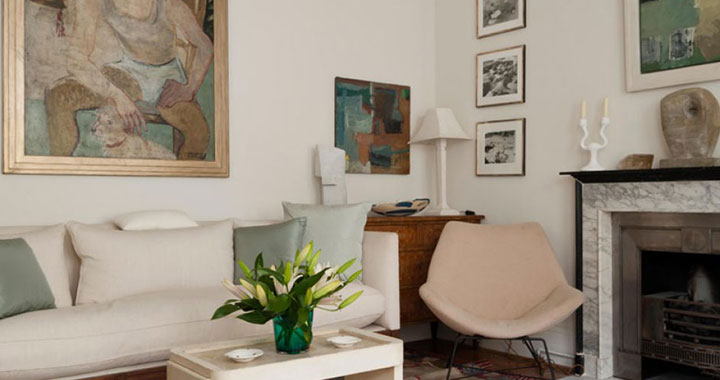
Collections are usually amassed over years and great love and care often goes into the acquisition of each piece. Whether your motivation behind the collection is financial or whether it is to leave a legacy, it is vital to make the right choices on the display and care of the artwork or object as these factors will impact the condition of the artwork, not only in the short term, but also in the long term. Condition plays a crucial factor when determining the value on the open market. Many owners are surprisingly casual with their artwork, particularly owners who have inherited the works rather than bought them and, therefore, see them more emotionally rather than in terms of their commercial value.
As with all assets, it’s essential to ensure that works of art are cared for properly and that their condition is maintained since good condition is one of the key factors in their financial value.
Working with clients and their collections over the years, I’ve seen certain recurring issues that can be detrimental to the condition of an artwork, so I’d like to share some of the key things to consider when looking after the items in your collection:
When an object stays in a set position, the risk of damage is minimal, however, when it is moved it is instantly put into a precarious position. Broken items are a frequent casualty in the hands of an over enthusiastic cleaner. If an item is broken, it’s vital to pick up every fragment as this will make repairs more successful and, in most cases, less costly. It’s best to avoid gluing things back together yourself, judging from the attempts I have seen, it’s never quite as easy as you might think!
If you have a valuable and vulnerable collection, it may be worthwhile to take the precautionary measure of employing a Conservation Cleaner. A specialist in this area will have the expertise to handle the object with sensitivity, knowing how and where to lift an object. They will account for weak or fragile areas or surfaces to prevent damage from occurring during the process.
Of course, not everyone has the budget for a Conservation Cleaner and speaking from my own experience, I like to clean the fragile items in my own collection. I treat these items differently to someone who doesn’t have the same emotional attachment, however careful they might be.
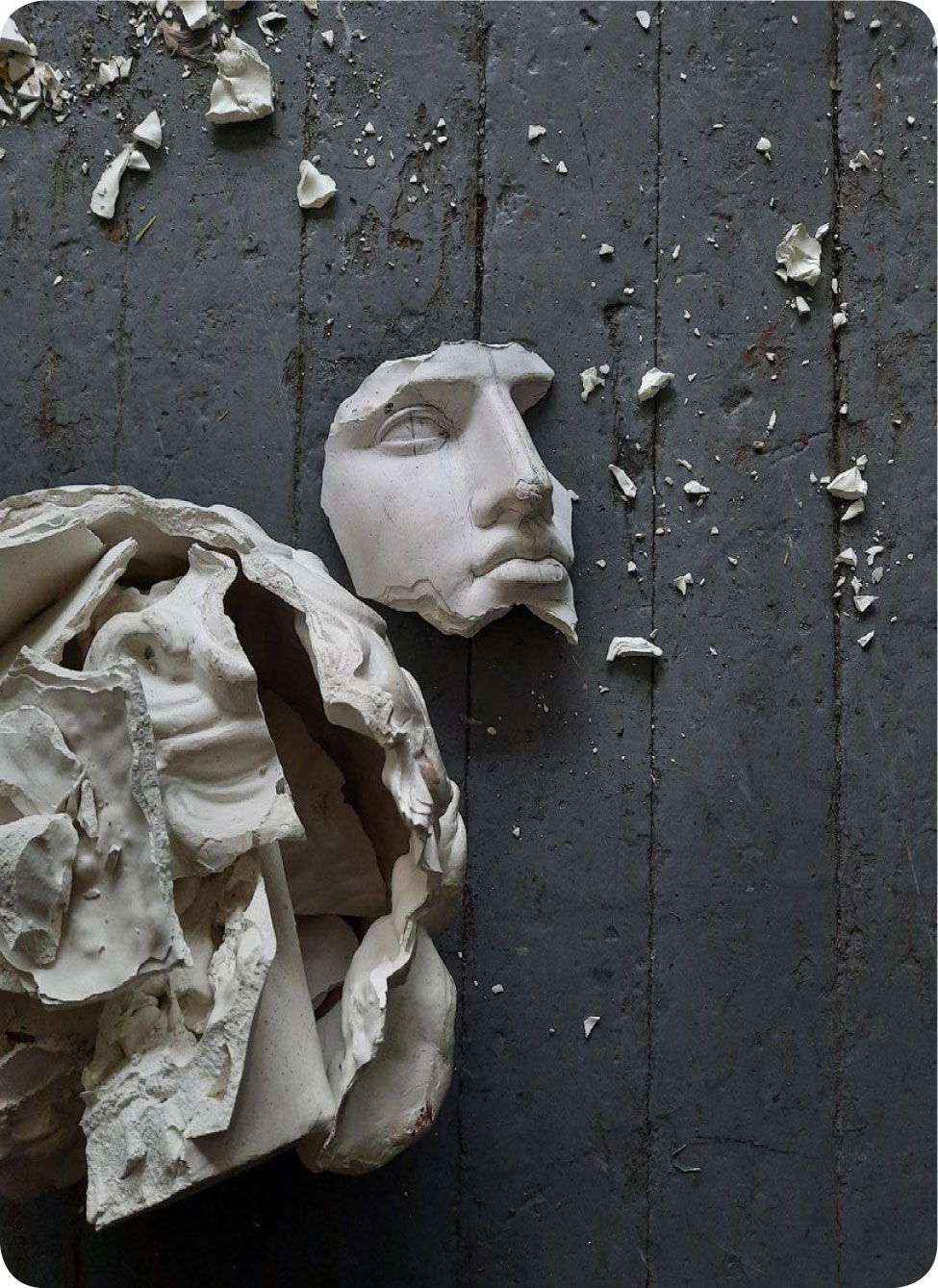
If cleaning a shelf which displays many objects, find a safe location and transfer the items to this position. Trying to dust around objects, can result in knocking over adjacent items. If you have something with a handle like a jug, it will be safer to hold it in two hands and hold it from the main body of the object. Hairline cracks which can be invisible to the naked eye can be present and therefore breaks can occur at vulnerable points.
Surface dirt and dust can affect an object as it absorbs moisture from the air, into the surface so it is important to clean an item regularly. A cleaner may adopt a method
that isn’t appropriate and can cause more damage to an object than the dirt itself; a duster may have fibres which can snag and cause damage to an item, for example a delicate gilded picture frame. A good solution for this is to use a soft brush, like an artist’s paint brush, if used gently, these can help remove dust without catching on or abrading vulnerable areas.
Specialist firms offer in-house training to domestic staff charged with the day-to-day maintenance of properties and their contents. Bespoke sessions are put together around the individual requirements of the house and collection, identifying those pieces which are safe to handle and how best to approach them, and to identify which pieces require attention from a conservator.
If an item is very delicate, it is worth considering a bespoke mount or display case to help support it and perhaps to prevent it getting too dusty or from being accidentally knocked over.
Weak picture hangings and mounts are common and are an easily preventable cause of damage. I have seen many an insurance claim following the snapping of a hanging wire. Not only do the pictures themselves become damaged, but they can break items beneath them.
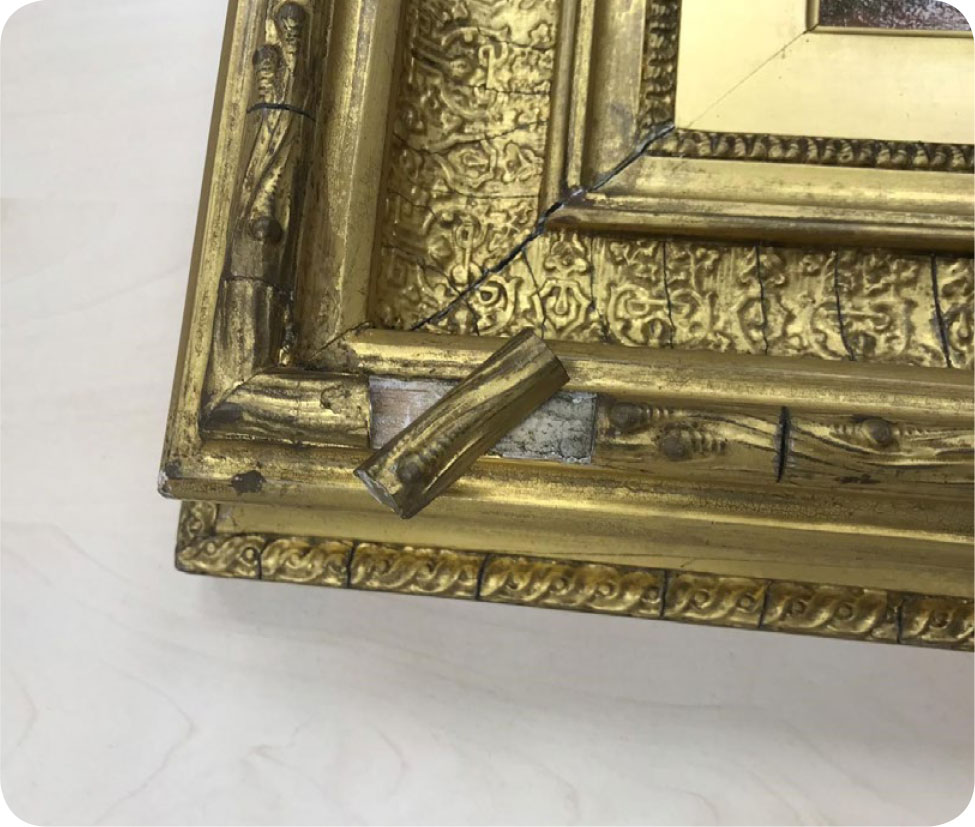
Many owners are so keen to display a new piece, they use the existing fixings without considering whether they are suitably strong. Engaging a specialist to carry out the installation of an artwork can be money well spent.
Pictures should be framed to conservation standards, using non-reactive materials. Works on paper can become foxed – the mottled brown staining which is caused by acids from the backboards or mounts leaching into the surface of the paper. Over time this will cause the paper to degrade.
It also is worth considering changing the glazing for acrylic or glass with a UV filter, this will help retain the colours of the artwork. If acrylic is used, this will prevent damage from occurring in the event of an accident; it will not splinter and break as glass does. However, if you have a pastel artwork, acrylic should not be used as the static charge can draw the pastel to the glazing itself. A good conservation framer can offer recommendations on what will be the best solution for your picture.
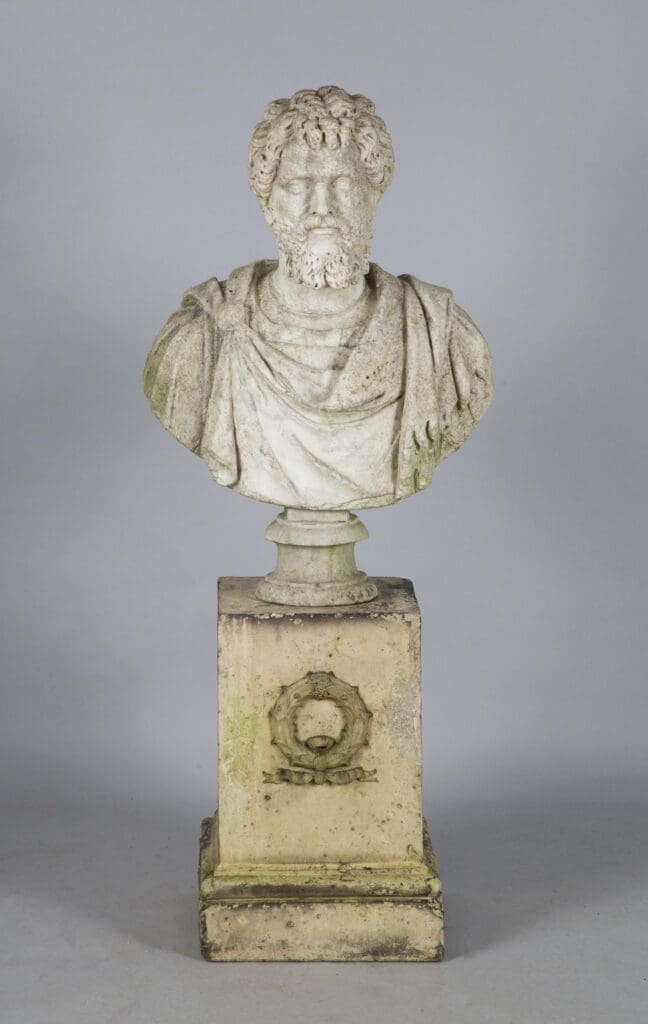
Marble and bronze items should be handled and installed by professional handlers, not by general movers who can lift heavy items. People think marble is robust as it is heavy, but in fact its natural veins cause the material to be very weak and prone to damage if handled incorrectly.
The same can be said for bronze as there may inherent weaknesses in the casting. A specialist will know how best to move the item taking weak areas into account.
Consideration should be given as to where you choose to display artwork, and environmental factors such as temperature and humidity should be assessed when choosing a suitable location.
Air conditioning, central heating, artificial lighting and direct sun light all potentially have a detrimental effect on the composition of an artwork, both structurally and in terms of the surface finishes. Certain walls within rooms can provide a more challenging environment than others due to the way the sunlight falls within the room or if they are an external wall which can increase issues with damp.
There is technology available for monitoring environmental conditions and is one of the most effective means of protecting works of art from short-and-long-term environmental damage. However, the information needs to be looked at and analysed and whilst helpful it cannot replace regular inspection of pieces to monitor their condition. I once saw an Andy Warhol ink sketch of which had completely faded, and this apparently had happened in a few months. The owners of the house had been at one of their other properties and this was missed by the house keeping staff.
A report carried out by a specialist to assess the condition of an object can be vital in some situations. It is often a requirement if lending or borrowing a work of art. If carried out by an independent third party, it acts as a neutral account and helps to protect all parties involved in the transaction.
It is also a useful precautionary measure to prevent a costly mistake when purchasing a work of art (a condition report may reveal areas of damage, details of restoration or materials or processes that aren’t inconsistent with the provided date of a piece), and in situations where there is an increased risk of damage, for example during transit.
Items damaged during shipping are a rarity, but accidents do unfortunately happen, which is why so many collectors are keen to explore solutions that allow them to reduce the number of times they need to ship valuables. Christie’s recently used hologram technology to take a Degas Bronze Sculpture of a Dancer on tour, although can this really be a satisfactory substitute for seeing the real item in the flesh?
Insurers may like to engage a professional condition report following a loss, a conservator can potentially point out factors such as an inherent weakness in an object such as a manufacturing fault, like a vein in a piece of marble or an area of previous repair which has caused an area of stress elsewhere in the object.
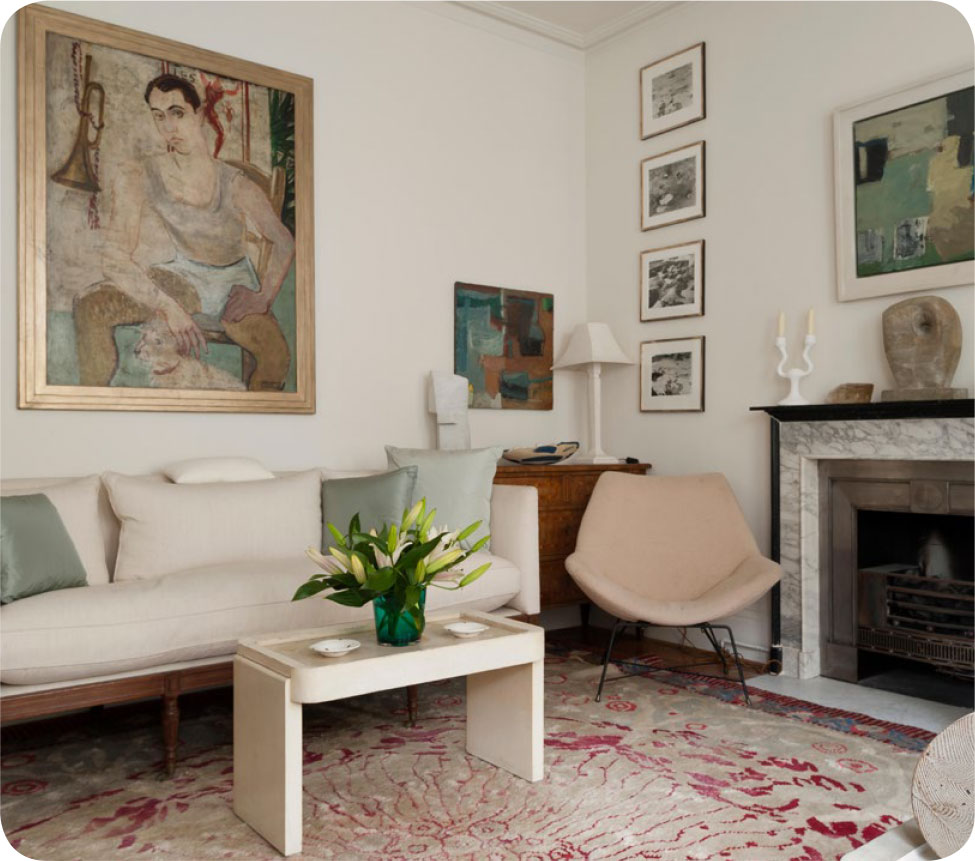
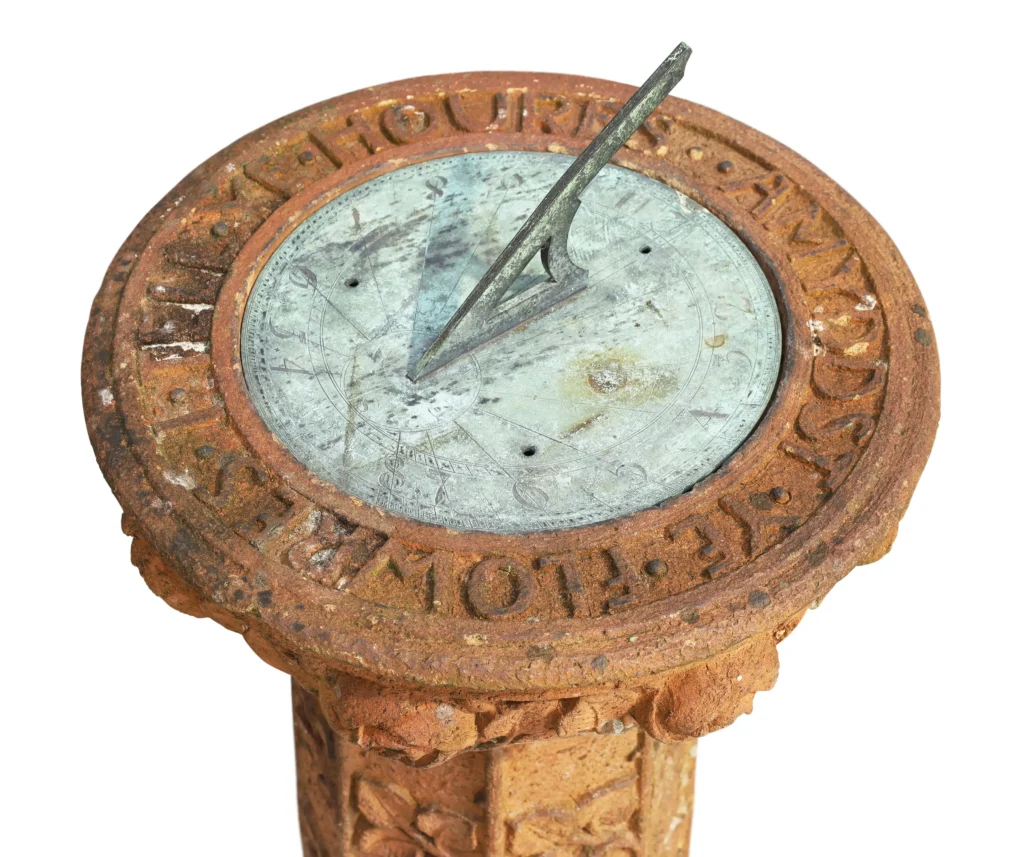
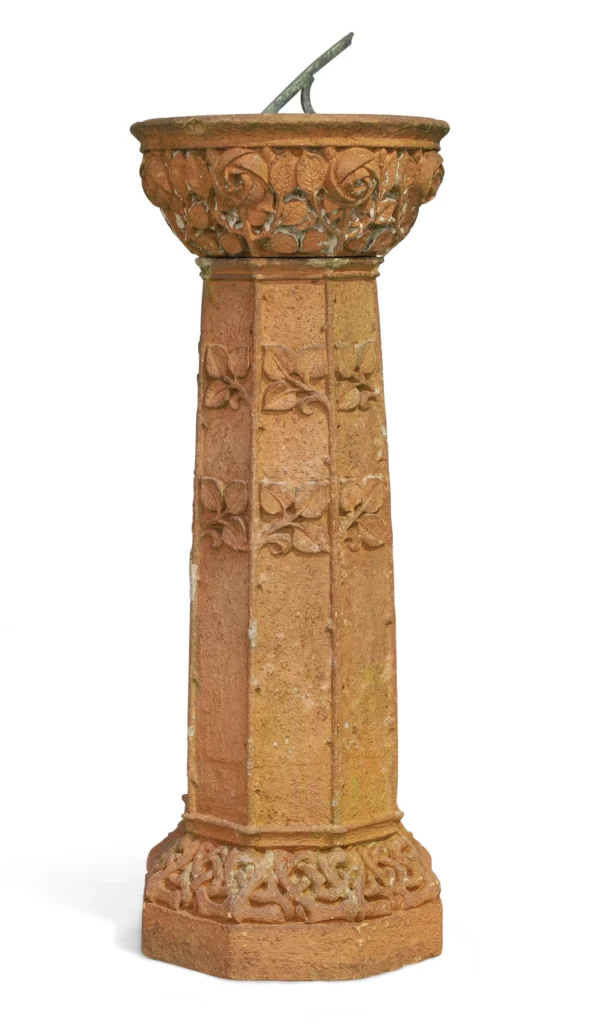
Outdoor sculpture or furniture is an area that is often overlooked, designed in heavy materials, it is easy to assume that materials such as stone and metal are resilient, however this is not the case and pieces do require care and attention to prevent the objects from deterioration.
There has been an increase in rainfall in the UK, so it is now more important than ever to protect garden statuary from excessive water ingress. Weather extremes are also more commonplace, and this can profoundly affect marble or stone as it absorbs moisture, followed by freezing temperatures which can cause the stone to crack due to the fluctuations.
A wax coating can be applied to bronzes to help protect the surface from the elements. Sculptures of stone or metal should be covered during winter; the purpose of a cover is to help maintain a steady condition to help mitigate damaging fluctuations. The covers must be lightweight so as not to damage the sculpture, but robust enough to protect the object. In interest of sustainability and to minimise cost to the client, there are covers available which can be stored during more temperament months and then reused when necessary.
So, you have taken precautionary measures, but accidents can happen and when they do the following steps may just help:
Gather up all of the broken pieces, no matter how small – restoration can often be more successful if all of the original pieces have been saved and this will also help lessen any loss in value.
For more information contact Sarah Giles on 07876 147230 or visit www.sarahgilescc.com
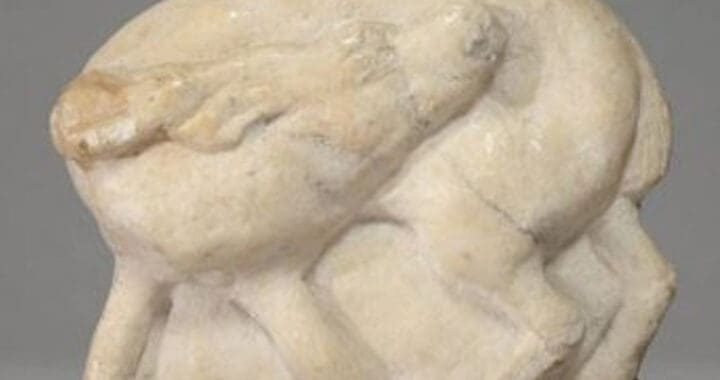
Known in the Art business as a ‘sleeper’ this 19 cm high, charming, and unique marble carving sold for 150 times its low estimate at Mellors and Kirk’s auction last month.

Very temptingly priced at a ‘come and buy me ‘estimate of £40-60 and intriguingly catalogued as ‘Modern British School’, this sculpture of a fawn grooming was finally hammered down at £6,000.
The Fawn is often depicted as a mythical creature and this piece certainly bears the hallmarks of early 20th century British carving. The attribution to Modern British School, although somewhat broad, is I believe, largely accurate as the piece could be attributed to the ill-fated and short-lived artist, Henri Gaudier Brzeska, (1891-1915), who although 100% French, somehow became an honorary ‘Brit’ and an integral part of the early dawn of the Modern British Art Movement at the beginning of the 20th century. He exhibited alongside greats such as Walter Sickert and Augustus John and is now very highly regarded as a sculptor and original work by him rarely if ever appears at auction. If this piece is by Gaudier then it’s a particularly good buy for someone as it could be worth 10-15 times the purchase price.
Another possibility is the sculptor and first husband of Barbara Hepworth, John Skeaping (1901-1980). If by him then it is still worth more (but not hugely more – value may increase by 2 or 3 times). I do not think it is by any of the big guns of Modern British sculpture such as Henry Moore or Barbara Hepworth, at least neither of them sculpted fawns. However it is an intriguing, good quality and well carved piece and so well worth a punt at £6,000…..
Watch this space for an update in case I hear anything more about its final attribution!
Henry Moore was born in Castleford in 1898 into a Yorkshire coal mining family. His rather didactic father felt that his children should never follow him into mining and saw education as the way out.

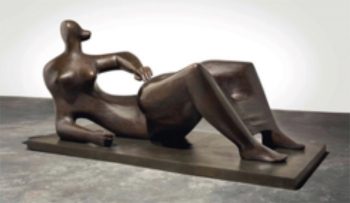
Reclining Figure, Festival 1951
Bronze, 230 cms wide.
Sold in June 2016 for £24,722,500. This is the current world record price for a Moore bronze
Moore had shown an early talent for sculpting and drawing at junior school and had made numerous very creditable pieces from clay and stone. He passed the entrance exam for Castleford Grammar School at the second attempt thus joining some of his siblings already at the school. The wide breadth of subjects taught there exposed him to medieval sculpture which attracted his interest straight away and he was encouraged to study, copy and draw pieces. He was also asked by the Headmaster to carve a School Society plaque and also a roll of honour for pupils who were serving in World War I.
Reclining Figure, 1982
Bronze, 246 cms wide.
Sold for $11,000,000 in Nov 2017
Moore joined the War effort in 1917, very soon after joining he was gassed and subsequently hospitalised until 1918, thus keeping him safely away from any further hostilities. On leaving military service in 1919, he received a servicemen’s grant which gave him enough money to study Fine Art at Leeds School of art. Between them, Leeds Art Gallery and the School of Art gave him easy access to see and study the many Modern works of art in their respective collections. This had a profound effect on Moore’s personal and artistic development and he became strongly influenced by the work of Brancusi, Jacob Epstein, Henri Gaudier Brzeska and Frank Dobson. These influences pulled Moore towards the almost forgotten traditional carving method known as ‘direct carving’ in which the imperfections of the material and marks left by the carving tools, became part of the finished sculpture, the process is referred to by sculptors as ‘truth to material’ . In actively pursuing this method Moore was resurrecting a then nearly four hundred year old carving tradition stretching back to the Old Master sculptors Canova and Bernini.
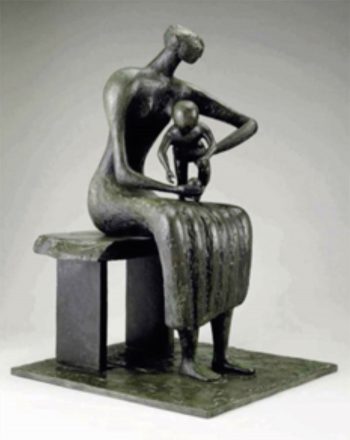
Mother and child with apple, 1956
Bronze, 72 cms high.
Sold for £5,010,500 in February 2014
Later in his career when casting his sculpture in bronze, Moore found that in his hands bronze was not an antithesis of stone or wood carving: carving, scraping and grating his plaster models allowed him to create texture in his finished bronzes that matched anything he could achieve in his stone or wood pieces. In fact Moore paid great attention to the patination of his bronzes and supervised the process personally whenever possible, especially on large scale works where it is evident that many of his patinas suggested natural textures and weathering.
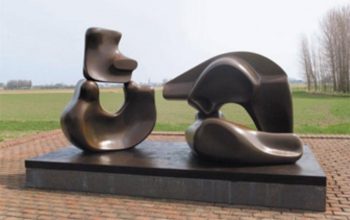
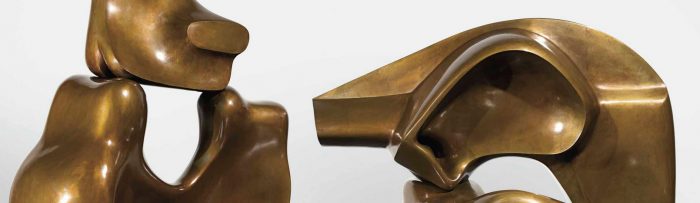
Large 4 piece reclining figure, 1972
Bronze, 402 cms high.
Sold $3,300,000 June 2006. Since 2006 prices have increased and I would now expect this piece to make nearer to $10 million
Following his studies at Leeds, Moore moved to Hampstead where he took on part time teaching work at the Royal College of Art while continuing working on his sculpture. He later took up another teaching role at the Chelsea College of Art where he began to develop more abstract work.
He was part of the organising committee for the international surrealist exhibition in London in 1936, where Roland Penrose purchased one of his Moore’s new abstract mother and child works, carved in stone. Penrose displayed his new purchase in the front garden of his house in Hampstead, much to the annoyance of the local residents who ran a two year campaign to remove the piece!
In 1938 Moore met Kenneth Clark who championed his work from this first meeting onwards.
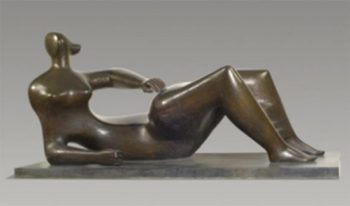
Reclining Figure, 1982
Bronze, 246 cms wide.
Sold for £3,625,250 in Feb 2006. Again the value of this piece has risen significantly since 2006, another from the same cast sold for $11,000,000 in 2018
At the outbreak of the Second World War the Chelsea School of Art was evacuated to Northampton, so Moore resigned his teaching post and began working on powerful drawings of Londoners sleeping on the London underground all commissioned by Kenneth Clark, now the Chairman of the War Artists Advisory committee. When the Moores’ Hampstead home was hit by shrapnel Henry and his wife Irina moved to a farmhouse called Hoglands, set within in a hamlet called Perry Green, just outside Much Hadham in Hertfordshire . This house and the surrounding land became a home, studio, gallery, workshops and display area for his work for the rest of his life. Over time his continued financial success in selling work enabled him to acquire adjoining land nearby and buildings for use as studios and exhibition spaces. This large rural site now houses the Henry Moore Foundation galleries and study centre, where you can take a tour of Hoglands, walk the grounds and gardens, and visit the galleries and studios which are all open to the public.
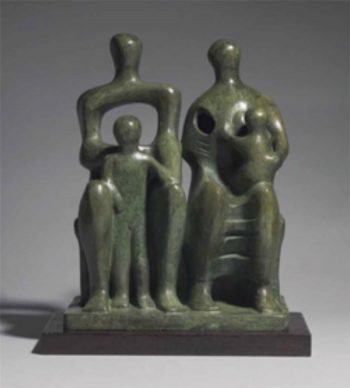
Family Group,1946
Bronze, 44 cms high.
Sold in June 2017 for £3,861,000. In 2008 another from this same edition sold for $4,000,000
After the war, following several miscarriages Irina had a baby daughter, Mary who was born in March 1946. Two years prior Moore had lost his mother and these two events drew him to focus on one of his most successful and enduring themes, the Mother and Child. Also in 1946 he made his first visit to America to attend a major retrospective of his work held at MOMA in New York. This exhibition was a huge critical and popular success and his fame spread rapidly across the US. He was taken on by an art agent in Los Angeles who advised many Hollywood moguls and actors. His work was bought in quantity by Betty Warner, a very wealthy and influential socialite and collector in LA and the wife of Jack Warner of Warner Brothers pictures was also a strong influencer.
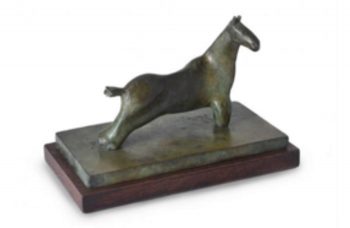
Horse
Bronze, 13.8 cms high.
Sold in March 2020 for £32,500. Horses are rare subject matter for Moore bronzes, however I think this piece is elegant and nicely stylised and offered good value at this price
The last 30 years of Moore’s life were his most productive in every sense, he was incredibly busy making, exhibiting and selling work in all mediums, particularly bronze all around the world.
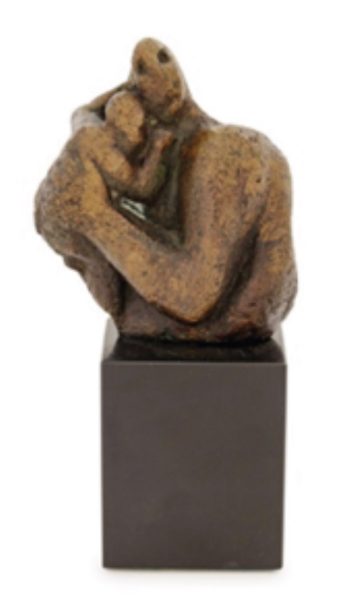
Mother and Child, 1929
Bronze, 10.2 cms high.
Sold for $5,000 in December 2019. This is the cheapest piece you can find, however its perhaps not the prettiest
By the early 1970’s he was making over £1,200,000 a year in income from sales of art alone. He was probably the first British artist of the 20th century to become a millionaire. However the downside was that as a UK tax payer earning this sort of money he was liable to pay 80% tax on his earnings In fact so significant was his tax bill that in 1972 he was publicly declared the single highest individual tax payer in the entire UK. This warranted a visit to Hoglands by the then Chancellor, Jim Callaghan to acknowledge his tax contribution, I noticed a photo taken of this meeting at Hoglands, Jim Callaghan is smiling broadly, however Moore isn’t looking quite so cheerful having just parted with £960,000 in income tax .
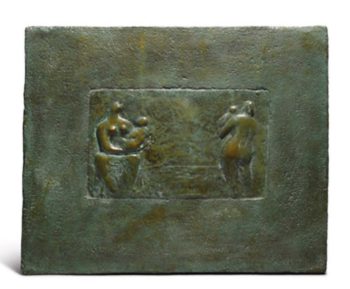
Mother and child, Relief, 1977
Bronze, 38.4 cms.
Sold in November 2019 for $10,000. There are a number of relief bronzes smiler to this which, although unusual, do offer good value.
Henry Moore produced a huge quantity of the highest quality work, particularly bronzes and he has a truly international reputation, so his pieces appear for sale around the globe, all the time. On any given day you can find something new coming up for sale somewhere in the world and I show a few examples below. One of the many truly remarkable facts about the Moore market is just how cheap his tiny bronzes are, in fact prices for bronzes range from as little as £5,000 for a small piece right up to £25 million for the largest pieces. In addition peace of mind is offered to buyers by the carefully curated complete catalogue raisonees listing with reference numbers all his bronzes, unique carvings, drawings and prints from all periods.
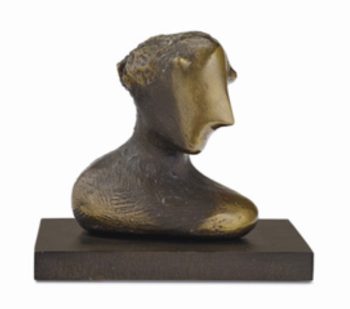
Caricature head, 1978
Bronze, 10.1 cm high.
Sold in November 2019 for $15,000