





Is it to tell the time? Highly unlikely.
Is it a status symbol? Possibly.
Is it to stand out from the crowd? Again, quite possibly.
This is where the allure of a limited edition watch comes into play, lets picture the scene;
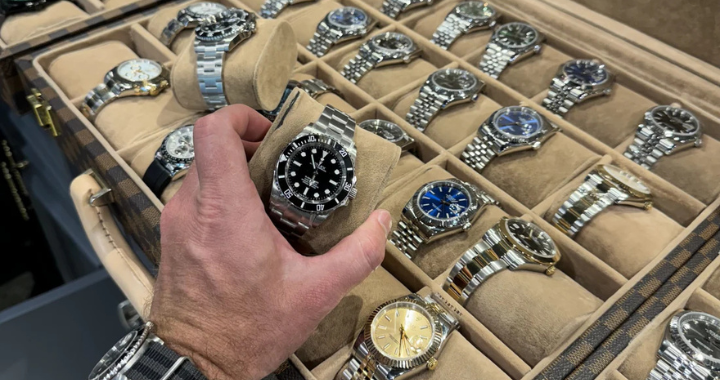
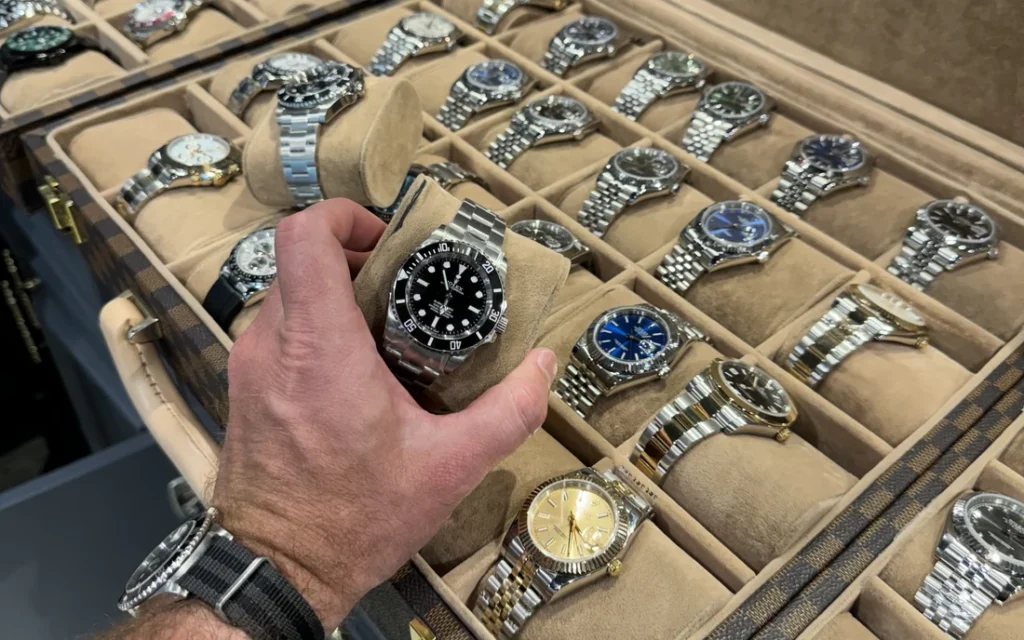
You are in your local bar on a Thursday evening (for those that work in London, you will know that this is the post covid night to be seen outside a bar in your gilet and trainers) and every other person in your office has a Submariner, or a GMT…when you arrive with a brand new limited edition watch that catches everyone’s eye. Irregardless of cost, the words that come out your mouth will be;
“Well, they only made 25 of these – and my authorised dealer managed to get me to the front of the queue”
In that very instant you will be launched into the higher echelons of the watch enthusiasts in your office, and demand respect among the other ‘watch guys’ who took the ‘obviously boring route’ into luxury watch ownership by buying a black bezel Submariner.
What is very clear though is that limited edition watches are actually almost an addiction for the hardened watch collector, the possibility of owning a watch that you are very unlikely to see another one of, apart at watch collectors evenings (yes, these things do exist) has such an appeal that many limited editions will be sold out months and years before they ever see the light of day.
There are many schools of thought in this department and originally, they were formed in order to move old stock – the old adage of ‘How do you make something old more interesting?’ – by making it appear new again. Car manufacturers still use this trick by giving a tired old model that nobody wants to buy any more by putting in some new seats and a slightly different paint job.
Well, given the date of October 2024, they are still a good investment but given the recent cycle of insane watch prices, it’s hard to determine where things might go but if we take one of the most noticeable and ‘mainstream’ limited editions and use this as an example.
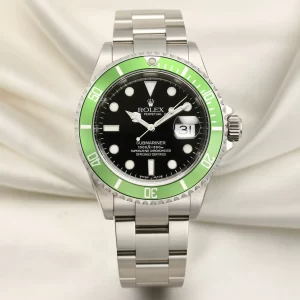
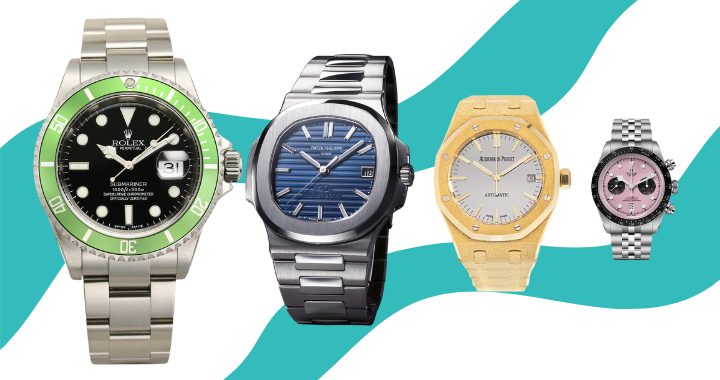
The Rolex Submariner 50th Anniversary 16610LV
The Rolex Submariner 50th Anniversary 16610LV
What on earth is that I hear you cry – well like many iconic things on the planet, such as Plato, Voltaire, and Shakira, it goes by a simple one word name of (the) Kermit.
When this watch was released in 2003 it caused a minor stir amongst Rolex aficionados and remember that this was a time when you could consider buying a Rolex after seeing it, as opposed to just being told about it on the phone or email.
The green bezel was not considered to be in keeping with the Rolex ethos, despite the fact that all their boxes were this colour, and nobody considered that the GMT was a little too outlandish – and so this watch was discontinued in 2010, a mere 7 year run, which at the time was considered to be a major failure. Back then I was offered two of this model, with a discount on retail price of £500 a watch, roll on 14 years and the story is very different.
This watch still retails on the secondary market for around £14,000 – I am aware that at the absolute peak of the market some people were paying up to £21,000 for them, but that was ridiculous, as was most of the market around this period.
When compared to a standard black bezel that you will see 35 of every night at The Ned, it has performed better due to its limited run – so much so that Rolex released similar watches following this such as ‘The Starbucks’ and ‘The Hulk’ – FYI, Rolex don’t actually come up with this names, thankfully.
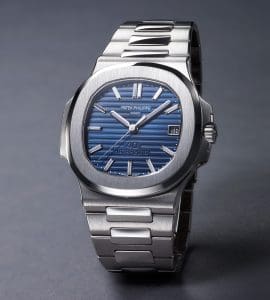
Patek Phillipe Nautilus 5711 40th anniversary
Whether or not this could be considered a ‘Limited Edition’ or not, is a good question – by any definition all luxury watches are ‘limited’ purely down to the fact that creating and manufacturing processes dictate that they cannot pull one off a production line every 30 seconds, considering that Rolex makes around a million watches a year, one could debate if this is down to supply to market rather than ability.
Another very good example of how the smallest detail can change not only the appearance of a watch, but also the heart rate of the collector is the Patek Phillipe Nautilus 5711 40th anniversary. From any distance this watch just looks like a standard 5711, (currently riding high in the top ten of the stockbroker mugging chart) but in fact it’s made from platinum and has an extra detail on the dial to indicate that you are very special, so special in fact that you were allowed to buy this watch. These small details now will tell the great and good that not only did you buy a Nautilus, but you also probably had to have owned a few in order to own this one – and now have to insure this particular watch for around £300,000.
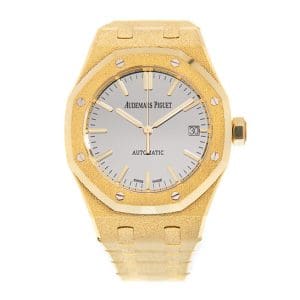
Audemars Piguet Royal Oak Selfwinding Frosted Gold “Carolina Bucci” Limited Edition 37mm
There are many other watches that are released as ‘Limited Editions’ by the big boys in the horology world and they vary as much as anything else in terms of investment – one simply cannot tell until the market decides, and this means taking the plunge sometimes.
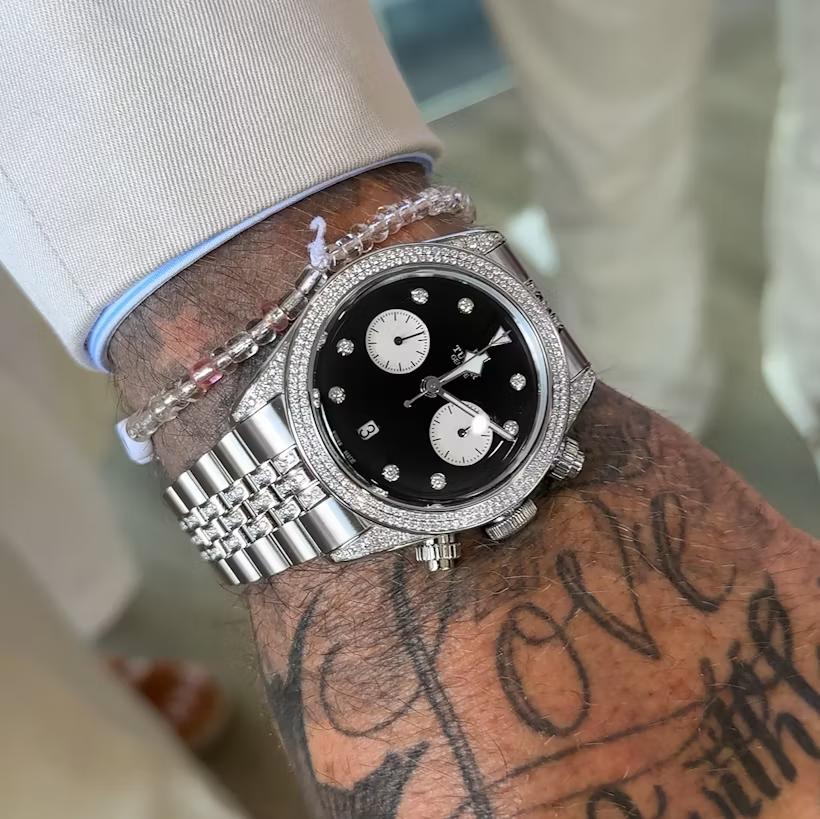
Whether or not history will be kind to the pink dial Tudor Chronograph is a question I have been asked quite a lot, needless to say – I have been diplomatic in most of my conversations about it.
Even in the sales pitch from Tudor, they say ‘It might not be for everyone’…but because it’s a limited edition, you should buy it anyway.
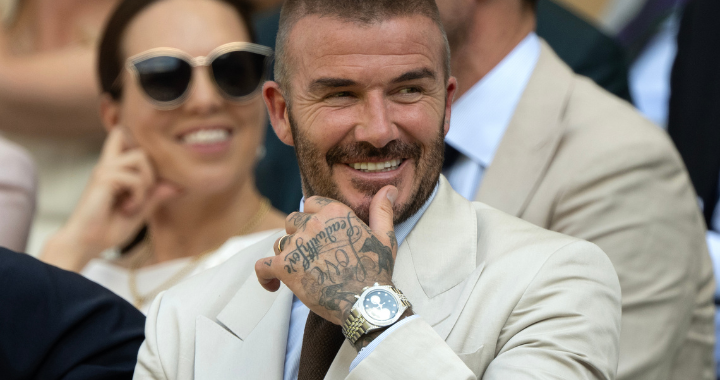
Why pink you may ask, but it’s actually a fairly simple answer – David Beckham. As one of the brands main ambassadors, and staple signature of masculinity, a pink dialled watch to go with his pink shirted football team Inter Miami seems to make sense in the celebrity endorsed watch world. For a price of £4,880, it does seem to be a reasonable outlay if you can live with that dial.
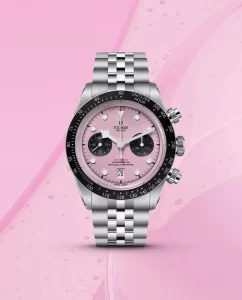
Tudor Black Bay Chrono Pink
Contact us about a watch valuation by emailing [email protected] or call us on 01883 722736.
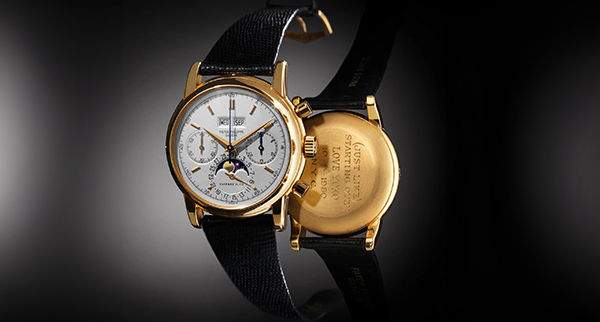

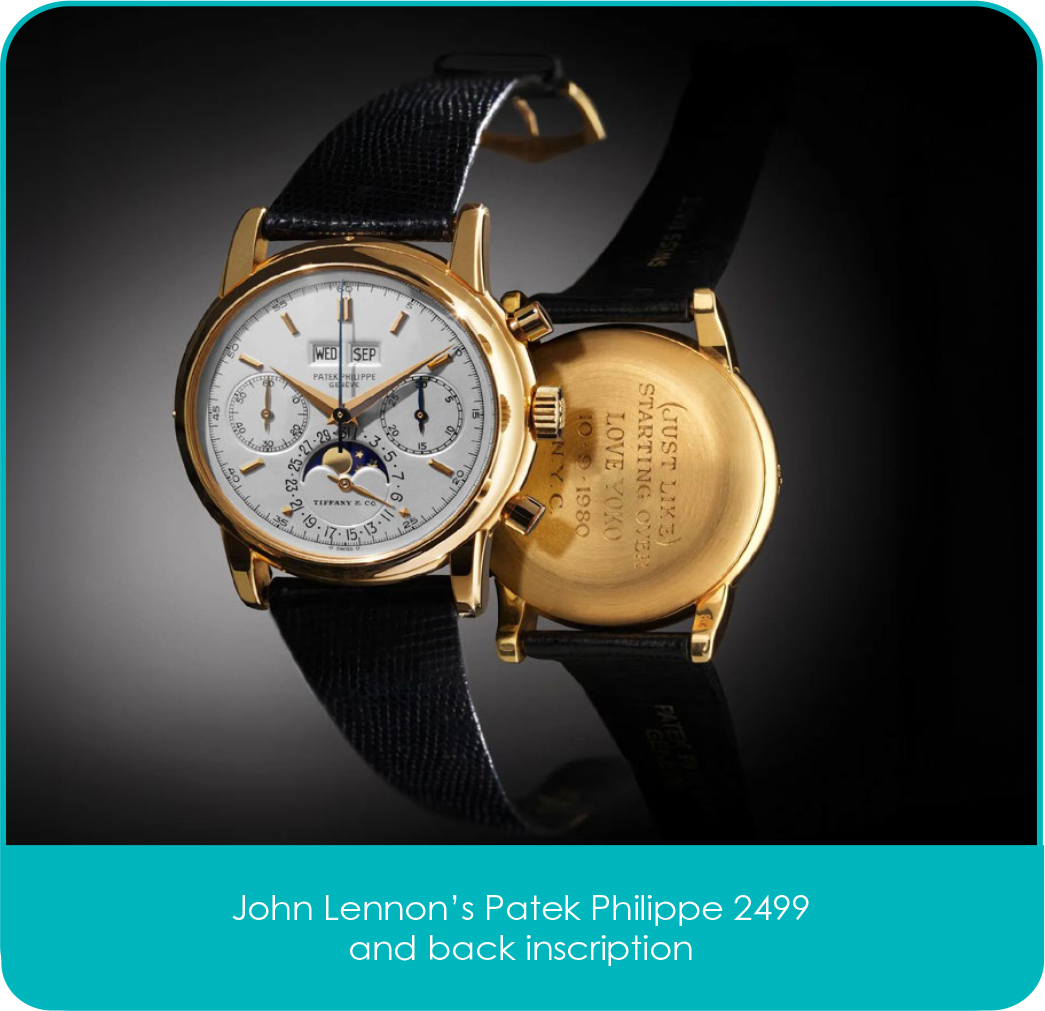
Set to eclipse the hammer price of Paul Newman’s Daytona if this wonderful piece ever comes to auction, John Lennon’s Patek Philippe has been at the forefront of watch news for the past six months. Famously missing for thirty-four years, this iconic and elusive timepiece is currently embroiled in a near-decade long court battle in Geneva between Yoko Ono and an Italian collector, who purchased the piece via private treaty from former German auctioneers Auctionata. Set to resolve by the end of 2024, the outcome of this lawsuit is eagerly awaited by collectors and watch enthusiasts alike.
John Lennon’s ref. 2499 Patek Philippe watch was purchased just months before his death, as a gift for his 40th birthday from wife Yoko Ono. She purchased the 4th series 2499 from Tiffany & Co. in New York – cased in yellow gold, with the retailer’s signature on the dial, and possessing a single personalised engraving to the case back, which rather eerily reads, considering that Lennon was murdered just three months later:
(JUST LIKE)
STARTING OVER
LOVE YOKO
10 • 9 • 1980
N. Y. C.
The reference 2499 by Patek Philippe on its own is an incredibly rare and highly sought-after timepiece. Only 349 examples of this reference were ever made within a 35-year production run. This reference is largely considered amongst collectors to be the ultimate Patek Philippe – combining singularity and exceptional craftsmanship. Replacing the 1518, this perpetual calendar chronograph features the triple subsidiary dial, day and date aperture and pushers to 2 and 4, all within a 37mm yellow gold, rose gold and the rarest of all platinum case (only two platinum 2499s were ever made).
Following Lennon’s untimely death in December 1980, the watch was recorded and placed into storage. It is purported that from here the watch was stolen by Yoko Ono’s former private driver, Koral Karsan who was later charged in 2017. In 2014 however, the watch was sold through private treaty by Auctionata for €600,000 to an Italian collector.
The watch was subsequently taken to Christie’s Geneva, who contacted Yoko Ono’s solicitor to enquire about the watch and its provenance. It was at this point, nearly 35 years later that Ono discovered the watch had been stolen. In 2015 a contest was raised, and the watch was placed in a ‘consignment-escrow agreement,’ with each claimant declaring their rightful ownership of the watch. Now, nine years later the case has reached its final appeal at the Tribunal Fédéral, Switzerland, against a verdict that Ono is the owner of the watch. The case is expected to be settled within the year.
As the watch and pop culture worlds wait with bated breath to see the outcome of this court case and the eventual trajectory of the piece, it is natural that the market is reactionary, meaning that regular valuations are essential for any watch collection.
Prices for Patek Philippe ref 2499 are amongst the highest for the brand and continue to grow – a combination of their rarity, exceptional complication and place in the zeitgeist. Whether Lennon’s watch does make it to auction or not, the infamy and journey of this exceptional timepiece will surely continue to bolster and uplift the value of these rare timepieces.


It’s April, and whilst the majority of us are looking forward to spring flowers and slightly milder days, a large portion of the country are looking forward to another yearly event – The annual bonus.
But if you thought that bargains were available in the post-Christmas sales on luxury watches, you couldn’t be further from the truth – despite the huge increase in production that Rolex, Audemars Piguet and Patek Philippe managed in 2022, there are still waiting lists, still a huge grey market and in fact a reduction in production of 2% for Patek Philippe and a whopping 10% for Audemars Piguet, whilst Rolex managed to keep a flat level inventory.
March 2022 seems a long time ago now, 24 months have passed, and the view of the wristwatch world has changed completely. When the inevitable price drops started to happen in April 2023, many people were surprised, but I think the general consensus was that there was no way that prices could rise exponentially in the way they had done for the previous two years.
Between March of 2022 and 12 months later, the Bloomberg watch index showed a huge drop of £15,000 from around £45,000 to £30,000, which clearly indicated the way in which the market was moving. Looking at the figures from this, however, indicated that those figures were dictated more by six figure Audemars Piguet and Patek Philippe watches losing almost 40% of their supposed secondary market rather than the middle ground of watches in the sub £100,000 market – yes ALL watches have taken a hit, but not to the degree of the absolute top end.

There are many reasons that the realignment of prices happened, not least the crumbling of bitcoin and the fact that most people had to go back to the office after COVID, the increase in production post-COVID, but also the concern of street crime. The fact that the BBC decided to cover the problem shows just how much of an issue it has become.
Right now, things appear to be levelling off though, in fact the prices of some watches appear to be increasing with the Rolex ‘Starbucks’ 126610LV actually increasing in value by 3.2% and completely bucking the trend for six figure watches. The Patek Philippe Nautilus Chronograph 5980/1R seems to be rallying at a 2.8% increase – which even I wouldn’t have thought possible.

What is great though is that the industry hasn’t laid back and decided to just ride out the storm, more and more amazing pieces keep coming out – not least the simply stunning Piaget Polo ’79, which to my mind WILL be the watch of 2024 and over the summer, everyone will be seen wearing it. What is fascinating though is that because of this new release, it has had a huge impact on secondary values of other Piaget watches, whereas before a slightly niche jewellery brand, it is becoming the watch word, metaphorically and literally.

Aside from the Piaget, other new releases include an ‘interesting’ collaboration between Victoria Beckham and Breitling, creating a range of Chronomat watches, that they hope will appeal to a lot of male buyers as well as ladies, which will be a tall order. Farer have released a lovely cushion shaped compressor style stainless steel wristwatch, which is as bold as they come, and in my opinion a bit of a bargain as well, and at the other end of the market the Swatch x Blancpain ‘Ocean of the Storm’ is creating a lot of waves and if you can find one for £350, I suggest snapping it up.


Whilst we all knew that the market for luxury watches could not continue after the booming nature of 2020-2022, scalping was rife, and speculators were buying up watches as business assets and in turn driving up the price of average watches such as Rolex Submariners, Datejusts and GMTs.
Let’s not be coy though, the vast majority of Rolex, Audemars Piguet, and Patek Phillipe watches will still be a long way from being a ‘spur of the moment decision’ – one cannot simply pop in to one of these brands boutiques and expect to walk out with a shiny box. There has been good news, however for those wanting to purchase one of these ‘grail watches’ in that the availability that is reducing those prices is actually meaning more clients are finally getting those watches that they have been waiting for. The most up to date figures are showing that 1.6 million Swiss watches are being exported every month this year so far, which is a huge number compared to even six months ago.

89 of Rolex’s current models, or pretty much 80% of their catalogue still trade at above retail price meaning that anyone is still insured for the figures that they either bought for, or worse what they think they could buy a replacement for.

Patek Phillipe has always been a strange entity in this area as a significant amount of their watches have never actually had a strong performance on the secondary market – the complications models for example have never had the huge presence that the Nautilus, or Aquanaut did, and for the most part still have. That being so Patek Phillipe still have 43 watches sitting above retail, which represents 48% of the total models they currently sell, which if anything is a bigger indicator than the Rolex figures. Audemars Piguet were, and still are to many collectors the ‘definitive’ boom watch, and despite the recent value changes have 34 watches above retail, coming in at a whopping 71% – again let’s not forget that AP still sell some stunning dress watches, that despite complications and amazing craftmanship – drop like a stone on the secondary market.
From these figures, it is clear that the market still desires certain models, and the availability of them (or lack thereof) has given the market such a huge boost over the last few years, that it’s still going to be difficult to purchase these watches from retailers for quite a while yet, and as we all know outside of the handbag market (see my other articles) the luxury watch market can dictate who buys their wares, when they buy them, and where they are purchased.
So, what happens now? For the last three years the market has been allowed to release watches that instantly have sold out, or instantly on back order – which to be honest in some situations, have not been the most inspired of choices, with very slight variations on a theme – but instantly worth at least a 25% uplift on the retail price, just because of the desire to own anything by a specific brand.
Whilst nobody can predict the future, I would say that more watches will be sold as a result of the drop in prices, and more customers will be happy to spend the kind of money that one might seem more reasonable for a luxury watch – without the premiums that we have been used to, and even become accepting of.
What we have seen in the last few months is a great array of further interesting models, not least the latest ‘disruptive’ model from Swatch X Blancpain.

When the model was mooted, and then launched, I for one was flabbergasted that a serious heritage brand like Blancpain would even consider such a collaboration – especially after the recent MoonSwatch, but after much consideration, and in fact purchasing one of them I can see where the sense comes from – it has raised the profile of the brand and where many people had not even known Blancpain (including the majority of purchasers) now they can legitimately long for one of their normal range, with some experience of the marque.

What other collaborations will arrive – we can only imagine, but I am fairly sure Swatch can’t be the only player in this game for too long, and other brands will be looking at this fairly exclusive market contemplating the six figure sales that could ensue…..
Well, what a year it has been in the watch world – from the Patek Phillipe Nautilus almost becoming a quarter of a million-pound stainless steel watch…. to thousands of people all around the planet fighting for a £200 Swatch, there couldn’t have been more ups and downs, even if you were writing from Downing Street.
2022 started as 2021 finished, with soaring prices for the most unavailable watches on the market; the Nautilus, Hulk, Royal Oak, Daytona, Aquanaut and many others, all trading at, so far, above their recommended retail price, that it almost became laughable. The secondary market was booming and I, personally was giving valuations on some watches on a monthly basis, due to the fluctuations we were experiencing at the time.

When the market changed, in April/May of 2022 we knew that prices were going to drop – and to be honest, I anticipated a heavier drop than we saw, with some in demand watches still trading at three times their original price in December. Hopefully collectors who bought in the last 2 years are still looking at long term investment pieces.
The Omega Speedmaster has long been regarded as one of the ‘go to’ pieces to have in any major watch arsenal. Its rugged good looks, sensible size, and moon landing history have given it more than half a century of desirability, and last year it was even more desirable than ever – but not in a way that die-hard mechanical watch fans would have anticipated….
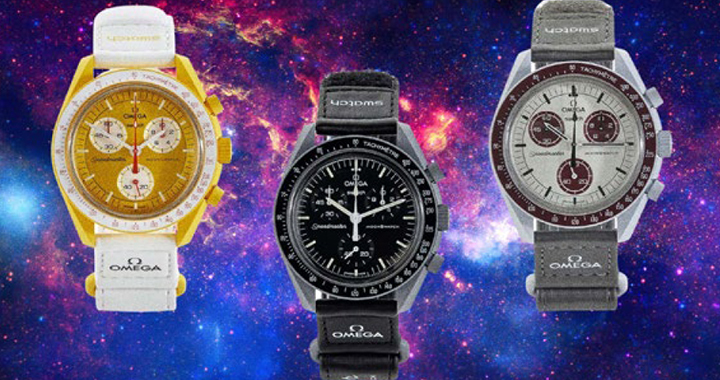
The ‘Moonswatch’ was released in 2022, with possibly the biggest marketing push that anyone has seen for a watch, blending the aesthetics of a traditional Omega Moonwatch, and the inexpensive practicality and sense of fun that Swatch have done peerlessly for many decades. The result caused uproar around the planet with near riots in London and Paris, and police being called to many other cities. The most desirable watch on the market for the year was actually a £220 plastic quartz watch, and with nowhere near enough examples, the secondary market went wild with certain examples reaching 10 times their retail value, with people camping out to buy one and then unashamedly selling them the next day on internet auction sites.
Thankfully, this market has calmed a little, with Swatch assuring potential customers that this is not a limited release and eventually there will be enough to go around. But as I write this in January 2023, it is still very difficult to get hold of an example, with some models virtually impossible.

We saw new releases from many of the major house, with Rolex continuing their theme of fancy dials and variations on classic models, such as a left handed version of the GMT Master II. Due to its green and black ceramic bezel, playfully nicknamed ‘Spirte’ or ‘Destro’, caused quite the stir when it was dropped, somewhat trading at over twice its original retail price, from £22,000 to even £30,000, its been one of last years unexpected stars – but if it has Rolex on the dial, it can never be that unexpected.


After the 5711 Nautilus was discontinued the options available to Patek Phillipe were probably immense – how could they change what has become one of the most desirable watches of the current era, if not any era? Well, they were bold! The 5811 is now 1mm bigger than the watch it replaces. I suppose the question is why would you change a winning formula and this proves that.

So, what does 2023 have instore for us?
I believe that whilst all the major brands are going to continue releasing ground-breaking watches with possibly a major offensive of movements, I think that some older watches are going to begin to fall into the modern vintage category and such classics as the much overlooked 16710 GMT Master from 1989-2007, becoming more desirable and prices increasing. There will undoubtedly be some surprises – look out for changes in the Daytona line, as this has been mooted for quite a while now.
Will prices rise or fall?
This is always going to be the question that everyone asks me, and as a valuer, it would be unprofessional to speculate. Whilst 2022 saw prices drop, they were still at the same kind of level they were 12 months ago, so that brings a distinct amount of confidence in watches as a commodity. The demand is still there and will continue to grow as people become more interested – needless to say 12 months is a long time in the watch industry!
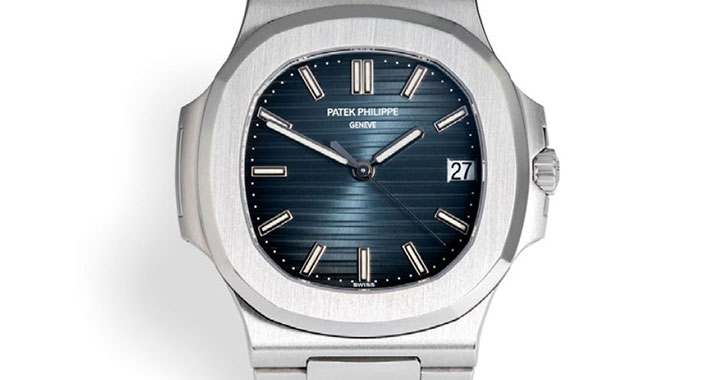
Let’s not beat around the bush, one of the most common watches that I have to value is the now almost immortal Patek Phillipe Nautilus 5711 and again one of the most common questions (or statements) is that the value is plummeting but let’s just have a quick look at the facts here – if you bought your watch any time before Christmas of last year, it’s still probably going to have to be insured for more than you bought it for. The timeline of this watch is probably the most extreme, and well known of any of the mid pandemic boomers so let’s just have a look at the statistics;
In November of 2019, these watches were in demand and trading above their retail price, and this flexed around the £50,000 mark with occasional spikes and troughs.

Then when COVID-19 decided to appear, suddenly things started getting extreme with Patek also announcing that they would be ‘Discontinuing’ the watch and around November of 2020 12 months on, they had pretty much doubled in price to a £100,000 watch.
March of 2021 and things had just got to a stage where asking prices were up to nearly £200,000 for what is a stainless-steel sports watch, I even knew of some trading around the £180,000 for sealed examples, which in my opinion is a bit of a nonsense anyway.
Today’s market has changed and now in the summer of 2022 the 5711 has taken a retreat and is currently sitting at around the £150,000 – there are fluctuations and deals being done, so this is a fairly liberal figure so yes, it has lost some value but ultimately those prices could not carry on rising – people were at one stage tipping the Patek to be a £250,000 watch, which quite frankly would have been amazing.
In the same breath, we can also talk about the other big hitter in this market, the Audemars-Piguet Royal Oak – similar style, similar quality and similar demand. A fairly similar course of events has occurred and now a good AP Jumbo can be bought on the secondary market for £90,000 when back in those days of Zoom calls and toilet paper shortages you would be paying closer to £130,000 – still, let’s not forget that this was a £35,000 watch.

So, is the whole market in decline? Absolutely not.
Rolex are still playing the field and keeping their desirability levels at an all-time high…is this because they are slightly more ‘affordable’? possibly. Is it because they are releasing more interesting variations on their ever-expanding roster of watches? Probably.
So why is this happening? The common thought thread seems to be a mixture of the potential economic issues that may or may not be coming into play over the next year, and the other big factor is the massive decline of crypto currencies.
At one time a gold Nautilus went with a large wallet of Bitcoin and Ethereum like it did with a very noisy Lamborghini (usually on The Kings Road) whereas now you are more likely to be heading to your local Casio store.
Whichever way we look at it, the watch market will always be volatile, it’s a luxury item that is really not just a watch, but a collectible, a piece of jewellery, a statement, a piece of art…
it’s everything.


The world of watches is not only a fascinating one, but also a frustrating one. For example in 2014 had I known that the world of Rolex sports watches would have become such a lucrative market place I would have purchased their entire stock and waited for the elevated position that their most desirable watches currently occupy.
There are of course limited runs of pieces that you always would like to own, but only when as it transpires, they are all sold out and you are late to the party – this is a classic situation with the Rolex Submariner with the famous green bezel…

The year was 2009 and a Rolex Submariner was known to be one of the most desirable sports watches on the planet with… wait for it, sometimes a waiting list if the authorised dealer of your choice didn’t have the model you required, fast forward to today – you would almost be laughed out of a dealer if you asked to buy a brand new Submariner – it is that popular.
Rolex had made a bold move, they had issued the fairly conservative Submariner with a green bezel. Instantly every Rolex aficionado let it be known how appalled and disgusted they were that such a great mark could do such a thing.
So, back to that year of 2009 when I happened to be speaking to a Rolex dealer, whom shall remain nameless when I was offered the ‘Kermit’ (I don’t think Rolex nicknames were such a big thing then) for the unimaginable price of £4,800, and if I took two of them then it would come with a discounted price of £9,000.
Fast forward to this moment in time and the green bezel Submariner is one of the most desirable watches on the planet, with similar incarnations such as the ‘Starbucks’ and the ‘Hulk’ offering buyers additional variations on a theme, with secondary market figures varying from £18,000-£25,000 each.
The next incident is actually ongoing and may well change over the next year, but currently one of the hottest pieces on the secondary market is the Swatch and Omega collaboration the ‘Moonswatch’. A ‘bioceramic’ (basically plastic) quartz watch in the manner of the Omega classic moonwatch.
Announced on the internet with 48 hours’ notice, the range of watches instantly became the most sought after item from either Swatch or Omega with Swatch boutiques having to close and call in for police security after mobs started storming the little shops all around the world – the demand was so huge they had to apologise.

Within hours the watches were appearing on secondary market sites for up to £3,000 – and considering this was a £200 watch, it seemed rather sad and cynical however.
The one thing that we can be sure of though is that the watch market will be constantly reinventing itself with new and different ways to attract buyers and collectors and as long as this keeps happening, no doubt I will always be looking to make sure no more items get away!