



| New | ||
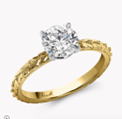 | 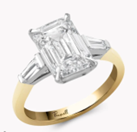 | |
| Pragnalls Jewellers 1.51ct - £18,000 | Pragnalls Jewellers 3.02ct - £74,650 | |
| Second Hand | ||
 | 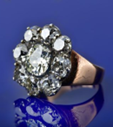 | 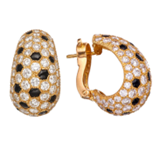 |
| Cartier yellow and white diamond cross over ring Wooley & Wallis auctioneers Estimate £4-6k Hammer £9.5k | Victorian antique cluster ring Harper Field Auctions Estimate £8,500 - £10,500, Hammer £28,500 | 1980's Cartier Panthere earrings $66,000 at Opulent Jewellers - USA |
The 2024 summer Olympics in Paris is the 33rd Olympics of the modern Olympiad and the third time that Paris has hosted the event; the previous occasions being in 1900 and 1924. Paris is only the third city to have put on the games three time, the other cities being London and Los Angeles.
This year approximately 11,000 athletes will be competing for the gold, silver and bronze medals awarded in each discipline. In the ancient games, Olympians received a wreath formed from an olive branch; and that only for the winner. Nowadays, there is something rather more substantive and enduring as a token of achievement.
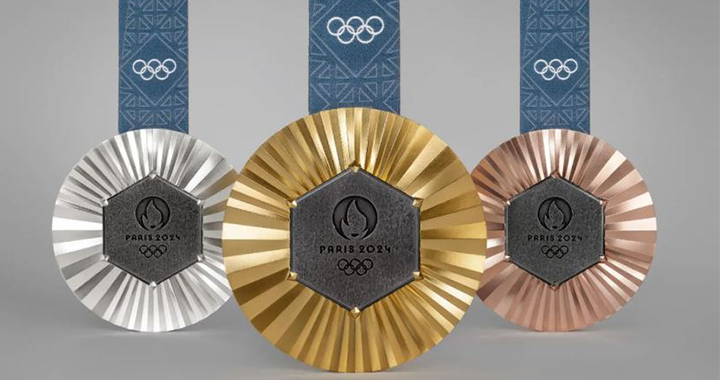
The design of the medals is the responsibility of the host city’s organising committee and varies with each iteration of the Games. The first Olympic medals in 1896 were designed by French sculptor Jules-Clément Chaplain and depicted on the obverse, Zeus holding Nike, the Greek goddess of victory; the reverse showed the Acropolis. They were made by the Paris Mint, which also made the medals for the 1900 Olympic Games and are responsible for this year’s medals. The medals for 2024 are currently stored at the Mint prior to of the start of the games.
The tradition of awarding gold, silver and bronze medals was first instigated at the Summer Olympics in 1904 in St Louis, Missouri, although competition place medals were retrospectively awarded to competitors in the 1896 and 1900 games.
It is the International Olympic Committee (IOC) which determine the physical properties of the medals. Although they were rectangular in 1900, in every other year they have been circular. Over time the designs have been honed, originally medals were handed out, then pinned to chests and then finally in 1960 they were hung around the neck; initially with a laurel chain and subsequently on a ribbon. The three tier victory podium was not introduced until 1931. Prior to this, medals were awarded at the closing ceremony with athletes wearing evening dress.
Until 1912, the gold medals were made of gold. This would be prohibitively expensive these days, but they are still made of silver gilt and at current prices the gold medals from the 2020 Olympics held in Tokyo in 2021 are worth about £630. The silver medals are made from sterling standard silver, which is 92.5% silver; and the bronze medals are predominantly copper at about 97% with zinc and tin alloy to give strength.
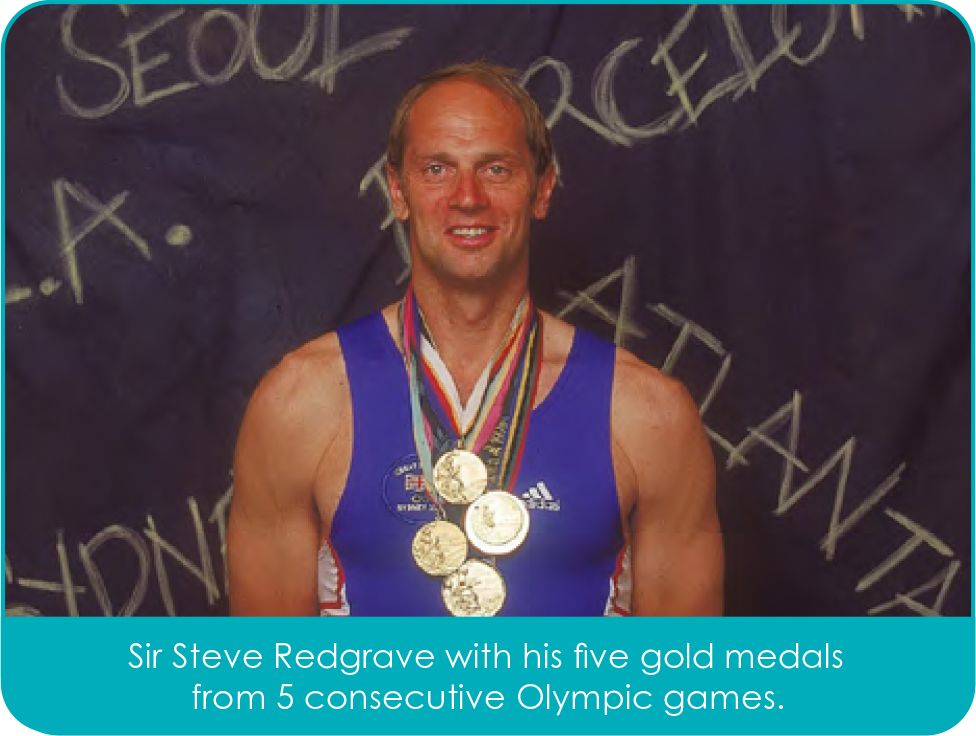
An Olympic medal is the pinnacle of any athlete’s career and monetary value is irrelevant compared with the physical embodiment of years of training, sacrifice and perseverance. That said, and without seeming crude, in our world we are sometimes required to put prices on the ‘priceless.’
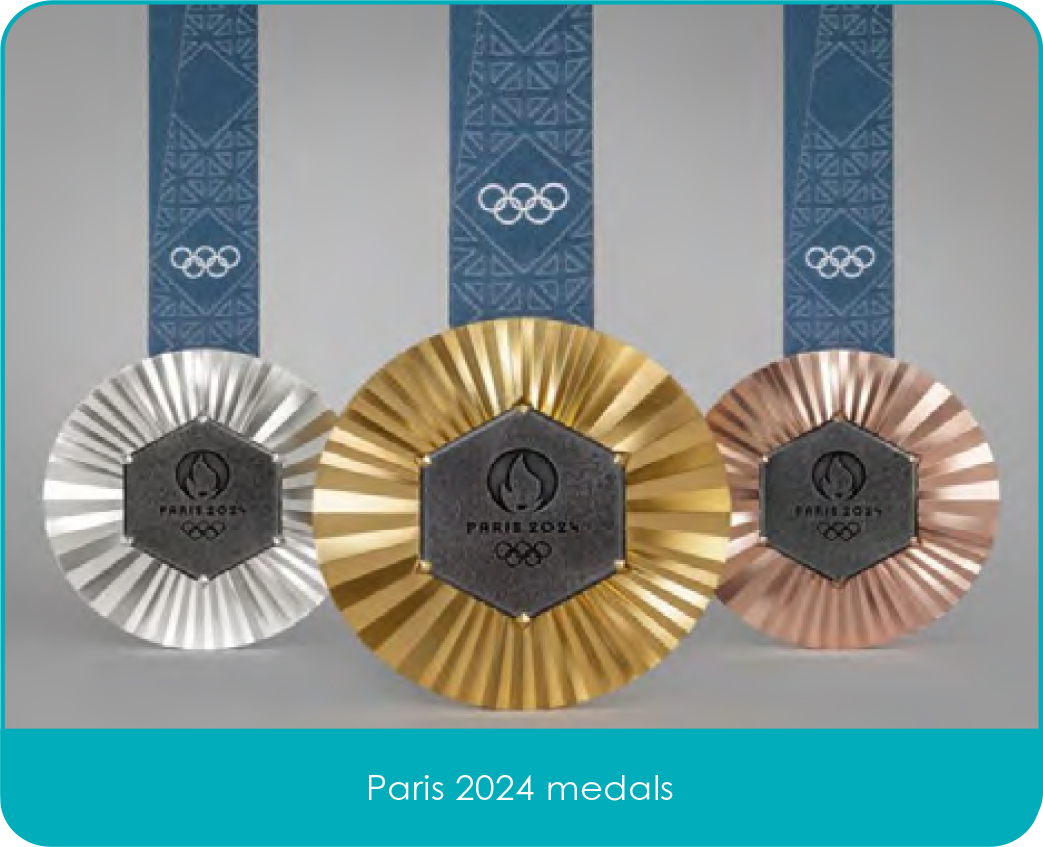
In Paris this year the successful athletes will be receiving medals that symbolise the motto of the modern Olympics, ‘ Faster, Higher, Stronger – together.’; medals made from gold, silver, copper, tin and zinc. I suspect however, that the athletes might view them as the embodiment of blood, sweat and tears.
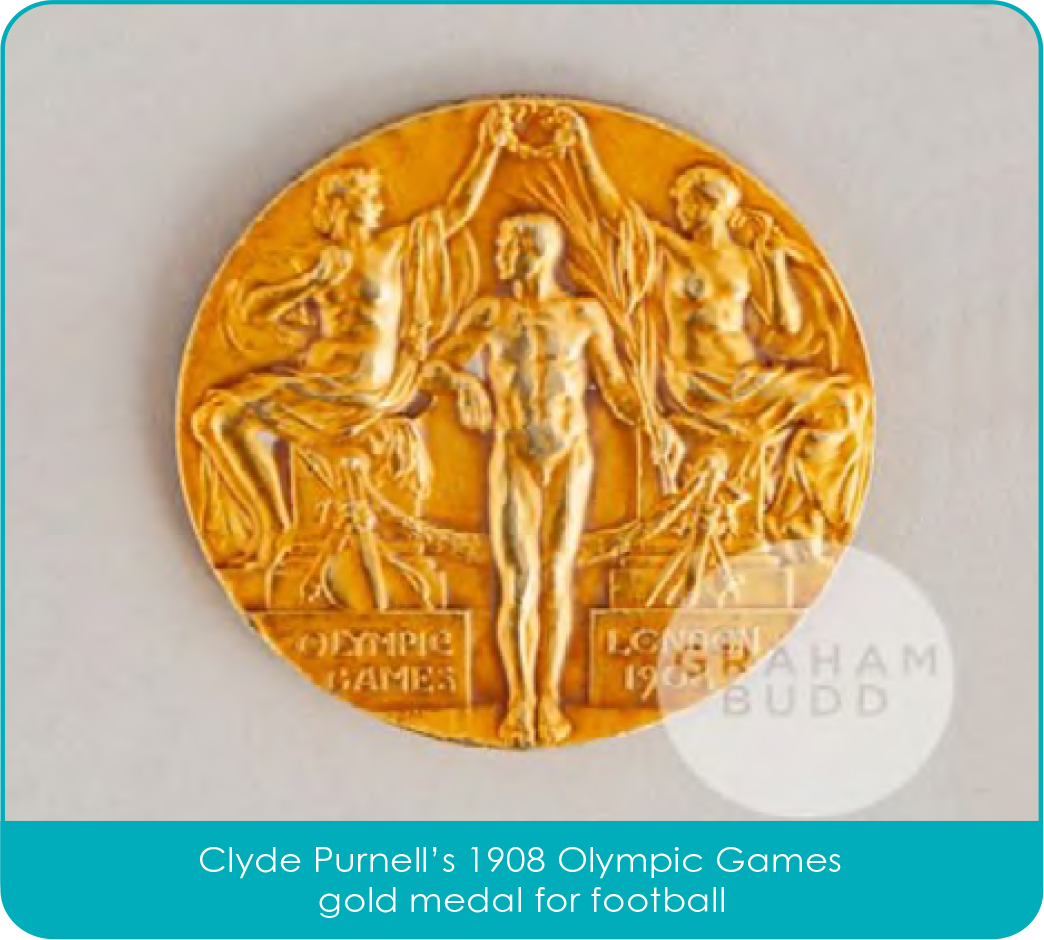
Clyde Purnell’s 1908 Olympic Games gold medal for football fetched £18,000 (plus premium) at auction in June 2024. This medal, produced prior to 1912, is made from 15 carat gold, but nonetheless the sale price far exceeds the scrap metal price, which is a little under £1,000.
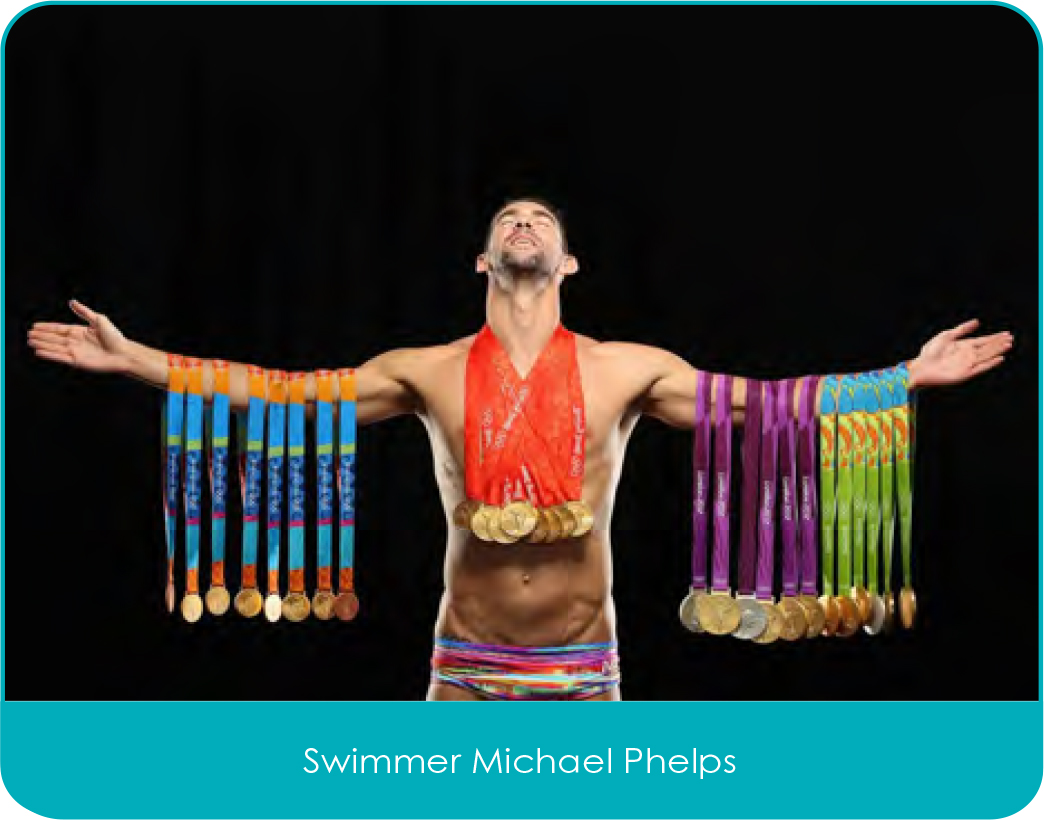
Swimmer Michael Phelps is the mostdecorated Olympian of all time. He has won 28 medals, 23 of which are gold. He has enjoyed being on the front cover of Sports Illustrated twelve times.
We wish all our Olympians ‘bon courage’ and enjoy Paris.
Read more on the history and memorabilia surrounding the Olympics.

It should come as no surprise to those who have read my previous articles that I would have chosen Cannes Film Festival for this week’s pick. A red carpet is always a good opportunity to see some of the most beautiful haute couture and jewellery which are inaccessible to most of us. Today I am looking at jewellery pieces by Tiffany & Co. worn by Camille Cottin – for whom I happen to have written a feature length jewellery heist screenplay.

As Mistress of Ceremony of the 77th Cannes Festival, and ambassador for Tiffany & Co., the spectacular French actress wore Tiffany Edge diamond drop earrings. These are set with 3.27cts of diamonds, mounted in platinum and 18ct yellow gold and retail for £32,800.

That same evening for the gala’s opening dinner, while still adhering to a very chic and elegant style, she sported another Tiffany & Co. suite from the HardWear collection.

Her neck was adorned with the Tiffany HardWear Graduated Link Necklace in yellow gold and pavé diamonds. It retails for £72,500 and is set with 9.07cts of diamonds.

The earrings en suite are set with 1.18cts of diamonds and retail for £15,800.

This particular jewellery line comes in white, yellow and rose gold, and can, as demonstrated the last few days, be worn to any circumstances, it really is a girl’s best friend.
The choice in design from Tiffany & Co. jewellery seems to resonate the theme of this year’s opening ceremony: women at the forefront of film and creativity. Camille Cottin’s speech mentioned #MeToo movement, the extraordinary Meryl Streep was awarded the Palme d’Or after a moving speech by Juliette Binoche, and Greta Gerwig (director of Barbie) was appointed President of the jury, six years after the last female jury president Cate Blanchett, in 2018. The HardWear collection says it all in its name and in its polished smooth and geometric lines. How could a jewellery collection be more perfect to echo both femininity and power.
To find out more about our jewellery valuation service, call us on 01883 722736 or email [email protected]
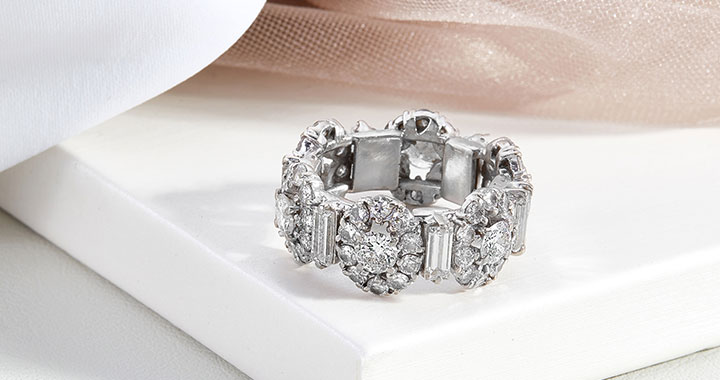
In an age where sustainability reigns as a paramount concern, the world of luxury is undergoing a profound transformation. Amidst this shift, an ancient practice finds renewed relevance: jewellery remodelling. Beyond mere aesthetics, this artful process breathes new life into forgotten treasures, championing environmental stewardship while indulging in the opulence of the past.
For those unsure of where to begin their jewellery remodelling odyssey, fear not – expert guidance from professionals like Lottie Leigh awaits. With a refined process honed over time, clients are gently ushered through the labyrinth of design possibilities. Even the most uncertain find clarity through collaborative visioning, discovering desires they didn’t know they had. It’s a journey of self-discovery as much as it is about transforming jewels, guided by passion and precision.
A Tradition of Elegance: From Aristocracy to Modernity
The art of jewellery remodelling is steeped in history, tracing its roots back through centuries of opulent adornment. From the courts of European monarchs to the palaces of Asia, this practice has long been a hallmark of aristocratic taste. Notably, the royal family has been a bastion of jewellery remodelling, with illustrious examples found in the treasure troves of the Princess of Wales. Pieces once cherished and now languishing in drawers find new life through thoughtful redesign – a testament to the enduring allure of sustainable luxury.

The Digital Canvas: Bringing Dreams to Life with CAD/3D Design
Innovation meets tradition in Lottie Leigh’s digital atelier, where dreams take shape with unparalleled precision, all driven by you. Here’s how Lottie facilitates this process: Through the marvels of CAD/3D design, you, as the client, assume full control, meticulously crafting every detail of your envisioned piece. Imagine this: a 360-degree image displayed on a screen, granting you the ability to explore and refine your creation to perfection.
But it doesn’t end there. Once your design is finalised, Lottie employs 3D printing technology to materialise it. This means you can not only see but also physically try on your design, ensuring it aligns seamlessly with your style and preferences. After all, being able to see and try on the design before anything is made is paramount. How can you truly know you love something without experiencing it firsthand?

This transformative tool not only streamlines the design process but also transcends geographical barriers, enabling seamless remote collaboration from inception to completion. It’s a modern twist on an ancient art, where imagination knows no bounds.

From Old to New: Trading Unworn Treasures for Fresh Beginnings
For those seeking to breathe new life into dormant jewels, an option exists to trade and upgrade unworn gemstones. Whether it’s diamonds, sapphires, or emeralds or other precious gems, these forgotten treasures find new purpose in bespoke creations. This exchange not only revitalises collections but minimizes environmental impact, aligning with the ethos of sustainable luxury. It’s a journey of transformation – a testament to the timeless allure of reinvention.

In the tapestry of luxury, jewellery remodelling stands as a beacon of sustainability and elegance – a testament to the enduring allure of heirloom treasures and the boundless creativity of human ingenuity. From the hallowed halls of royalty to the ateliers of modern artisans, this artful practice bridges past and present, leaving an indelible mark on both history and the future. As we embark on this odyssey of remembrance and renewal, may each jewel shine brightly, a testament to the timeless union of luxury and sustainability.

Doerr Dallas are delighted to have Lottie share her knowledge and expertise with us and our client base. Many of us have pieces gifted to us by our family members that are sitting in drawers that sadly we do not wear as fashion changes, so having an option to redesign is wonderful.
It is always important to remember that once you have ‘redesigned’ a piece of jewellery the need for re-valuing becomes more important. At the moment, with jewellery prices on the high street increasing; the price of gold going up daily, we are recommending to our clients to update their jewellery valuations if their current valuation was over two years ago.
To arrange a jewellery valuation give us a call on 01883 722736 or email us on [email protected]
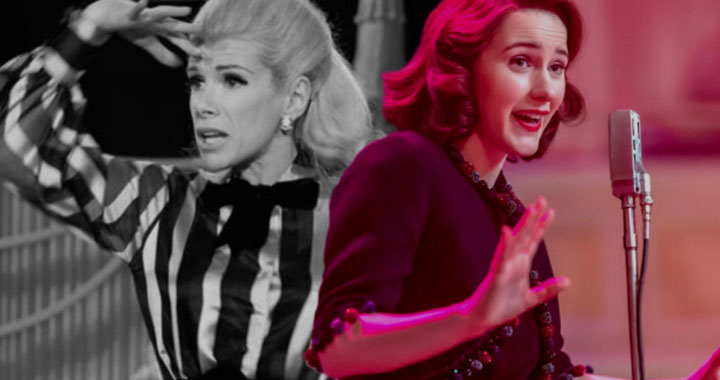
I recently finished the multiple award-winning show The Marvellous Mrs Maisel. And if you haven’t seen it yet, you know what you’ll be doing straight after reading this article!
The main character, Midge Maisel, played to perfection by Rachel Brosnahan is based on Joan Rivers.

Other characters are real, such as Lenny Bruce, others fictional. Created by Amy Sherman-Palladino, it portrays women’s experiences in the mid-20th century, focusing specifically on a young Jewish woman trying it to make it on the comedy scene.
The series is mostly set in the late 50s and 60s and the costume and jewellery are divine. Costume designer Donna Zakowska created a dream wardrobe for all the characters, earning her awards for her creativity.

Not only are the dresses and jewels visually stunning, they add and carry the story, they are a story of their own. Today I will look at the pearls used in the series and especially one set of doublestrand cultured pearls which Mrs Maisel wears for her first official stand-up at the Gaslight Café (a sticky downtown New York club where the great Joan Rivers also performed).

In this moment she experiences great success, slightly undermined by some misogynistic remarks, then put to right by her estranged husband, and the outfit is perfect and effective. A black dress complemented by a pearl necklace.
The double-strand is strung and knotted with 6mm peach cultured pearls. The pearls appear to be uniform in shape, colour and lustre.

And when looking to purchase pearls, these are the most determining factors in assessing pearl necklaces. In this scene, the choice of colour sends the message of softness, being peach and not gold, and also lets us extrapolate that she could become very successful in the future, the pearls being almost golden. Mrs Maisel and her success shine thanks to the peachy colour and also due to the pearls’ lustre. Lustre measures the rate of light reflecting off the surface of the pearl and the sharpness of reflection visible on its surface. We often describe these as poor, fair, good and excellent. The better the lustre, the more radiance and glow they emit.
The pearls are also well matched and round. Their shape in this scene is key. She is trying to make a name for herself in a male dominated industry, all the while maintaining and celebrating her femininity and exposing her marital instability and struggles as a mother. The roundness works brilliantly.

Though the above baroque pearl necklace comes with a generous price tag of £7,500 they would have sent a very different message than perfectly round pearls.
It was common practise to have faux pearls at the time and they were very effective. In today’s market they do not have any value. The costs of cultured pearls vary greatly depending on the factors mentioned above, amongst others. But essentially, their value depends on what they mean and signify to the wearer.
To arrange a jewellery valuation call us on 01883 722736 or email us on [email protected].

Since ancient times silver and gold have been highly regarded for their natural beauty, as well as their intrinsic value but why is there such a discrepancy in their values?
Gold has always been seen as a display of wealth, as far back as ancient Greece and Rome the homes of the nobility held impressive collections and women were adorned with exquisite jewellery. A fine example is the pendant below, discovered in Crete in 1930.

For every eight ounces of silver that is mined only one ounce of gold is extracted.
The mining of gold is hugely challenging, as well as expensive. Expertise in many areas is needed, including geology and engineering. In fact, less than 0.1% of prospected sites will lead to success with often a wait of up to twenty years before a discovered mine will produce material for bullion.
The spike in the price of gold during the Coronavirus pandemic of 2020 wouldn’t have come as a surprise to many, in times of economic crisis and catastrophic world events the investment in bullion can be viewed as a ‘safe haven’.

This small 18ct gold case sold at auction for £5,437 in February 2020, working out at £787 per ounce.
As the year progressed and the pandemic hit, gold prices peaked at £1,555 per ounce in August. Had this sold that summer it may have achieved over £10,000.

Also sold in early 2020 was this fantastic Victorian silver table bell achieving £5,062. At only 16cm long this shows how unusual items of vertu are sought after by collectors. Highly celebrated makers like Paul de Lamerie will always be popular but fashions have changed over the past twenty years. Mass produced items like tea services and salvers sell at scrap price, whereas areas such as mid-century and Danish silver continue to rise.
Gold will continue to be the favourite for investment due to the potential for high gain. Investment in silver can be prudent if only you can predict the fashions of the future!
At the time of writing this article the gold price was approximately £1,600 per ounce, silver £18 per ounce.

Believed to be a gift from God, diamonds were first discovered in India in the 4th Century BC and were recognised for their hardness and strength. They were worn as adornments to ward off evil and provide protection in battle. Diamonds were also used as a medical aid; thought to cure illness and heal wounds when ingested. This was later dismissed, and it was thought that diamonds were highly poisonous; a rumour introduced to stop miners stealing diamonds by swallowing them.
Up until the 18th Century the only known source for diamonds was in India and their value was still considered much less than sapphires and rubies.
Alexander the Great opened a small trade between the East and the West in the mid-4th Century but it wasn’t until much later in the 14th and 15th century when diamonds entered Europe through Venice. They made their way north to Bruges, Antwerp and Amsterdam making these cities bustling diamond centres. It was at this point that European and Indian cutters begin to experiment with diamond cutting.
The earliest diamond cut is the point cut and was popular in the 15th Century. Cutters used diamond grit and olive oil to simply polish stones in their natural octahedral form. Olive oil was used due to its ability to tolerate the high temperatures caused by polishing.
Below is a diamond crystal in its natural octahedral form and a diamond ring set with multiple polished point cut diamonds.

Point cut diamonds are very rare as many of the original diamonds were re-fashioned as cutting techniques and styles changed. Here is an example of point cut diamond selling at auction for £11,000, well exceeding its pre-sale estimate of £1,800 – £2,400.

 In the mid-15th Century cutters designed the table cut diamond, they used the same polishing methods and simply removed the top point of the octahedral shape to produce a table.
This style of cutting possessed far better optical qualities than its predecessor, with greater brilliance and fire. It also displayed, when viewed from above, the impression of a table within a table, which fitted perfectly with Renaissance Europe’s love of classical proportions. The table cut became far more desirable than the point cut, which is why it is now rare to see examples of the point cut diamond as most were re-fashioned into the table cut.

Throughout the 16th and 17th century, variations of the table cut shape such as rectangles, triangles and tapered diamonds appeared.


Here are some more examples of diamonds with a table cut selling through auction.


The early 16th century saw the birth of the rose cut diamond. This made use of the flat rough instead of the octahedral crystal that we have seen so far. It proved the most efficient way to retain the weight of a flat crystal. The flat bottom and faceted domed top proved much more effective at displaying brilliance but not fire.


 After developing and perfecting table and rose cuts, European cutters started to experiment with new cuts and styles. Cardinal Jules Mazarin requested that cutters in Europe designed a faceted diamond. The result was a cushion shaped diamond with 34 facets called the Mazarin cut, also known as the double cut.

 The mid-17th century saw the introduction of the single cuts. Like the point and table cut, the single cut resembled the shape of the octahedral rough. It also displayed more potential for brilliance than the table cut because it had more facets. This cut served as the basis for the modern brilliant cut and even today, the single cut is still used on smaller diamonds.

In the early 17th Century, the mines in India were running low on diamond source and European cutters needed more stones to continue experimenting with cuts. Luckily at this time, while miners were panning for gold in Minas Gerais, Brazil, a few odd crystals, and pebbles were found. Not knowing what they had discovered the miners used these stones to keep score during games of cards. It wasn’t until an official saw them that they realised that in fact it was a new diamond source.
The discovery of alluvial deposits in Brazil meant great things for the cutters in Europe. The diamonds rivalled those of India, and Brazil became the main source of diamonds for Europe.
At this time, Europe had a great desire to experiment and evolve the diamond cut, and there was an increasing interest in optical science. With the aid of advanced lighting and the modernisation of technologies, the developments of the first modern brilliant cuts could start to take place.
 The new rough from Brazil was used to create the first old mine cut also known as the Peruzzi Cut; this has the same number of facets as the round brilliant, but with a high pavilion it resembles a cushion shape. In 1750, a London jeweller called the new style of cut a passing fad and said the classic rose cut would outlast them all.
Today, antique cushion cut diamonds remain extremely popular and sell very well. Here are some examples – notice how almost all exceed their pre-sale estimates.


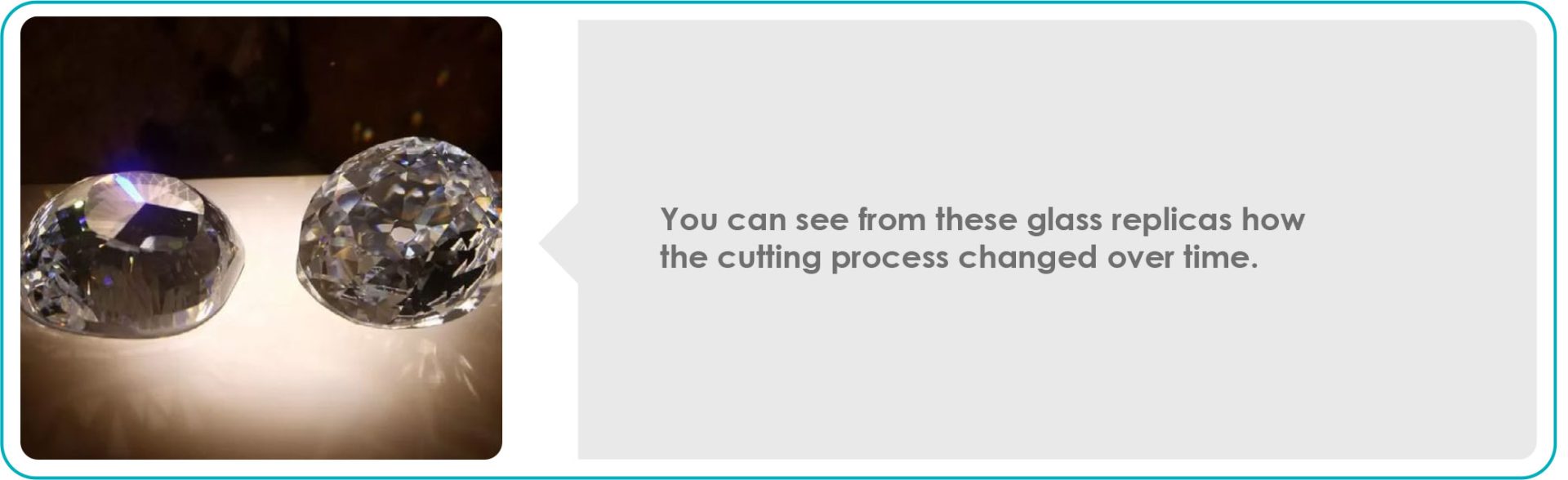
Years of experimentation with cutting led to the production of the modern brilliant. We can see examples of the modern brilliant cut being traced to the 1800’s. Henry Morse had been trying to achieve the optically efficient cutting design. It was however Marcel Tolkowsky in 1919 who published his PhD thesis called Diamond Design. This used mathematical calculations that considered how to display both brilliance and fire in a diamond. Tolkowsky understood that if a diamond was cut too shallow or too deep that the light entering the stone would leak out of the side; this discovery was achieved by systematically analysing the optics of a diamond. Although this was revolutionary for its time, there have been other claims on the perfectly proportioned diamond. In 1940, Eppler produced the European Cut and later in 1970 The IDC (International Diamond Council) also produced a set of ideal ranges.
Compared Results

These differing proportions are all aiming to show the viewer the perfect amount of brilliance and fire. Brilliance is the reflection of light from the back facets when viewed from the top of the stone. Fire is the splitting of white light into the spectral colours as the light passes through inclined facets.


Altering the angle of the crown will affect the balance of brilliance and fire.


Fancy Cuts
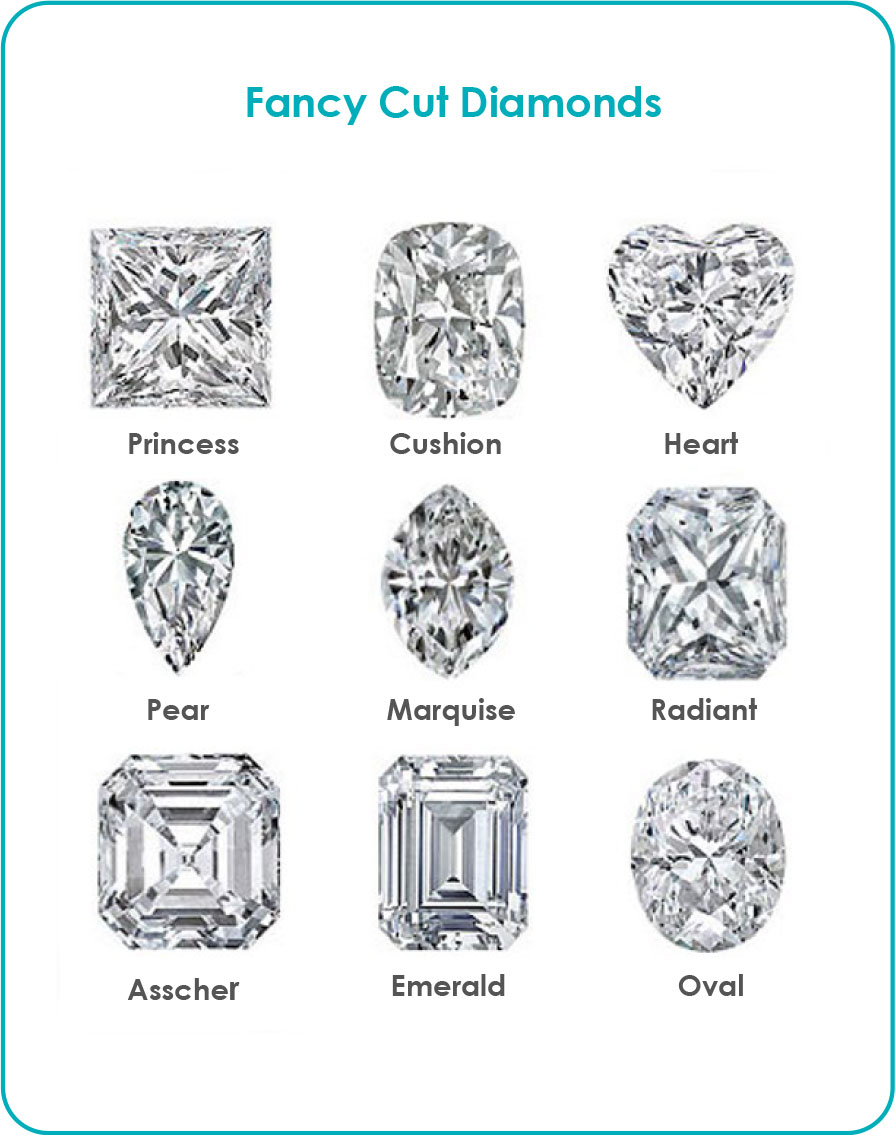
In more recent times we have seen variations of the round modern brilliant cut diamond. Cutters have applied the same perfected proportions displaying great amounts of fire and brilliance and applied them to the Pear and Marquise cuts. The Pear and Marquise cuts have been around for centuries but never before displayed the optimum optical properties. Furthermore, this led to the production of more fancy shapes in the brilliant cut; heart cut and princess cuts are now examples of this. Triangular diamonds cut in this way were even named the Trillion cut.
With many attributing factors that have been considered in the cutting of diamond throughout its evolution; from a polished octahedral crystal through to the brilliant cut diamond displaying fire and brilliance, I wonder what the next seven centuries will bring. Will our future generations look back and consider the brilliant cut diamond a primitive design compared to what this stone, advanced technologies and creative cutters achieve in the future?
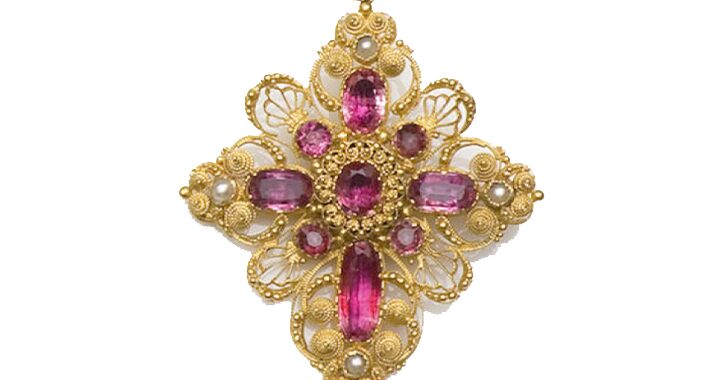
The word filigree derives from Latin “filum” meaning thread and “granum” grain. It is a form of intricate metalwork, usually made of gold or silver. The Latin words gave filigrana in Italian which itself became filigrane in 17th-century French and shortened from filigreen in English.
The technique consists of using tiny beads or twisted threads, sometimes both, soldering them together or to the surface of an object, such as a bracelet or brooch for example. The result is a highly artistic and detailed work of art.
Its origins can be traced back to the Egyptians and along the coast of the Mediterranean. Archaeological digs have found the technique to be incorporated into jewellery dating as far back as 3,000BC.

“Necklace in gold filigree of Queen Twosret and earrings of her husband Seti II. Discovered with a cache of jewellery inscribed with the names of Seti II and Twosret in the Gold Tomb (KV56) at the Valley of the Kings, West Thebes.
The cornflower and ball beads in this necklace were made by soldering wire rings of several different diameters into the desired forms. The piece is an early example of the technique known as filigree. New Kingdom, Late 19th Dynasty, ca. 1292- 1189 BC. Now in the Egyptian Museum, Cairo.”
It was greatly used by Portuguese goldsmiths, using both gold and silver filigree.
The elaborate metalwork also included techniques such as granulation, wire and scroll.

The small beads are applied to the surface through heat with visible solder. This technique was used by the Etruscan civilisation of ancient Italy in Tuscany, western Umbria and
northern Lazio (700-300 BC). Its style was made famous with Etruscan revival jewellery, modelled after the ancient Roman empire. The most famous jewellery designer to create Etruscan Revival pieces was Castellani.

“The head in the form of a thyrsus, an ancient Greek stylised pine cone, with twisted wirework decorations, bearing Castellani’s double C’s hallmark on the base, all to a yellow gold pin, circa 1860, measuring 2.5 x 1.1cm, the pin measuring 4.9cm long, gross weight 4.7 grams.
A collectable stick pin in the shape of a pinecone, made in London around 1860 by Castellani. This charming pin features twisted wirework filigree decoration, a technique used in Ancient Etruscan jewellery, and would today make a perfect and eye-catching addition to a silk tie.”
Though it is an ancient jewellery technique, it is still frequently used in today’s jewellery, especially in Asia and particularly in Indian jewellery.
The technique should not be confused with cannetille. Filigree’s fragility and delicateness suggests lace, in a flat form. Cannetille has a 3-dimensional aspect to it, sometimes with added repoussé work to it – which is a method of hammering metal into relief from the reverse side.
There was a renewed popularity for filigree in Italia and France between 1660 to the late 19th century, with the fashion reaching its peak in 1830.
A decade later, the precise and time-consuming technique of filigree and cannetille had been replaced by repoussé, which offered a similarly inexpensive artistic and decorative way of setting stones.

Like many metalwork techniques, its origin is far behind us but its use and technique are forever evolving. It is understandable that this craftmanship would be a favourite for different cultures
and throughout time. Though some modern pieces of that style may be inexpensive, the cost of purchasing a traditional parure reflects the art and the know-how that is filigree.


“A fine Georgian citrine and gold parure, consisting of a necklace, a pair of earrings and a pair of bracelets, the necklace consisting of an oval-cut faceted citrine surrounded by a gold frame of foliate design, suspending three detachable drop-like pendants, each centrally-set with a pear-shaped citrine, all suspended by a double strand of tubular mesh chain with box clasp of similar
design, set with an oval faceted citrine, each bracelet with a clasp of similar design, each centrally set with an oval faceted citrine, to a gold mesh ribbon-like bracelet, the earrings of matching gold foliate design consisting of an oval-cut faceted citrine suspending a pear-shaped faced citrine, all mounted in yellow and rose gold, circa 1820, accompanied by original fitted box, the necklace measuring approximately 38cm long, gross weight for the suite 71.5 grams.” Selling for £37,500
The Brief: My Great Aunt Winnie has kindly gifted me £5K in her will. However she has also specified that I must spend it on something within my field of expertise, something that I believe will increase in value over the next five to ten years.
The Options:
My immediate thought is that I would invest it in gold. The gold price does fluctuate but over a long period of time it usually increases. As I write this, in the final months of 2020, the gold price is quite high. One of the reasons for this is because of the uncertainty in the stock market due to the COVID 19 pandemic, traditionally when share prices go down, the gold price goes up. My plan would therefore be to wait until the markets stabilise, which could take a year or two, to ensure I’m not buying gold at a price peak time. I would then go to auction and buy gold in the form of Sovereigns, chains etc., put it all in a safe for five to ten years, keep an eye on the markets and look for an opportune time to sell and hopefully profit on the investment. I wouldn’t sell at auction though because I would have to pay commission for the privilege. I would go to a jewellers/dealers who buys gold. Then tend to give you a better price per gram the greater quantity you have.
However, that all sounds very good but I wouldn’t get much enjoyment out of that experience. I don’t really wear plain gold jewellery so it would just be locked away and not looked at. Wouldn’t my Great Aunt Winnie prefer me to buy something I would actually wear and love? So my next thought is:
Historically the vintage jewellery of certain brands, such as Cartier and Van Cleef & Arpels, can hold and increase in value. Pieces made in the early to mid-twentieth century can be very desirable and sought after. Clearly it’s a piece by piece case and does not apply to all jewellery made at this time. The ‘rule’ doesn’t necessarily apply to more modern designer jewellery such as the Cartier Love bangle. If you do an auction house online search for these bangles you will see many examples come up. The market is pretty flooded with them at the moment and some of them are the amazingly impressive fakes that are coming out of Dubai, some of which are hard to tell from a genuine bangle if you don’t know what you are looking for.

Fake Cartier Love Bangle
There is also a bit of a myth that if the jewellery is ‘old’ it will naturally increase in value. Again it depends on the piece but generally this is not the case. I was recently asked to value a diamond bangle that had been marketed as ‘Georgian’ and ‘very rare’. However in reality it was a modern piece manufactured in India and was not as valuable as originally thought.
So I know I need to have my wits about me if purchasing at auction. Another question is will I actually find such a piece that is £5k or under because such items can command high prices.
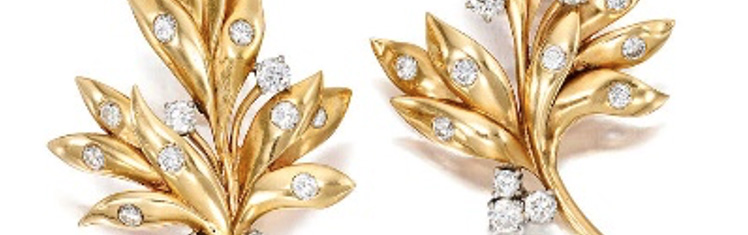
There are a lot of beautiful brooches out there, which were highly fashionable at the time but not so nowadays. I may be tempted by something like these earrings.

Cartier earrings c1970
They are by Cartier, circa 1970 and sold for £3,800 plus buyers premium. They are beautifully made, signed and numbered by Cartier and I would wear and enjoy them. However I may also be tempted to extend my search and try and find something within my price range that was made by Cartier slightly earlier.
Conclusion
I think there is more certainty of a profit in strategy one but more fun and enjoyment in strategy two. Which would you choose?