The Hobbit - J R R Tolkein

Tolkien and The Desk That Built Middle-Earth

Most desks live quiet, unremarkable lives. They support laptops, half-drunk mugs of tea, piles of paperwork that should have been dealt with last week, and the faint, nagging sense that today was meant to be productive but somehow wasn’t. During Covid we all became far more intimate with them than planned, and for a brief moment desks mattered again. But only just.

And then, very occasionally, a desk reminds us that furniture is not just furniture.

That happened on 11 December 2025, when the desk belonging to J.R.R. Tolkien crossed the rostrum at Christie’s in London. A stubbornly brown, resolutely Victorian piece of furniture – the very sort of thing television programmes have spent the last two decades ridiculing – realised £330,200 including buyer’s premium. The estimate? A modest £50,000–£80,000. The hammer fell at £260,000.

Now, I should be clear: I have never read The Hobbit. I have never worked my way through The Lord of the Rings. I’ve also never watched Star Wars. Cultural gaps aside, you don’t need to be a devotee to recognise when something of genuine weight enters the room. When an object so closely tied to the creation of modern mythology appears at auction, it is never going to slip by unnoticed.

What is perhaps most interesting is how Christie’s chose to present it. There was no overwrought language, no misty-eyed fantasy, no talk of magic or destiny. Just facts. A late nineteenth-century mahogany and satinwood roll-top pedestal desk. Green leather writing surfaces. Visible wear. Photographed in Tolkien’s Oxford study in December 1955. Documented as being in use during his tenure as Merton Professor of English Language and Literature.

J R R Tolkein in his office

Crucially, this was not a desk that happened to be in the background of a famous life. It was a working surface. It sat there while The Lord of the Rings was revised, proofed, argued over in correspondence and finally released into the world between 1954 and 1955. This was not décor. It was machinery.

Tolkien himself doesn’t require much introduction, but he does benefit from occasional recalibration. Born in 1892 and dying in 1973, he was not some whimsical fantasist sketching elves between lectures. He was a philologist to his core – a man who believed that language didn’t describe reality, but created it. From that belief came The Hobbit in 1937, The Lord of the Rings nearly twenty years later, and a legendarium so dense it would only be fully revealed after his death.

Tolkien's Desk
Tolkien’s Desk

He worked slowly. Obsessively. By hand. Revising, reworking, refining. Building a world with the texture and weight of genuine history. That kind of work does not happen perched on a sofa with a laptop balanced on your knees. It happens somewhere solid. Somewhere stable.

This is the point at which the desk stops being an interesting curiosity and starts being important.

Good furniture shapes behaviour. It dictates posture, endurance and pace. Tolkien’s desk was never designed to look good on camera or flatter a room. It was designed to take the weight – manuscripts, maps, reference books, cigarettes, ink, the physical detritus of long intellectual labour. It encouraged duration rather than speed. It assumed seriousness.

In an age obsessed with frictionless creativity, standing desks and immaculate workspaces, it is almost jarring to be reminded that one of the most influential literary worlds of the twentieth century was built slowly, at a desk that made absolutely no concessions to fashion.

Strip away the provenance, however, and the romance collapses instantly.

Without Tolkien’s ownership and documented use, this is just a Victorian pedestal desk. Perfectly functional. Mildly handsome. Entirely unremarkable. Comparable nineteenth-century mahogany or oak pedestal desks, lacking literary association, regularly sell at auction for hundreds, not hundreds of thousands. However the retail price for these items is much, much higher and should always be insured as such.

The gap between those figures and £330,200 has nothing to do with craftsmanship. It is about meaning.

Tolkein's Merton College desk - sold at Christies December 2025 for £330,200
Tolkein’s Merton College desk – sold at Christies December 2025 for £330,200

And that is precisely why this sale matters. The Tolkien desk did not achieve its price because someone famous once brushed past it, or because it sat politely in the corner of a notable house. It achieved it because it was demonstrably used, over decades, in the making of work that reshaped global culture.

It tells us something uncomfortably unfashionable about how creativity actually happens: slowly, physically, somewhere specific. Brown furniture, long written off as dull, irrelevant and unwanted, turns out to have been quietly winning all along. It doesn’t chase relevance.

It doesn’t need reinvention.

It waits.

Lalanne - Rhinocrétaire I

From Decorative Curiosity to Record Breaker: The Lalanne Phenomenon

The world of art and design is not only a fascinating one, but also a deeply confusing one. At certain moments it behaves logically, almost politely, and then at others it veers off into territory that makes you question whether everyone else knows something you don’t.

François-Xavier Lalanne sits firmly in that second category.

A few years ago, in the middle of Africa, I had my first proper encounter with Lalanne in the most bizarre setting (which I can’t divulge, for reasons that are fairly obvious once you’ve been in the art world long enough). In front of me was a stunning group of ornithological lamps; birds, perched and poised, somehow both whimsical and utterly serious at the same time. And what blew me away wasn’t just the construction (which was superb), but the perceived value. Even then, they felt expensive in that slightly irrational way that makes you laugh and then immediately stop laughing when you realise someone will pay it.

Fast forward to now, and they haven’t just risen…they’ve rocketed.

There was a time when Lalanne was viewed as charming, slightly eccentric, and firmly decorative. Interesting, yes. Collectable, perhaps. But hardly the sort of thing you’d expect to see breaking records, causing bidding wars, or being discussed in the same breath as blue-chip contemporary art.
Fast forward again to the world we currently live in, where a bronze hippopotamus that doubles as a bar has sold for more than £25 million. At which point you have to pause and ask yourself: what exactly is going on here?

So, let’s rewind.

François-Xavier Lalanne was born in 1927 in Agen, France. He trained as an artist in Paris, studied sculpture seriously, and in one of those details the market loves in hindsight, worked at the Louvre as a museum guard in the late 1940s. Which feels quite fitting really, an artist who would go on to make objects that sit somewhere between art, design and pure theatre.

In the early 1950s he met Claude, who would become his wife, collaborator and the other half of what the world now neatly packages as Les Lalanne. (Collectors love a neat label)

François-Xavier made animals. Sheep, rhinos, hippos, birds, bears… but these were not sculptures in the traditional sense. They were useful. A sheep could be a stool. A rhinoceros could be a desk or a bar. A hippo could open up to reveal shelves and bottles, like some slightly surreal butler that never speaks.

For years, this caused a problem.

Art people didn’t quite know what to do with furniture you could sit on. Furniture people didn’t quite know what to do with sculpture that stared back at you. So Lalanne existed in a comfortable but slightly vague middle ground; admired, discussed, collected quietly by those in the know, but not exactly treated like a headline act.

That changed. Slowly at first… and then very suddenly.

Collectors began to realise that Lalanne had done something quite rare: he created objects that were immediately recognisable, technically superb, limited in number, and utterly immune to changing fashion. A Lalanne doesn’t care what colour interior designers are pushing this season – It just sits there, being itself, waiting for everyone else to catch up.

And the market, inevitably, did.

In October 2023, Christie’s Paris sold Rhinocrétaire I (1964) a rhinoceros that opens to reveal compartments for €18.3 million including premium. That was the moment many people stopped saying “that seems strong” and started saying “perhaps we should have paid more attention.”

Then came December 2025.

Sotheby’s New York offered Hippopotame Bar (1976), a unique bronze hippopotamus commissioned by Anne Schlumberger. Estimated at $7–10 million, it sold for $31.4 million including fees. At the time of writing, that is the most expensive design object ever sold at auction.

A hippo. With a bar inside it.

I mean… who wouldn’t want one?

So, why is this happening? Because whilst the sums feel mad, the reasoning isn’t.
Firstly, Lalanne understood something most designers do not: that function does not dilute importance, it enhances it. These are not objects you hang on a wall and politely ignore. They occupy space. They dictate rooms. They become part of daily life. You don’t “own” a Lalanne so much as negotiate with it. It’s always there, quietly stealing attention from everything else you probably paid far more money for.

Secondly, scarcity matters. While Lalanne did work in editions, many of the pieces that people really chase are unique or produced in very small numbers. When you combine rarity with instantly recognisable form, you create the sort of object that multiple collecting disciplines want at the same time. Art collectors, design collectors, fashion collectors, and people who simply want the best example of something, all in the same room, all bidding…

That never ends quietly.

Thirdly, and this is crucial, not all Lalannes are equal. The market is increasingly selective. Smaller works, later editions, and less characterful models do not enjoy the same demand. The money follows the animals, the scale, and the confidence of the form. Sheep, rhinos, hippos, bears. Not everything… but the right things.

This is where people get caught out. Because someone hears “Lalanne” and assumes everything is gold. It isn’t.

Just like the watch world: not every Rolex is a Paul Newman Daytona, and not every Lalanne is a record-breaker. Condition, model, size, date, edition number, provenance, it all matters. A lot.

The prices achieved recently are not irrational. They are the logical outcome of limited supply, cross-category demand, and a growing appreciation that Lalanne created something that cannot easily be repeated. Plenty of artists can make sculpture. Plenty of designers can make furniture. Very few can make objects that sit so comfortably and so profitably between the two.

So yes, we now live in a world where a bronze hippopotamus is worth more than a lot of inner London houses. That may feel absurd, but markets are not sentimental. And as such, I wouldn’t be surprised if 2026 brings more Lalanne pieces to market with extraordinary prices achieved.

And those birds I saw in Africa… well, they’ve probably doubled again since I last thought about them.

Petit Échassier table lamp in patinated copper, gilt bronze, and glass.
Francois-Xavier Lalanne
Lampe Pigeon
Lampe Pigeon
Grand Échassier lamp-sculpture, made of patinated copper and bronze for the head, wings, and legs, with a frosted opaline glass body.
Blue polyester resin “Hippopotame I” bath and washbasin
François-Xavier Lalanne
Eames Furniture

Charles Eames – Elegance, Function, and Modern Form

“The details are not the details; they make the design”

Charles Eames is around you, he is almost omnipresent in the western world, and today it is likely that you have encountered some of his work, but you may never realise it or appreciate it – That in many ways is the definition of good design; elegance and function.

Eames LCW
Eames LCW

Time Magazine, in their infinite wisdom of consumerism once called the Eames designed ‘LCW’ moulded plywood chair, the ‘Chair of The Century’, and whilst I agree with the sentiment, I wonder if they chose the wrong piece – what the stipulations for such an award, I wouldn’t know. In my opinion the very well-known Lounger chair and matching ottoman are as about as iconic as a Cadillac, a Fender Stratocaster, or any other piece of mid century American design.

The lounger chair started life in 1956 when the already well respected designer wanted to create a chair that the encompassing comfort and feel of a baseball glove (see Joe Colombo for more on that!) and to have a piece of furniture that was not only aesthetically pleasing, but practical and comfortable, its construction using plywood and a cast metal base could have been used in almost a utility fashion, but instead it formed one of the most endearing designs of all time, with pieces seen in the homes of style icons, musicians, and in the 1990s being one of the key aspects of the American televisual institution that was ‘Friends’.

Eames Lounge Chair
Eames Lounge Chair

The chair was initially produced by Herman Miller in the United States, and Vitra within Europe. Its these original chairs that now command the highest figures with original ‘first generation’ chairs needing to be insured for close to £25,000 – even modern official pieces retail at close to £11,000 so making sure these items are covered correctly is vital. As with many iconic designs, there are licensed pieces, replica versions, and some pretty terrible fakes out there, so it’s very important to know which one you are sitting on.

Eames Aircraft design

Whilst the Lounger was of course iconic, there were many other projects that Eames worked on that many people just would not realise, for example; During World War II, Charles and Ray Eames were contracted to design leg splints for casualties – whilst this seems a bizarre connection, their knowledge of design and strength of plywood meant that they excelled at this and were later tasked with creating more items for the war effort including stretchers, pilots seats and even a plywood fuselage for a military aircraft. They were most definitely in their stride during these war year and the necessity to create reliable products, that were not only quick to produce, but cheap to manufacture and easily scalable during an increasing war effort towards the latter part of the war.

La Chaise
Eames La Chaise

The experience they gained during those years mean that their ambition for good design to available to the general public was now even more possible, the facilities and equipment available to them in the booming economy of the United States in the 1950s meant that it wasn’t unreasonable to expect a middle income house in Los Angeles to have many design pieces that were not just designed for style, but accessibility. One such piece was ‘La Chaise’, another iconic piece comprising stunning lines of moulded fibreglass in an almost shell like form, raised upon chrome stilts and an oak cross frame base – inspired by the ‘Floating Figure’ sculpture by Gaston Lachaise (you will notice the nod in the title of the piece) it was designed for the 1948 International competition for low cost furniture, and encompassing as much irony as furniture design possibly can is now retailed for close to £10,000 and originals should be insured for around the £30,000 mark – would this disappoint the Eames powerhouse of design, possibly but then one could say the same about all pieces of good utility design that become iconic; the Rolex Submariner, the Citroen DS, and many more items that appear in auction houses across the country.

The piece that defines Eames design for me though, is the Aluminium series office chair. As a 21 year old student growing up in Regency Cheltenham, I had never been exposed to such revelations as a fabric seated office chair that just oozed style and was incredibly comfortable. My then girlfriend, (herself an award winning furniture designer) bought one back to our apartment in Montpellier and subsequently, the following Christmas was rather lean… however 20 or so years on, she still has it and its escalated in value. Not to the extent of the major players, but still needs to be insured for £2000, with similar new chairs retailing around the same figure.

Eames Aluminium Series

The devil is always in the detail, and Charles & Ray Eames knew this, with design for the masses being at the forefront of their ethos and target market their appeal has never died, through decades of change and fashion, the designs remain largely unchanged and still perfectly suitable for a modern world for this age, and plenty to come.

Getting to the root of it – woods in furniture

Wood is one of the greatest resources that mother nature has ever given us, from buildings, ships, cars, paper, its uses are pretty much universal. There is nothing involved in our everyday lives that doesn’t involve wood, and that may well be a unique quality.

In our world, and fairly low on the food chain in terms of global importance, is furniture. We all know that wood has been used since the dawn of time for making chairs, benches and many other items that make us more comfortable, but what woods have been used, and why?

Mahogany

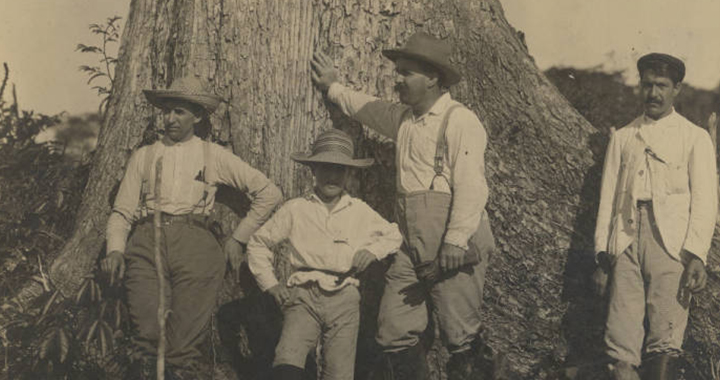
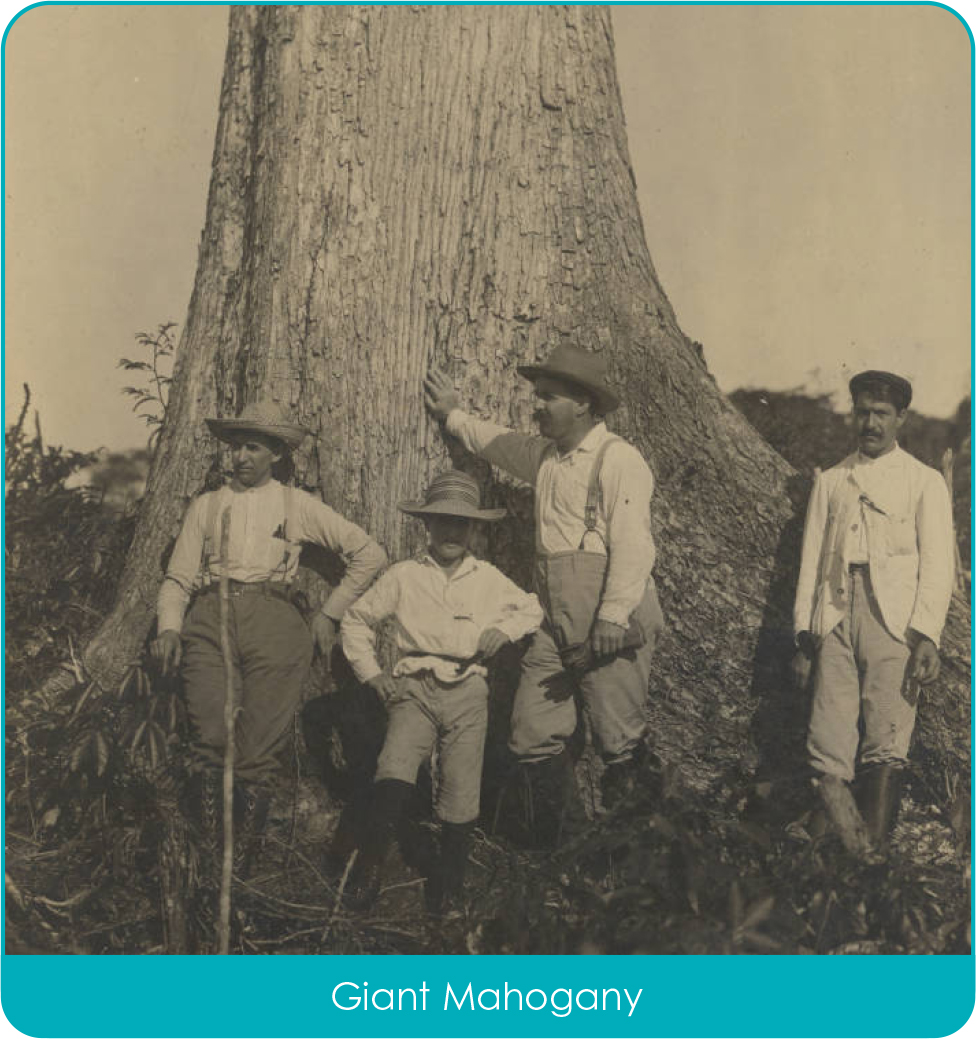
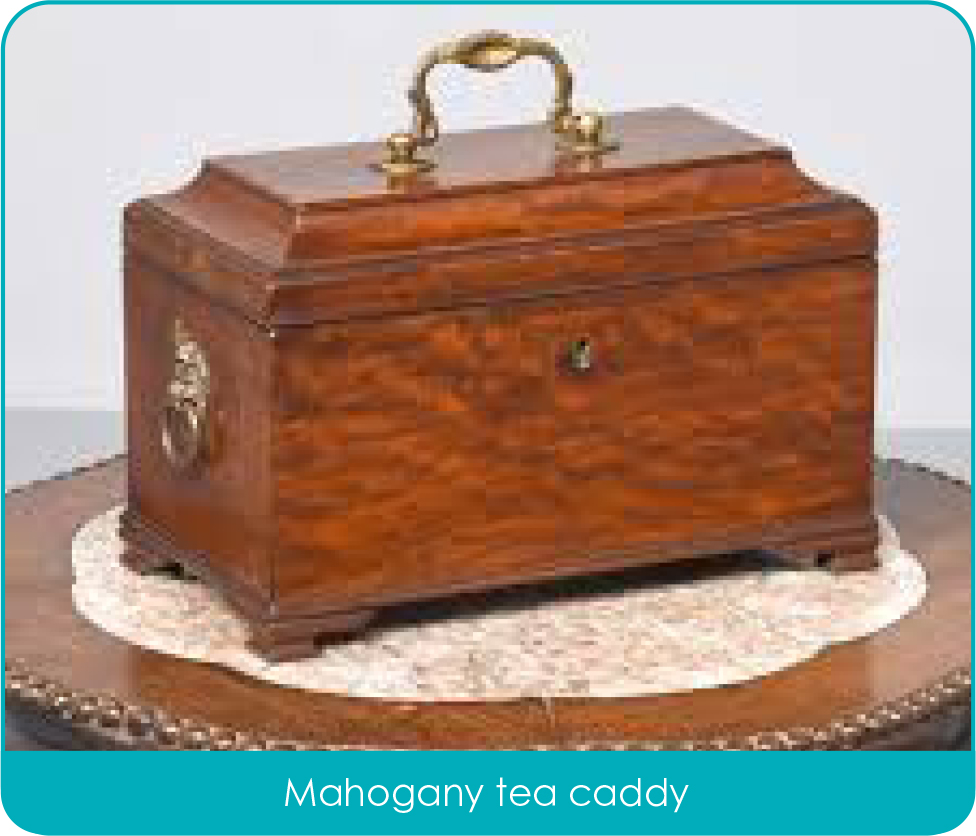
Possibly the term that you will see the most when it comes to antique furniture, for the most part of the 18th and 19th centuries, it really was the most popular material for quality furniture. Mahogany is actually a term for three types of wood in the Swietenia variety of trees, comprising the San Domingo, Cuban, and Honduras, with a significant amount of this wood originally coming from Jamaica and the South Americas. Many of the pedigree woods are now covered by CITES regulations and subsequently modern items are made from crossbred trees that create very similar woods. Identifying mahogany is slightly tricky as there are so many variations, but the general appearance is that of a reddish brown material with fine grains, and next to no voids or pockets.

Walnut

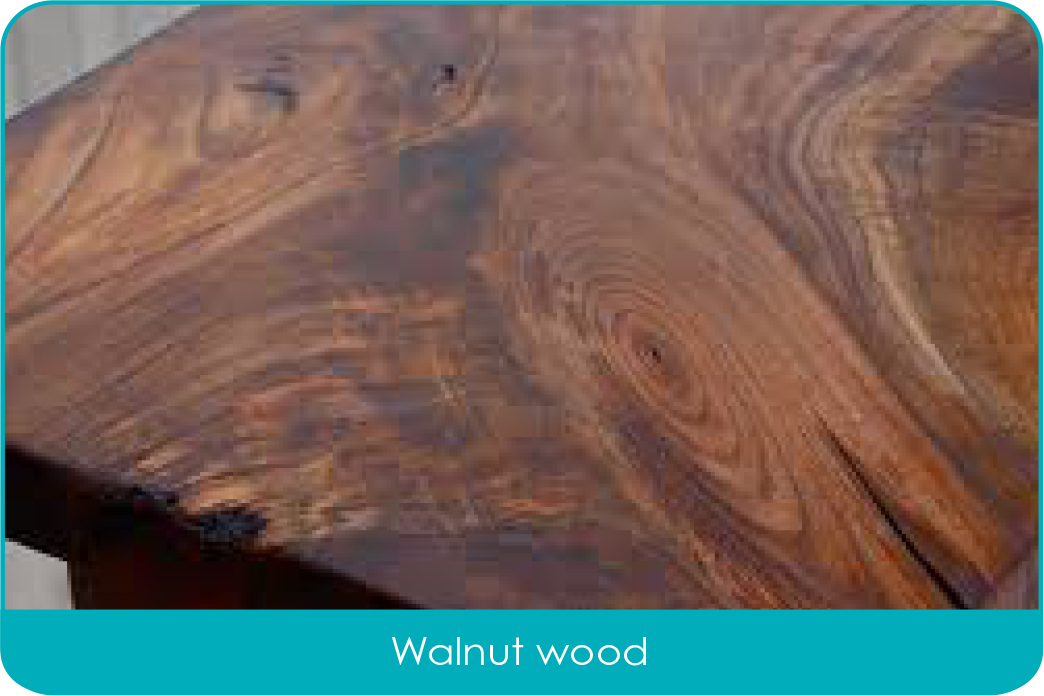
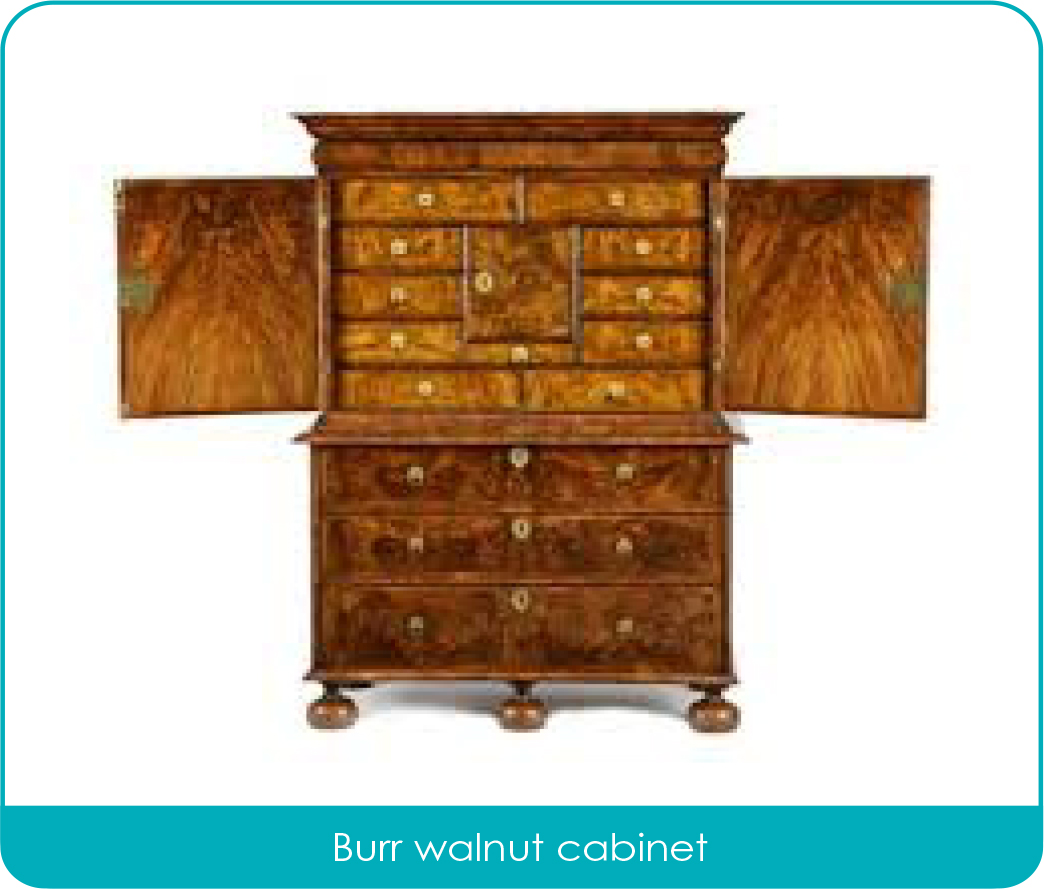
Before mahogany and the ability to transport wood across the seas, walnut was one of the most valuable woods used for furniture construction. Elizabethan documents indicate that walnut wood, specifically from France, was regularly used in the construction of the most majestic pieces across the land. Following a particularly bad winter in 1709, the French actually blocked any exportation of the wood in order to protect it from foreign hands, which is where we start to see an influx of walnut veneers upon lesser quality wood bases, it is also where the very attractive polished burr varieties became popular. In some ways it is a similar wood to mahogany put with a more buttery colour, and with a swirling grain. The burr varieties can be found with an even more pronounced colouration, spots and pockets.

Oak

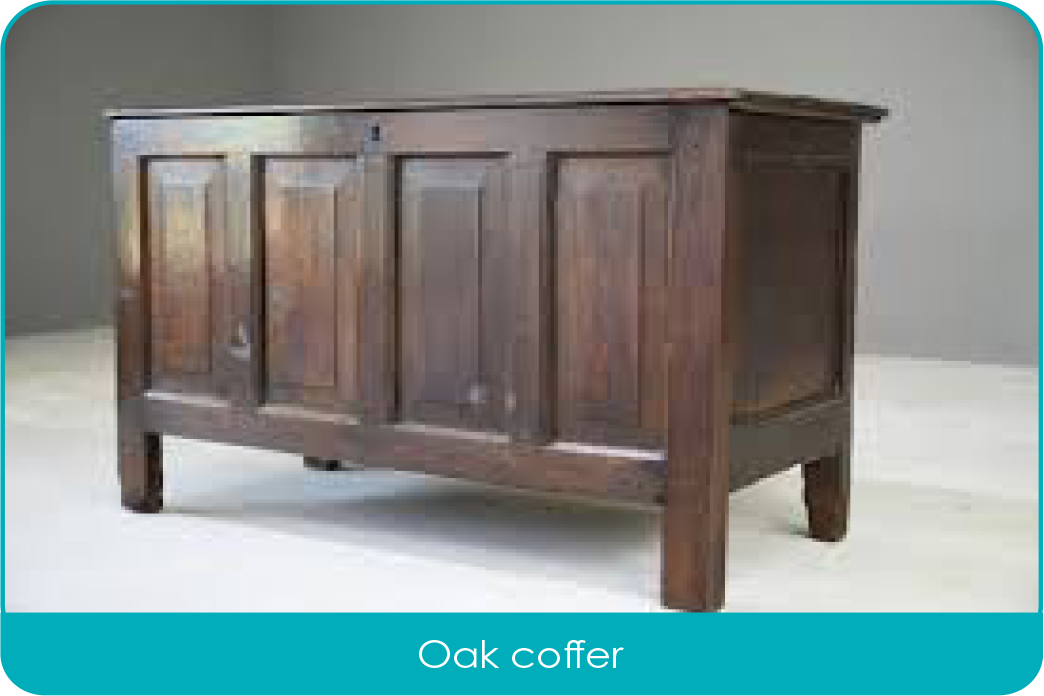
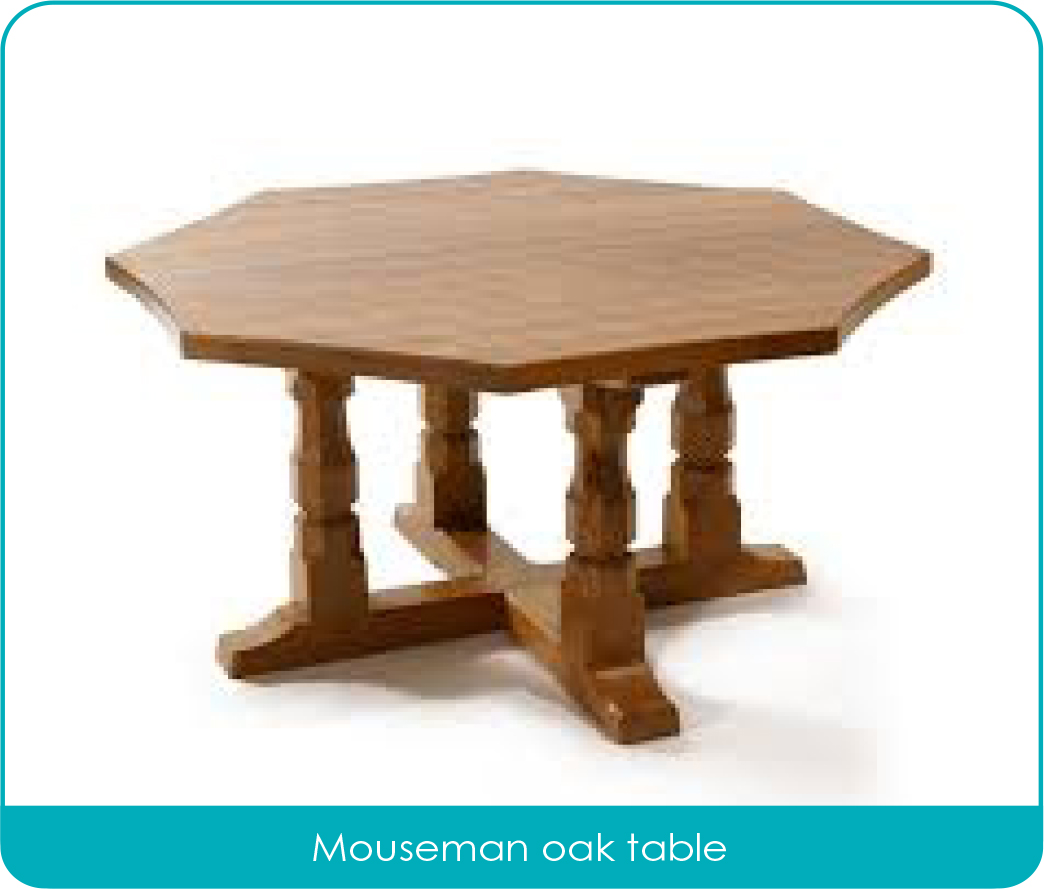
Possibly the most symbolically English tree in existence, the oak has been used since the middle ages in furniture making and one of the only woods on this list not originally used for its appearance, but its sheer practicality and useability. The wood itself was always considered more of a working wood with items made in the material known as ‘Country pieces’ with 18th century items often made in different woods, the oak being the cheapest. However, in the 20th century a resurgence in popularity in oak caused many reproduction pieces to be made, and also interesting pieces made by new designers such as Mouseman of Kilburn. Identifying oak is a lot easier than most woods, considering the nature of the wood, it is usually seen in more simple items with a heavy grain and uniform colour.

Rosewood

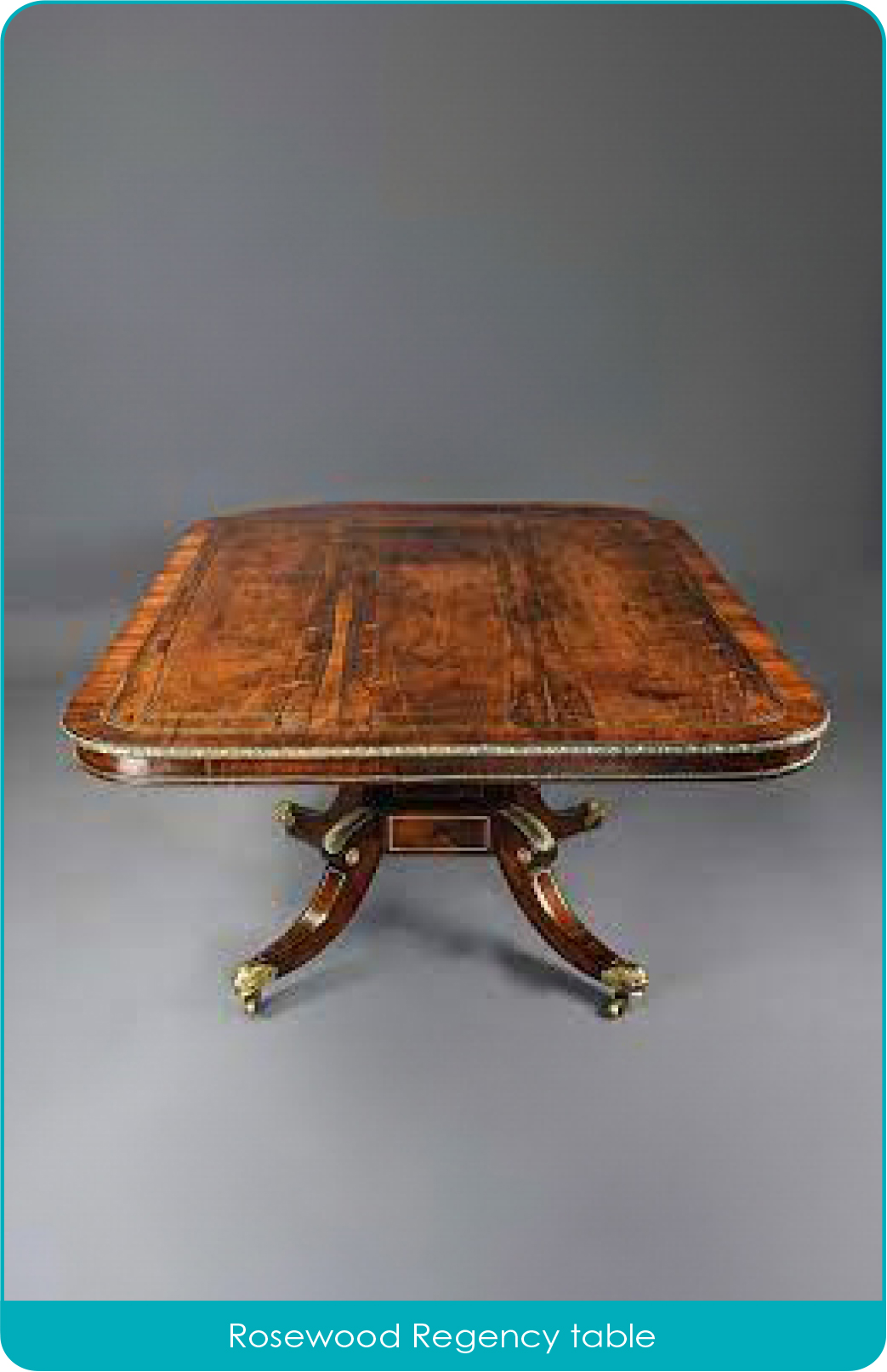
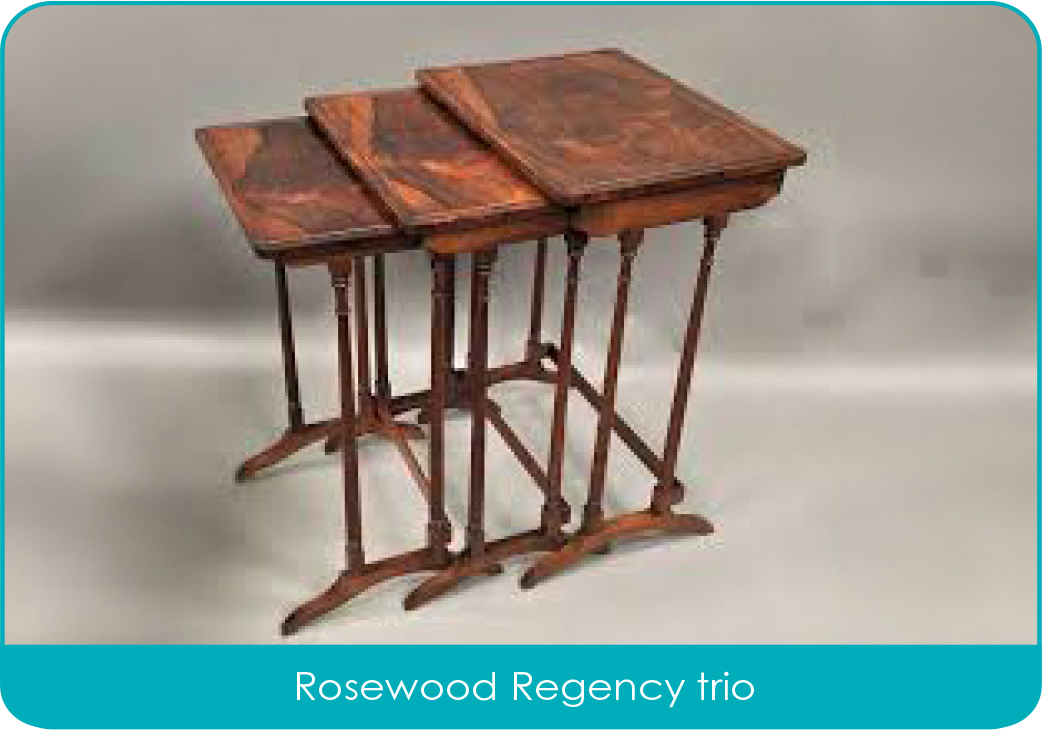
One of the true superstars of antique furniture, rosewood has been used for elaborate pieces of furniture for centuries and as such some of the most expensive pieces of furniture from certain periods, often seen as an upgrade from a standard mahogany piece, its rich deep brown hues really do capture the style of certain pieces. Also, some of the best Scandinavian mid-century pieces are made in rosewood, which leads to a certain problem that the industry has recently had to deal with. The Convention on International Trade in Endangered Species of Wild Fauna and Flora (CITES) has declared certain type of rosewood as an ‘Endangered Species’, meaning that certification may be needed in order to sell, or even insure some pieces.

Exotic & other woods

Of course, there are as many different types of woods as there are trees – we see many pieces of 19th century continental furniture in fruitwoods, which generally are a lovely rich orangey colour, but with a lot of grain and inconstancies.

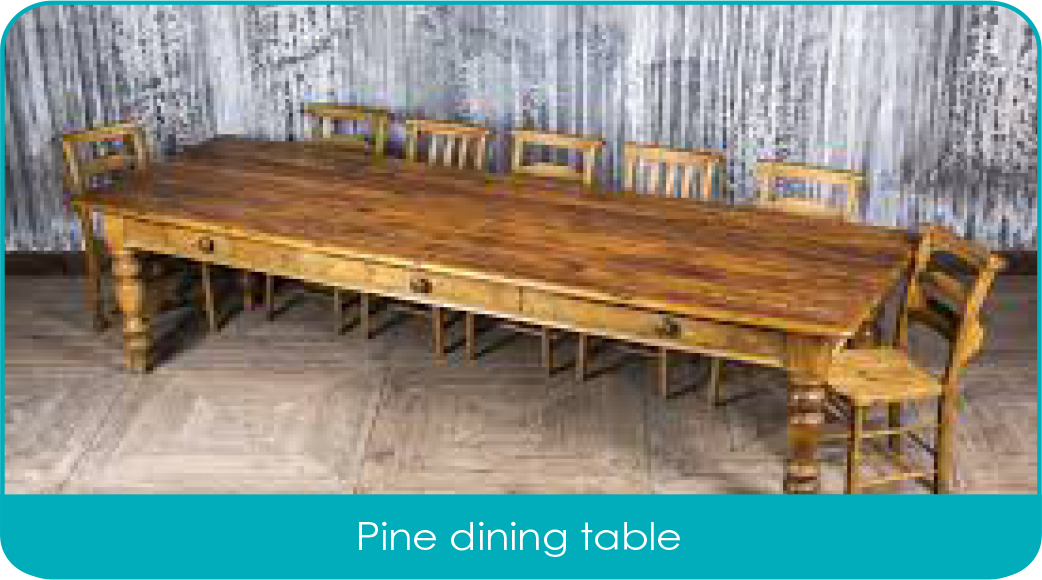
Pine, which is without any doubt the best material for a kitchen table ever thought of, with red wine stains and children’s pen marks always adding to the patina.

Ash, Beech, Maple, Yew, Teak, Elm… the list goes on with many woods being exclusive to certain types of furniture or locations, but with so many different types to explore.

While some furniture values in the last twenty years may not have proven to be an escalating asset, the top levels of antique furniture continue to soar in value to the right client.


Read more articles by Alastair Meiklejon.

Protecting the Cash in the Attic

Frequently, for those whose homes are filled with antiques and art – particularly when they have been treasured family possessions for generations – potential replacement values for insurance can be overlooked.

Whilst jewellery and silver are often undervalued for insurance – recent costs having increased – there are certain types of objects which can be discounted completely.

With that in mind, Doerr Dallas Valuations would like to share a few examples where interesting history and excellent quality have led to growing value and this fact may lead to under insurance.

Georgian Costume Jewellery

The 18th and early 19th centuries were a time of great innovation and advances in technology. One of the fields in which this was obvious was jewellery design. With sumptuary laws being ignored, and with a growing middleclass keeping up with the latest trends, the desire to own the most fashionable jewellery became widespread. This demand was met by advances in artificial stone production – what would now be described as paste jewellery. Paste stones could be manufactured in a range of dazzling colours – mimicking – or even more vivid than their precious stone equivalents. It made jewellery more affordable to the fashionable of the day.

Costume jewellery, in terms of its financial value, has often been disregarded in comparison with fine jewellery equivalents. However, in recent years a strong market for costume jewellery as a whole is evident. Recently, the Georgian paste jewellery market has strengthened resulting in rocketing prices.

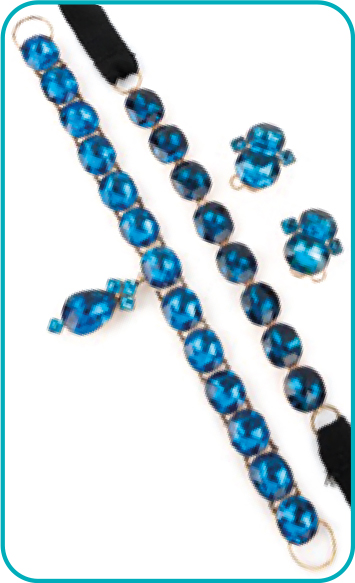
At auction, estimates have been smashed – in February 2023 a suite of blue paste jewellery (parure) comprised of a necklace (which would have been attached by a ribbon), a bracelet and a pair of earrings was offered in auction (Woolley & Wallis lot 148) with an estimate of £200 – £300. The eventual total selling price was over £25,000!

Domestic Metalware

Objects made from brass, copper and pewter may appear ordinary but again their values can be surprising. Lighting, fire grates, door furniture, mortars are all things to consider when arranging an insurance valuation.

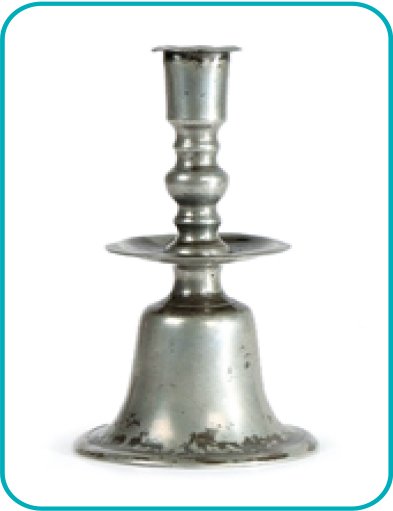
Early pieces are highly prized by collectors and their replacement value can be in the thousands. In a recent auction, (The Chapman Pewter Collection – Bishop Miller; April 2023) a rare pewter candlestick manufactured during the reign of Elizabeth I/ James I achieved a selling price of over £30,000 (Lot 43). If you are uncertain as to the origin of your metalware, it is always best to consult a specialist valuer.

Furniture

In recent years the antique furniture market has been much maligned, with reports of the decrease in values being widespread. While the market may not be that of the 1980s, quality antique furniture continues to be esteemed and seeking replacements competitive.

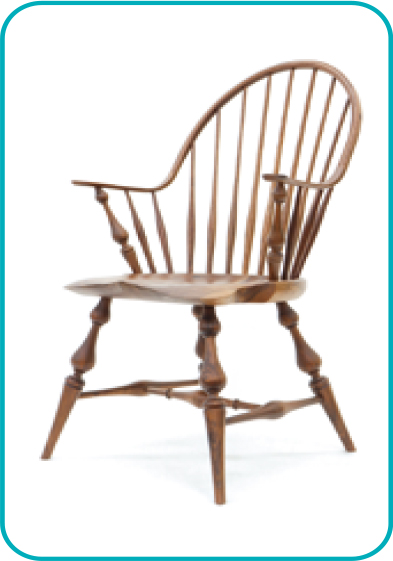
Modest oak and antique country furniture should be closely looked at when considering insurance. Windsor chairs, mule chests, dressers and farmhouse tables are respected amongst collectors.

Treen

In a similar vein to country furniture and domestic metalware – treen – domestic objects made from wood may have been disregarded. In this fierce collecting field, prices can be surprising and some objects extremely rare.


Toys, Games and Juvenilia

When considering a valuation, looking at the playroom or nursery may not be the first area for attention but with the market for antique toys and games proving ever popular, replacing these treasured possessions can be costly.

Important and interesting 18th and 19th century dolls houses are collected not only by those interested in toys, but for those with a passion for architectural history. These microcosms of the family home often include complete furniture and decoration – showing how families lived and operated their homes. To replace good examples, the anticipated cost will be upwards of £10,000.

Rocking horses have a history which dates back thousands of years – the toy in the current form has existed since the 19th century. Rocking horses, both antique and modern, are a focal point for a playroom and as such should often be insured. When looking to acquire a good 19th or early 20th century example, one should budget over £2,000.

Playing cards, board games and games compendiums may be valuable depending upon age, manufacturer and scarcity. Toy specialists can offer guidance on teddies, dolls and antique toys and games.

Exploring the hidden treasures in your attic could be a delightful journey down memory lane. These items which hold dear memories close to your heart might even surprise you with their financial value.

Mouseman furniture

The Timeless Appeal of Mouseman Furniture

One knows that a true sign of an endearing artist is that of the moniker – we have seen it recently with Banksy, and throughout the past few decades with musicians such as Ringo and Prince, but perhaps one of the trendsetters in this field was actually a Victorian woodworker from Yorkshire, called Robert Thompson.

Born in 1876 in the small town of Kilburn in North Yorkshire, he inherited his father passion and skills for working with wood and specifically oak, starting with the family business creating doors, gates and kitchen cabinets amongst many other run of the mill items, then in 1895 the range of furniture that he is best known for began to take shape.

The gothic style mixed with the very current Arts & Crafts movement gave Robert Thompson the artistic freedom to develop some of the most popular designs for furniture of the 20th Century. Encompassing traditional techniques of manufacture such as mortise and tenon joints, dovetailing and pegging, the unique quality fighting against what was a tide of massed produced utility style furniture.

Working initially with churches and schools, Thompson designed many pews and benches, and one day whilst almost playing an ‘in-joke’ upon himself, he carved a small rodent into one of the ecclesiastical pieces supports – in his mind the colloquial phrase “Poor as a Church mouse”.

Following this moment of inspiration, the desire for his work and style moved on from just churches and schools to reach the homes of the fashion conscious furniture seekers of the 1920s and 1930s, and these without doubt are the pieces to look for when it comes to collecting. By this point ‘Mouseman’ or ‘Mousey’ had trademarked the cheeky chap whom now adorned all of his pieces, and not as a joke, but as a sign of quality.

mouseman furniture

The dresser detailed below is one of the many bigger pieces made by Mousey in the peak of his career, and whilst it made £35,000 at auction back in 2018, one would expect a retail price for it in 2024 to be over £50,000.

mouseman furniture

The Blanket box, with a fantastically 17th Century influence – even with a cheeky nod having the date of manufacture in a moulded plaque to the front, indicates that it was made in 1920, the start of the pinnacle of his career – commanded a price of £12,000 in 2022 at auction, which identifies it as being one of the most desirable medium sized pieces.

mouseman furniture

The last two items show the creative side of Mouseman, combining a mantel clock flanked by a pair of elephants, which without Thompsons influence would be virtually valueless, and perhaps one of my favourites, a sculpture of a mouse with apron and tools, even entitled ‘The Mouseman of Kilburn’. Funnily, this title indicates the humility of the artist that he could laugh at his own fortune. These items making £10,000 in 2023 and £13,000 in 2021 respectively indicates the rarity and demand for such individual pieces.

The Mouseman of Kilburn

The Mouseman legend has lived on for decades following Mousey’s death in the 1950s, with his family still at the helm of the business creating quality oak furniture in North Yorkshire to this day, with many of the original designs still available, and whilst it is not uncommon to see Mouseman pieces at auction, the rarer items are still a treat to see, and still make the kind of prices that befit a man of such character and celebrity. Call us today to enquire about an appointment on 01883 722736 or email enquiries@doerrvaluations.

Year of the Dragon

In East Asian cultures, the Year of The Dragon in the Zodiac is marked with power, energy and fortune, with strength and intelligence assured of those born during this period.

Whilst every symbol holds a special place in East Asian cultures, the dragon has always held a significant place in the nations folklore and history, with emperors associating themselves with the dragon as a symbol of imperial authority and strength.

The dragon has often been used for many decorative items throughout history in the art world and even further afield. At Doerr Dallas we thought we would talk you through some of the most glorious examples of this most auspicious figure.

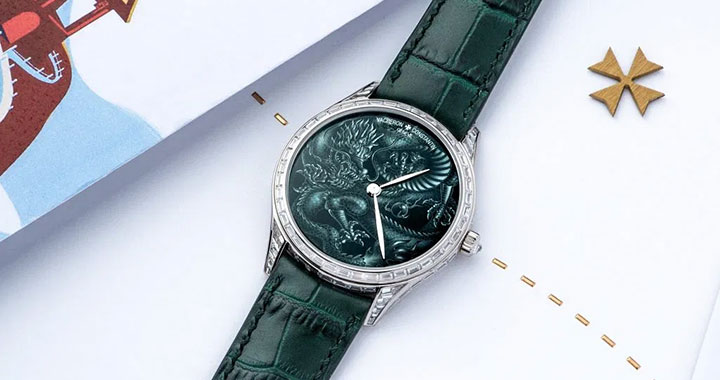
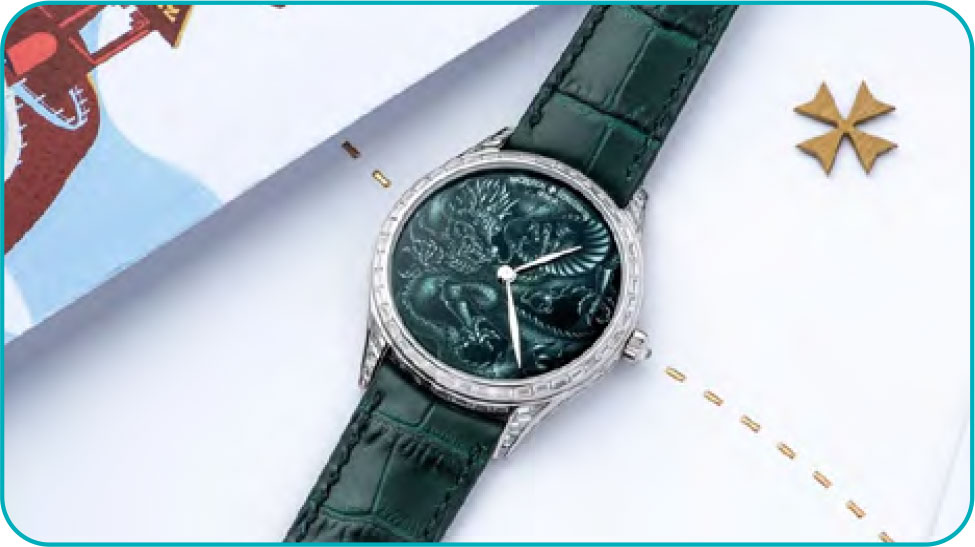
1. Vacheron Constantin Les Cabinotiers – Recits de Voyages collection

Vacheron Constantin, despite usually being a very conservative watch brand have recently introduced this impactful piece in a series of multicultural one-offs. Included in the stunning line-up is an ode to China, with a five-clawed dragon realised in grisaille enamel. The 16th century technique uses white enamel on a dark enamel base to emphasise the interplay of light and shadow without the use of vibrant colours.

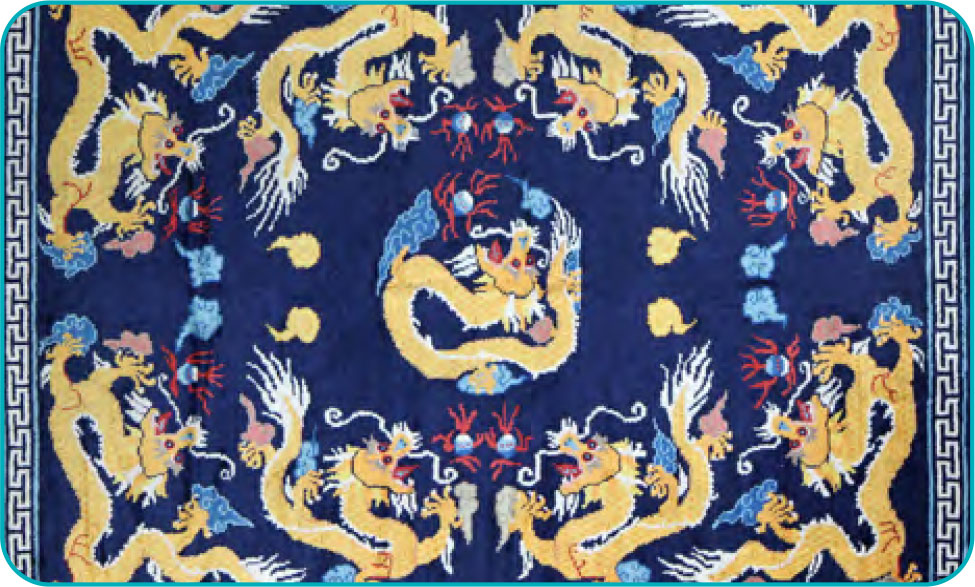
2. An early 20th century Chinese Dragon carpet

The carpets of the far east have always been fascinating to many people and this example is no different.

Stunning golden dragons on a deep indigo blue background with a classical T pattern border design, it is supposed that the figures from which they were derived, once symbolised thunder and clouds.

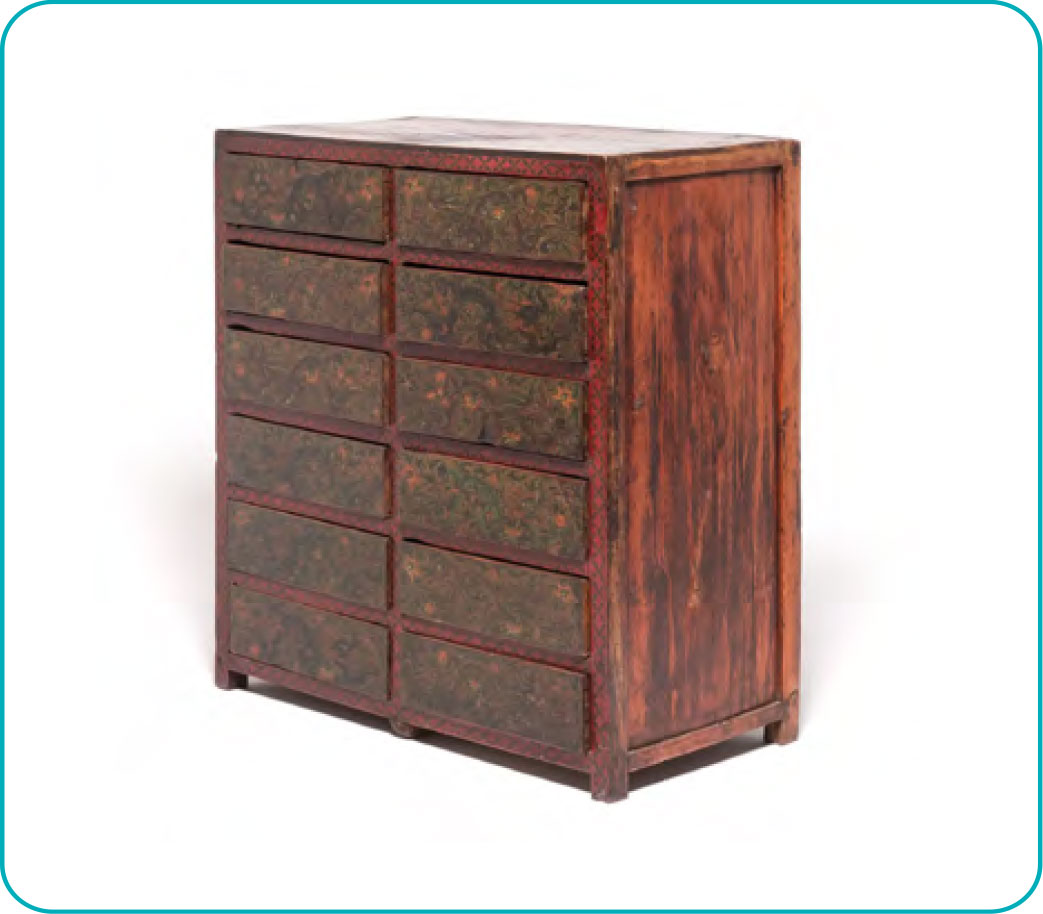
3. A mid 19th century Tibetan painted chest of drawers

The number 12 figures prominently in Tibetan astrology, making this simple chest’s dozen drawers the perfect canvas to honour the year of the dragon. Tibetan astrology recognizes a 12-year cycle, characterized by 12 animals, including the dragons that wind their way on this expressively painted cabinet. The gessoed dragons symbolize ambition, dignity and success. Camouflaged by lush flowers and vines, each writhing dragon clutches in its claws a lotus flower, a symbol of purity and perfection, and a peach, a symbol of immortality.

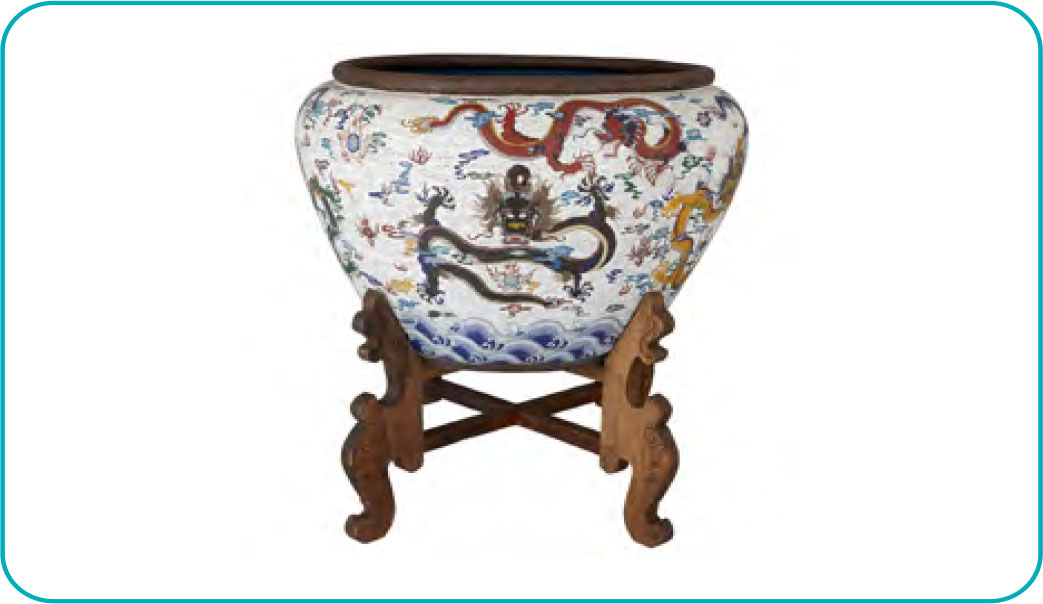
4. A 20th century Chinese Jardiniere upon stand

This monumental cloisonné enamel jardinière is a superb example of 20th century Chinese design. The jardinière is of traditional form, rising from a narrow foot to a flared shoulder and culminating in a rolled rim. The body is profusely adorned with cloisonné enamel designs over the white enamel ground: dragons, waves, floral patterns, and other motifs abound. The piece is supported by a wooden stand, each of the stand’s four legs ornately carved and finished.

So whilst the images of other Zodiac figures such as the Rat, Dog, Rabbit and others all have their fans, it’s clear that the Dragon really does hold a special place in the heart of the Chinese people and judging by the popularity of the items relating to it, all over the world.


To arrange a an asian art valuation, call us on 01883 722736 or email us on [email protected].


Caring for your furniture and rugs

Without doubt, one of the most common questions that we at Doerr Dallas Valuations get asked is “What is the best way to take care of… (insert as appropriate)” and the simple answer is that everyone has their own way and own interpretation for different items – some people swear by old wives tales, whilst some find new solutions and potions on Amazon and insist that their carpet has never looked cleaner. So as a rough guide I have compiled the following advice for certain groups of items.

Furniture

When people ask about furniture, it is generally whilst talking about wood items, such as mahogany, oak, walnut, rosewood, and many other weird and wonderful materials that we are privileged to work with.

The first thing to say is – look at where the item is kept; Is it in sunlight? Next to a radiator? In a damp shower room?

If any of these answers are ‘yes’ then seriously consider relocating the items, as ultimately, it’s not going to end well. Warping, fading and serious cracks may appear after time and that will result in a costly visit to the restorers.

Whilst we all remember the smell of the spray cans of furniture polish commonly seen in the 80s and the 90s, these really are not a good way of polishing or cleaning antique furniture, the artificial chemicals will gradually damage the finish and leave you with an item needing to be professionally restored – the general rule of thumb, is less is more.

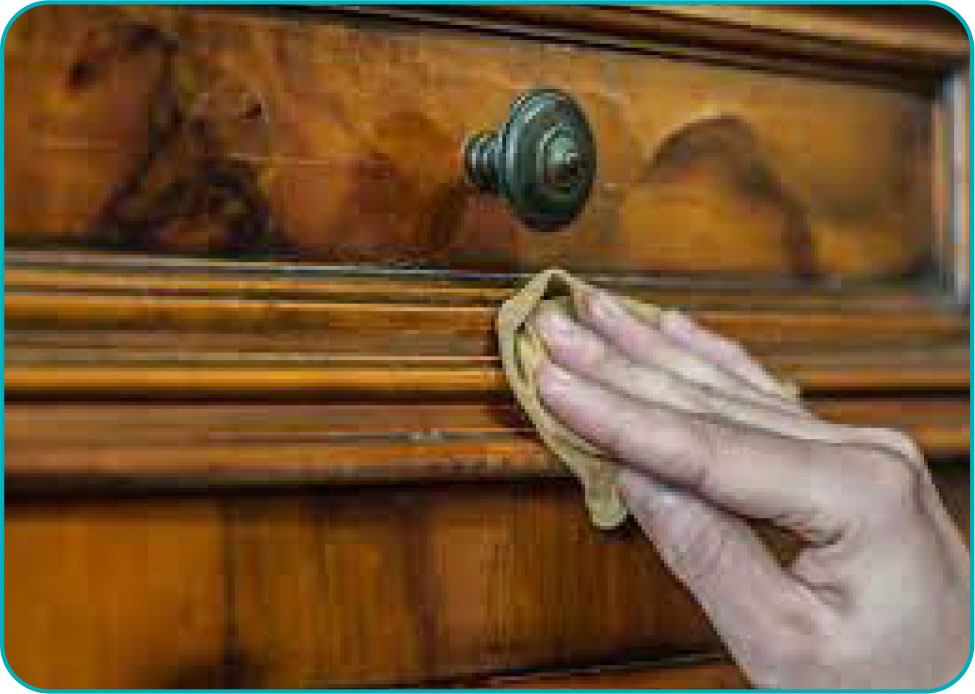
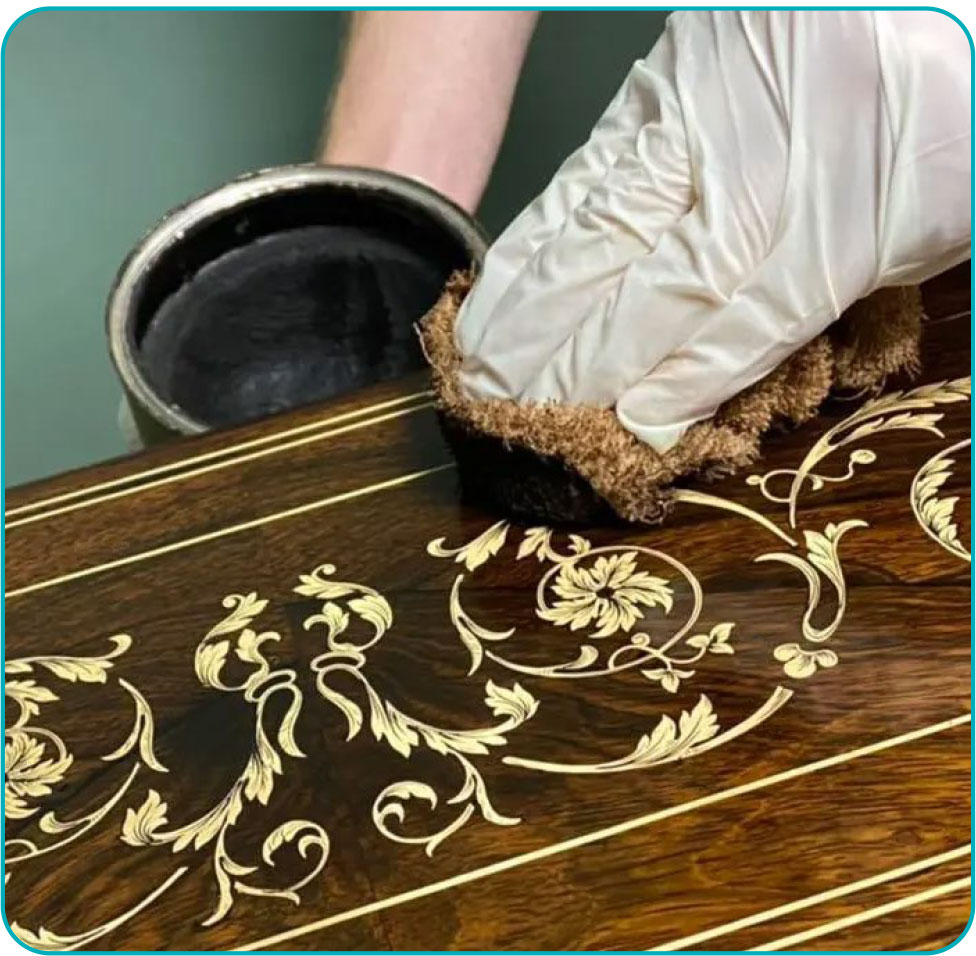
A lint free cloth with natural beeswax is always the best route, applied until the wood is nourished (this might take a little while, but have patience) will gradually bring back a nice genuine shine and bring out the grain of the wood, as opposed to a silicone type shine that a spray can will bring – it also smells a lot better in my opinion.

Any metal work, such as handles or escutcheons, should be dealt with very carefully – personally I would leave them well alone and enjoy the patina that develops over time, especially with brass work. However if you have to clean them, a very fine wire wool, used sparingly is really your best option – never, ever use Brasso, or similar products as you will end up with a rather ugly rash around wherever you have used it.

Furniture and rug care

Ultimately, furniture is there to be used and a good tablecloth or coasters are one of the most simple ways of keeping the piece in tip top condition – you are more likely to damage it with a stray glass of red wine, rather than normal use over decades.

Rugs

Rugs and carpets are some of the most susceptible items in the household to damage, but how do we avoid the wear and tear?

Furniture and rug care

Again, much like furniture, one should always think about where a carpet is going to be positioned, direct sunlight and damp areas are of course a big no due to the impact that both factors can have on the material. Additionally, turning a rug is a really good idea – for example if in a drawing room, there will always be that one corner that is worn more frequently than the others, and turning the rug will spread the wear more evenly – why not try them in different parts of the household?

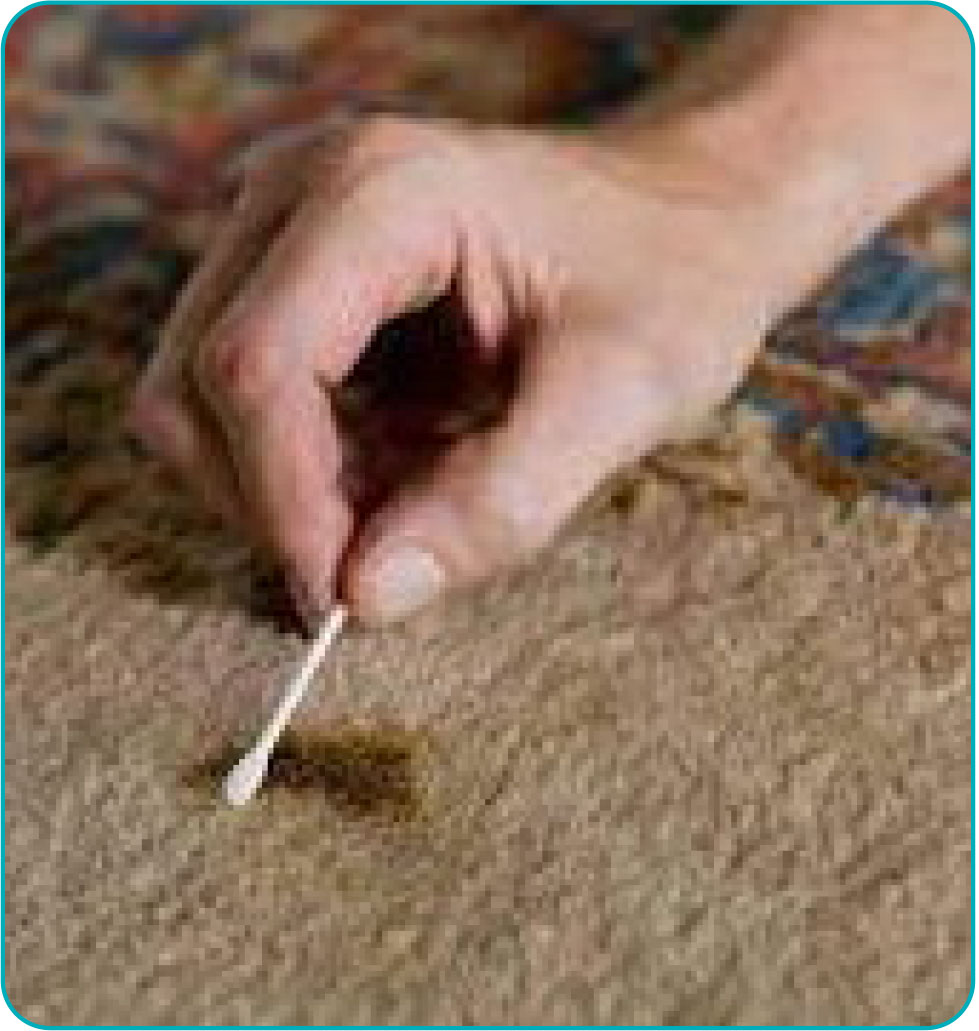
When it comes to spillages, again the glass of red wine seems to be the biggest culprit of terrible stains. The experts are unanimous in their recommendations – DO NOT SCRUB – always blot the stain with a kitchen towel and then flush with water, and repeat… this may take some time.

Furniture and rug care

If you are lucky enough to have a furry friend, then they present a slightly different problem and a slightly different method of attack; white vinegar diluted with water is generally considered to be the best option, as the chemicals in urine can attack the fibres and cause significant damage – the logic behind the vinegar is that it works against those chemicals.

The one area that I would strongly recommend not doing anything to, is silk rugs. Whilst there are options out there, the risk for things going horribly wrong are so great, and ultimately a good carpet cleaner or restorer will be able to advise you as to what action to take.

So whilst furniture and rugs are both somewhat daunting in terms of maintenance, it really is a case of keeping on top of little things regularly and they will continue to give you years, if not decades of reliable service.

Brown and out – The confusing world of antique furniture

In the world of antique furniture, there is nothing that raises temperatures, or gives a better reason for an argument than the rather broad term of brown furniture, but what does it actually mean and is the market for such items truly as doomed as many people would want you to believe?

Firstly, lets back track about 23 years. The 1990s were coming to a close, Lovejoy had been cancelled, Ikea was becoming a love/hate word in the English vocabulary and traditional antique furniture that had been the mainstay of the collectible and usable market had started to hit hard times. The re-discovery of mid-century modern furniture had started to fit with people’s lifestyles and the necessity for a Victorian gentleman’s compac tum had waned.

At this stage, demand had simply dropped and by the 2010s one c ould buy a Victorian chest of drawers, built by a craftsman, from a fine imported mahogany for pretty much the same as a cardboard box full of Swedish chipboard that you would have to spent hours putting together yourself – it just doesn’t seem right, does it?

However ‘Brown furniture’ isn’t simply the row of beaten-up Edwardian sideboards in a local auction house, it includes some of the most glorious items ever made as functional pieces – and to place all items of furniture into a single category, just because they are made from wood seems a little absurd.

The market today for fine antique furniture is perhaps not as s trong as it was in those days when anyone would pay at least a £1000 for something that start ed with “Georgian” but looking at retail markets now, there are fine and rare pieces a vailable for well in excess of what many people would give them credit for.

So what does the future hold for the ‘Brown Furniture’ market?

Let us not kid ourselves, do we really think that the modern, almost disposable lifestyles that people live in 2022 are going to ever need a chest of drawers w ith a brushing slide? Do we think that suddenly every house will need a drop leaf bureau and that writing letters will suddenly become popular again?

Of course, the answer to both of these questions is no, but – the market for customers that actually do desire these items will only go up as the collectors market still strives to own the best, and only the best.

So when your clients say “we have some brown furniture, but it’s not really worth anything anymore” it might be worth getting it looked at…

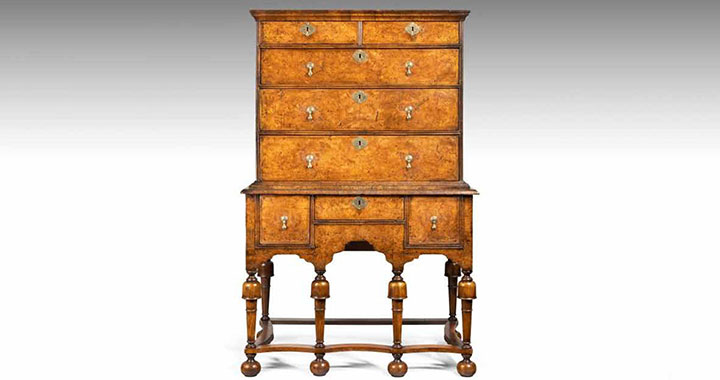
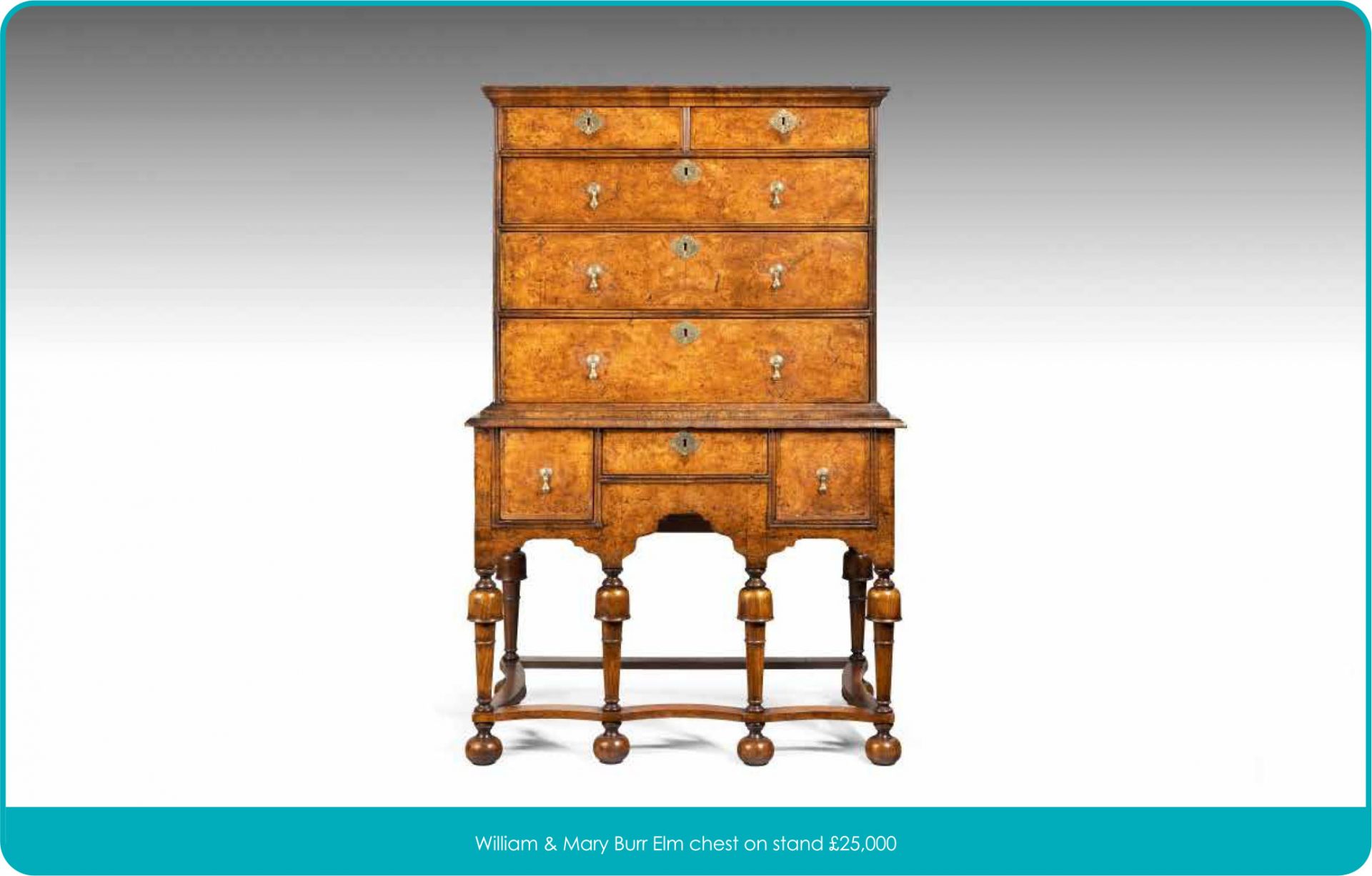
William and Mary Burr Elm Chest on Stand 25,000

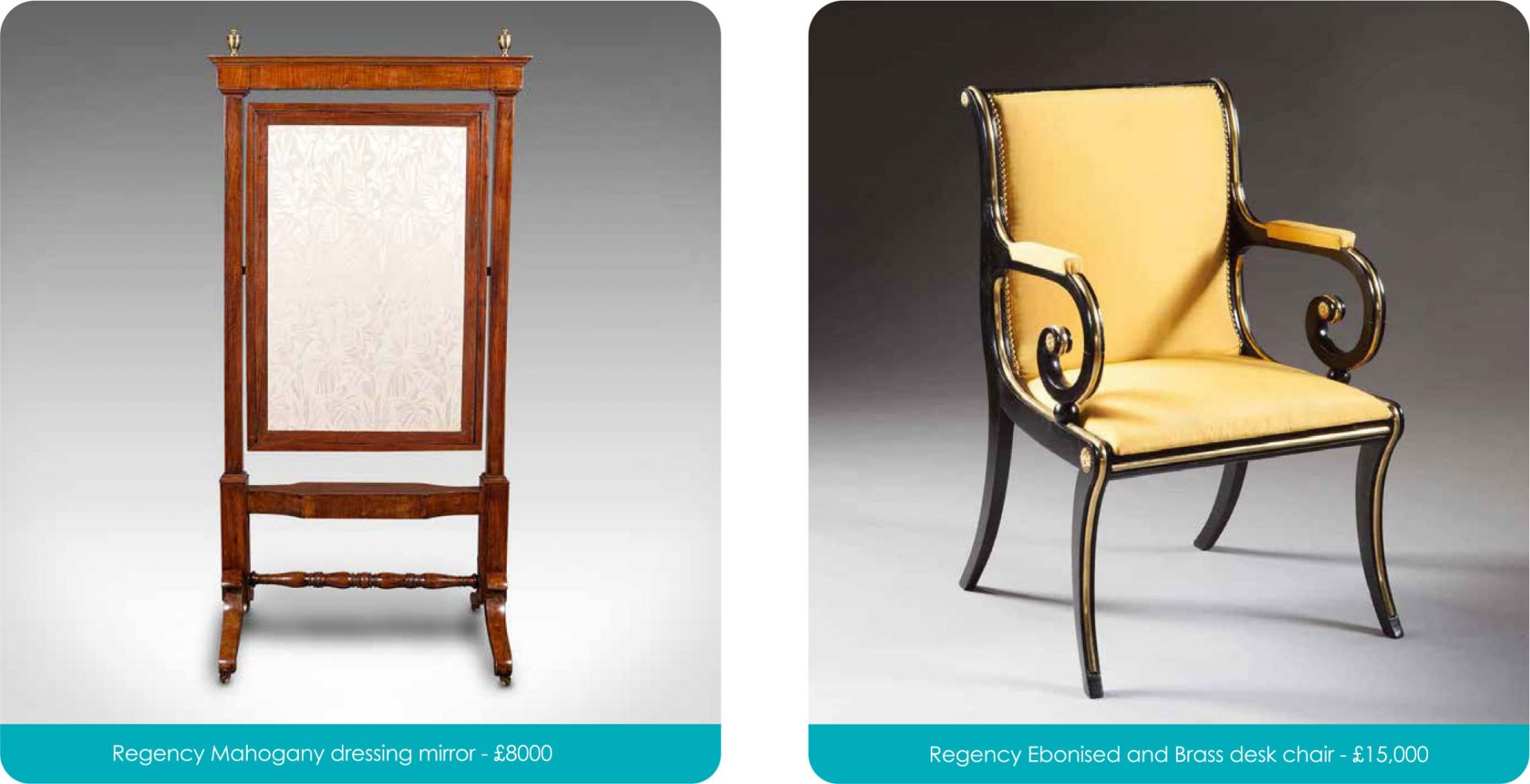
Regency Mahogony dressing mirror £8,000
Regency Ebonised and Brass desk chair - £15,000

Collection care: how to protect your investment

Collections are usually amassed over years and great love and care often goes into the acquisition of each piece. Whether your motivation behind the collection is financial or whether it is to leave a legacy, it is vital to make the right choices on the display and care of the artwork or object as these factors will impact the condition of the artwork, not only in the short term, but also in the long term. Condition plays a crucial factor when determining the value on the open market. Many owners are surprisingly casual with their artwork, particularly owners who have inherited the works rather than bought them and, therefore, see them more emotionally rather than in terms of their commercial value.

As with all assets, it’s essential to ensure that works of art are cared for properly and that their condition is maintained since good condition is one of the key factors in their financial value.

Working with clients and their collections over the years, I’ve seen certain recurring issues that can be detrimental to the condition of an artwork, so I’d like to share some of the key things to consider when looking after the items in your collection:

Cleaning

When an object stays in a set position, the risk of damage is minimal, however, when it is moved it is instantly put into a precarious position. Broken items are a frequent casualty in the hands of an over enthusiastic cleaner. If an item is broken, it’s vital to pick up every fragment as this will make repairs more successful and, in most cases, less costly. It’s best to avoid gluing things back together yourself, judging from the attempts I have seen, it’s never quite as easy as you might think!

If you have a valuable and vulnerable collection, it may be worthwhile to take the precautionary measure of employing a Conservation Cleaner. A specialist in this area will have the expertise to handle the object with sensitivity, knowing how and where to lift an object. They will account for weak or fragile areas or surfaces to prevent damage from occurring during the process.

Of course, not everyone has the budget for a Conservation Cleaner and speaking from my own experience, I like to clean the fragile items in my own collection. I treat these items differently to someone who doesn’t have the same emotional attachment, however careful they might be.

If cleaning a shelf which displays many objects, find a safe location and transfer the items to this position. Trying to dust around objects, can result in knocking over adjacent items. If you have something with a handle like a jug, it will be safer to hold it in two hands and hold it from the main body of the object. Hairline cracks which can be invisible to the naked eye can be present and therefore breaks can occur at vulnerable points.

Surface dirt and dust can affect an object as it absorbs moisture from the air, into the surface so it is important to clean an item regularly. A cleaner may adopt a method
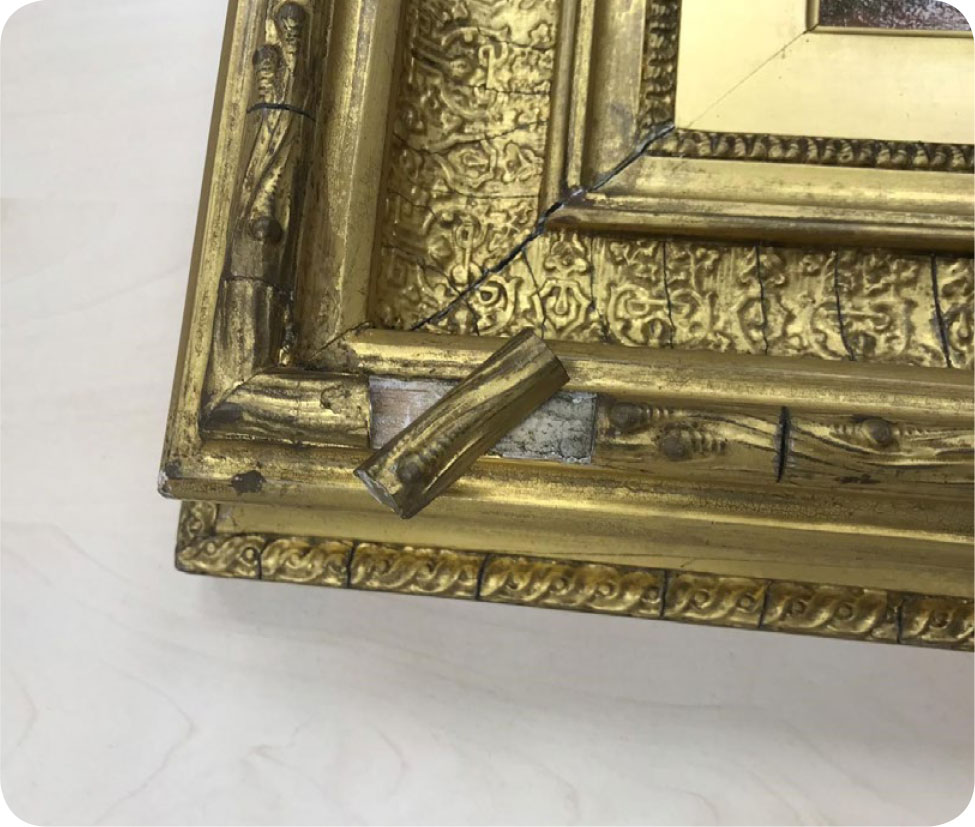
that isn’t appropriate and can cause more damage to an object than the dirt itself; a duster may have fibres which can snag and cause damage to an item, for example a delicate gilded picture frame. A good solution for this is to use a soft brush, like an artist’s paint brush, if used gently, these can help remove dust without catching on or abrading vulnerable areas.

Specialist firms offer in-house training to domestic staff charged with the day-to-day maintenance of properties and their contents. Bespoke sessions are put together around the individual requirements of the house and collection, identifying those pieces which are safe to handle and how best to approach them, and to identify which pieces require attention from a conservator.

Display/Installation

If an item is very delicate, it is worth considering a bespoke mount or display case to help support it and perhaps to prevent it getting too dusty or from being accidentally knocked over.

Weak picture hangings and mounts are common and are an easily preventable cause of damage. I have seen many an insurance claim following the snapping of a hanging wire. Not only do the pictures themselves become damaged, but they can break items beneath them.

Many owners are so keen to display a new piece, they use the existing fixings without considering whether they are suitably strong. Engaging a specialist to carry out the installation of an artwork can be money well spent.

Pictures should be framed to conservation standards, using non-reactive materials. Works on paper can become foxed – the mottled brown staining which is caused by acids from the backboards or mounts leaching into the surface of the paper. Over time this will cause the paper to degrade.

It also is worth considering changing the glazing for acrylic or glass with a UV filter, this will help retain the colours of the artwork. If acrylic is used, this will prevent damage from occurring in the event of an accident; it will not splinter and break as glass does. However, if you have a pastel artwork, acrylic should not be used as the static charge can draw the pastel to the glazing itself. A good conservation framer can offer recommendations on what will be the best solution for your picture.

Marble and bronze items should be handled and installed by professional handlers, not by general movers who can lift heavy items. People think marble is robust as it is heavy, but in fact its natural veins cause the material to be very weak and prone to damage if handled incorrectly.

The same can be said for bronze as there may inherent weaknesses in the casting. A specialist will know how best to move the item taking weak areas into account.

Environment

Consideration should be given as to where you choose to display artwork, and environmental factors such as temperature and humidity should be assessed when choosing a suitable location.

Air conditioning, central heating, artificial lighting and direct sun light all potentially have a detrimental effect on the composition of an artwork, both structurally and in terms of the surface finishes. Certain walls within rooms can provide a more challenging environment than others due to the way the sunlight falls within the room or if they are an external wall which can increase issues with damp.

There is technology available for monitoring environmental conditions and is one of the most effective means of protecting works of art from short-and-long-term environmental damage. However, the information needs to be looked at and analysed and whilst helpful it cannot replace regular inspection of pieces to monitor their condition. I once saw an Andy Warhol ink sketch of which had completely faded, and this apparently had happened in a few months. The owners of the house had been at one of their other properties and this was missed by the house keeping staff.

Condition Report

A report carried out by a specialist to assess the condition of an object can be vital in some situations. It is often a requirement if lending or borrowing a work of art. If carried out by an independent third party, it acts as a neutral account and helps to protect all parties involved in the transaction.

It is also a useful precautionary measure to prevent a costly mistake when purchasing a work of art (a condition report may reveal areas of damage, details of restoration or materials or processes that aren’t inconsistent with the provided date of a piece), and in situations where there is an increased risk of damage, for example during transit.

Items damaged during shipping are a rarity, but accidents do unfortunately happen, which is why so many collectors are keen to explore solutions that allow them to reduce the number of times they need to ship valuables. Christie’s recently used hologram technology to take a Degas Bronze Sculpture of a Dancer on tour, although can this really be a satisfactory substitute for seeing the real item in the flesh?

Insurers may like to engage a professional condition report following a loss, a conservator can potentially point out factors such as an inherent weakness in an object such as a manufacturing fault, like a vein in a piece of marble or an area of previous repair which has caused an area of stress elsewhere in the object.

Outdoor

Outdoor sculpture or furniture is an area that is often overlooked, designed in heavy materials, it is easy to assume that materials such as stone and metal are resilient, however this is not the case and pieces do require care and attention to prevent the objects from deterioration.

There has been an increase in rainfall in the UK, so it is now more important than ever to protect garden statuary from excessive water ingress. Weather extremes are also more commonplace, and this can profoundly affect marble or stone as it absorbs moisture, followed by freezing temperatures which can cause the stone to crack due to the fluctuations.

A wax coating can be applied to bronzes to help protect the surface from the elements. Sculptures of stone or metal should be covered during winter; the purpose of a cover is to help maintain a steady condition to help mitigate damaging fluctuations. The covers must be lightweight so as not to damage the sculpture, but robust enough to protect the object. In interest of sustainability and to minimise cost to the client, there are covers available which can be stored during more temperament months and then reused when necessary.

So, you have taken precautionary measures, but accidents can happen and when they do the following steps may just help:

Gather up all of the broken pieces, no matter how small – restoration can often be more successful if all of the original pieces have been saved and this will also help lessen any loss in value.

  1. Collectors should be mindful of the fact that the way an object is restored may play a key part in mitigating any loss of value following damage.
  2. One should always approach a reputable company to undertake treatment. Once an accident has been discovered, or damaged has been identified, contact this company as soon as possible.
  3. Finally, if making a related insurance claim, do remember to photograph and preserve all the evidence. If the claim is due to damage during transit, it’s important to keep hold of shipping documentation, condition reports and packing materials and make sure photographs are taken as a piece is unpacked.

For more information contact Sarah Giles on 07876 147230 or visit www.sarahgilescc.com