Summer exhibitions

Summer 2026 Must-See Exhibitions

With the appearance of summer there are an array of fantastic exhibitions and displays of artwork, sculpture, ceramics, and jewellery across the UK. Fortunately, our team of nationwide specialists are here to pick out their selections for this year’s calendar:

Cecily Brown: Picture Making
Serpentine Gallery
Running until 6th September

“I recommend this exhibition. Cecily Brown is a truly great painter and her work is little known beyond those of us already involved in the art world. Amazingly for such a major artist this is her first London show and is a must see …. It’s already open and runs over the summer into early September.”

Grima at the Tomasso Gallery
Tomasso Gallery, London
From 11th – 20th June

“I’m really looking forward to this year’s instalment of the Grima exhibition at the Tomasso Gallery. In what will be its fourth year, this week-long showcase of Andrew Grima’s work, including jewellery and watches from his iconic ‘About Time’ collection for Omega, and contemporary Grima Jewellery pieces is one of the best opportunities to see such a breadth of his work together. For our review of the 2025 edition of this special annual exhibition, take a look at our article here.

London Watch Week
Various locations, London
3rd-6th June 2026

“For those with a passion for horology, London Watch Week has you covered. Last year included events hosted by Bonhams, Pragnell, Oris, plus dedicated days to celebrate independents, and vintage wristwatches – organised by Lucy Cheesewright, Justin Hast and Tom Exton – this carefully curated event will cover numerous facets of the watch world.”

London Watch Fair
The Renaissance Hotel, Heathrow
14th June 2026

“If the Watch Week wasn’t enough, the London Watch Fair takes place just over a week later on 14th June and provides visitors with the chance to see (and buy!) vintage watches from some of the best dealers in the business. With seventy traders lined up for this specialist fair, this is a fantastic opportunity to see rare models, discover new collecting niches and make connections with dealers.”

The Bayeux Tapestry

The British Museum, London
September 2026-July 2027

“To say the upcoming Bayeux exhibition at the British Museum will be a once-in-a-lifetime exhibition would be an understatement – the Bayeux Tapestry hasn’t gone on tour since the Napoleonic era! This will be the first time it has visited the UK since its creation nearly a thousand years ago, so reserve your tickets promptly when they go on sale in July for the September opening.”

Quentin Blake Centre for Illustration
Clerkenwell, London
Opening 5 June 2026

“While not an exhibition I am really excited to visit the Quentin Blake Centre for Illustration which officially opens in London this June. Illustration art is one of my greatest passions, so I am fascinated to see the programme of exhibitions in this unique dedicated space.”

May Morris: Crafting a Legacy

Lady Lever Art Gallery, Liverpool
25th April – 1st November

“This exhibition is a celebration of the wide-ranging creative output of Arts and Crafts designer and maker, May Morris, the younger daughter of William Morris. A vibrant display of embroideries, wallpapers, watercolour designs, costume and jewellery will showcase her many talents.”

Gwen John: Strange Beauties

National Museum Cardiff
Until 28th June

‘It was a joy and a revelation to go to the Gwen John Exhibition at Amgueddfa Cymru – Museum Wales in Cardiff, last week. The drawings are almost entirely from their own collection, which numbers more than 900 works, purchased from the artist’s nephew’s estate in 1976. The oils are borrowed from all over the globe. There are only 158 known. One observation I made after looking closely at so many tiny drawings, was that Gwen spent most of her time painting these portraits and still lifes in a small studio. There is little sense of space or depth in these drawings so, despite feeling “more at home in the country than in the town”, her landscapes are strangely ambiguous. She can’t cope with or describe the great outdoors. It isn’t intimate enough.”

Elizabeth 1, Queen & Court
Philip Mould & Company
14th May – 10th July

“This exhibition will include the earliest surviving life-size, full length portrait of Queen Elizabeth I, together with rarely seen works of some of the key figures from her close circle of courtiers and confidantes. This ‘cast’ of Elizabethan portraiture, rarely exhibited, will show a rare glimpse of how portraiture was used as a tool of power in the 16th century.”

Firsts London 2026 – London’s Rare Book Fair

Saatchi Gallery, King’s Road, London
14th – 17th May

“Firsts London is one of the world’s most popular and high-profile rare book events. Whether you’re a collector looking for the next masterpiece to add to your library, or a bibliophile who loves browsing second-hand classics, Firsts London is the event for you. Discover titles by distinguished authors, ephemera from celebrity readers and manuscripts from history’s great moments, all in the heart of Chelsea.
Are you new to the world of rare books, or just want an expert guide to the fair? Firsts’ selection of talks and tours are a great way to learn more about book collecting and make the most of your visit. From deep-dives into revolutions in printing, to perspectives on careers in the book trade, these free events are a chance to meet experts and learn some of the secrets of the trade.”

Photo London 2026
London Olympia
14 to 17 May 2026

“Photo London is the UK’s leading international fair for photography and image-based art. Each year it brings together the world’s most acclaimed photographers, galleries and curators alongside a new generation of emerging talent.”

The Other Photography Fair

London Olympia
16 May 2026

“The Other Photography Fair showcases photography in its many forms, with a special focus on vintage works from the 19th and 20th centuries. Supported by Vintage Photo Fairs Europe and sponsored by the Chiswick Auctions Fine Photographs Department, the fair gathers leading international dealers, collectors, and specialists under one roof.
Alongside historic photographs, visitors will find photobooks, rare cameras, and live wet plate collodion and cyanotype workshops, bringing early photographic processes to life.”

Fired Legacies: The Ceramic World of Rich Miller
Watts Gallery, Godalming, Surrey
Opening 5 June 2026

“As a novice potter and fan of the Channel 4 show, The Great Pottery Throwdown, I am looking forward to seeing Rich Miller’s first exhibition at Watts Gallery. The exhibition delves into his own heritage and an exploration of British colonial history, and unearths the narratives of trade, labour and identity that have shaped contemporary British society.”

Samurai and Beyond at the British Museum

I recently had the thrill of attending the preview evening of the British Museum’s newest exhibition Samurai, which explores Samurai culture from its Japanese origins through its international influences today.

The term “Samurai” refers to feudal Japan’s warrior elite class, which emerged in the late Heian period and rose to political dominance in the Kamakura period. One might have expected the British Museum’s Samurai exhibition to just be an assemblage of armors, but Samurai was unlike any exhibition I had ever seen on the topic, placing unusual emphases on Samurai activities outside the battlefield, depictions of Samurai in other Japanese art forms, art produced by Samurai, women in the Samurai sphere, and perhaps the most shocking – Star Wars memorabilia! From a market perspective, Samurai are worth collectors’ attention, as they attract wide interest. Although dedicated Samurai auctions are rare, an example is Sotheby’s 2021 Samurai auction, which saw multiple lots selling in the 200,000 – 400,000 GBP range.

Although not the focus of the exhibition, the Samurai armor displays were striking and shed light on fashions and practicalities for different types of Samurai across Japanese periods. One such example featured armor for a fifteenth-century archer, who would have worn ōyoroi armor, which was angular and loose to allow the wearer ample space to draw his bow. This piece includes approximately 2,000 scales of lacquered iron or leather to enhance the practicality for the wearer. Samurai armor can perform well at auction, especially the more complete the piece is (such as this armor set from the 2021 Sotheby’s Samurai auction, which sold for 378,000 GBP), although individual elements such as helmets (such as this helmet from the same auction, which sold for 52,920 GBP) have a strong market as well. Weapons such as swords are also of market interest.

Fifteenth-century Japanese armor for a Samurai archer on display at the British Museum. Photograph by Ashley Innes.

Instead of merely displaying armor, the exhibition did a spectacular job of immersing visitors into the world of the Samurai, demonstrating that these warriors were not isolated, but fit within broader Japanese culture. Samurai included a plethora of examples of Samurai depicted in art. Many of these were japan woodblock prints, which consistently enjoy a strong market, especially for famous nineteenth-century artists such as Hiroshige or Hokusai. Samurai were not always warriors fighting in battle; sometimes they carried out far more mundane administrative tasks, such as tax collection or land management or protective roles such as policing, firefighting, and security. Katsushika Hokusai, who is best known for the Great Wave, also frequently depicted Edo scenes of everyday life, such as this print of land surveyors

Hokusai’s woodblock print of land surveyors (1848) on display at the British Museum. Photograph by Ashley Innes.

For Japanese art collectors, factors such as condition and edition size make a considerable difference to value. The artist and recognizability also play an important role; for example, a Hokusai Great Wave print sold at Sotheby’s last November for a record-breaking 21,725,000 HKD (2,124,000 GBP).

Since its opening, the Samurai exhibition has been praised for its ample curation about Samurai women, who have historically been excluded from discussions about Samurai, as the stereotypical Samurai image is of a warrior. The exhibition remedies this omission, as women comprised half of the Samurai class and therefore made significant contributions to many areas of life. I felt that the exhibition really did women justice in this regard, as the curation did not treat them as a mere afterthought only mentioned sporadically, but they instead were featured in multiple parts of the exhibition. My favorite object was a bright red jacket and hood belonging to a female firefighter from Edo Castle. Unfortunately, this type of textile is so niche that I’m unaware of any existing auction history for it, but now that I’ve seen one, I personally will be keeping my eyes peeled…

A firefighting jacket and hood worn by a female firefighter on display at the British Museum. Photograph by Ashley Innes.

A real and completely unexpected treat near the end of the exhibition was one of Darth Vader’s original costumes as seen in Star Wars. The costume design for this character was inspired by Samurai warrior armor, which is especially noticeable in the helmet, which resembles a Samurai helmet. While this is obviously not categorized as a Japanese Samurai object, it is worth mentioning that the collector interest for Star Wars memorabilia is substantial. While Darth Vader costume props have sold well in the past, just last year, Darth Vader’s lightsaber broke the record for the most expensive Star Wars prop, selling at Propstore Auction for $3,654,000. Star Wars lightsabers are linked to traditional Samurai swords.

If visiting the Samurai exhibition, be sure to allow sufficient time to see everything, as the sheer volume of objects makes this an exhibition not to skim through. The Samurai exhibition is on through 4 May (perhaps this date has something to do with Star Wars?) and, in addition to the British Museum’s upcoming Bayeux exhibition, is bound to be one of London’s top exhibitions for 2026!

Darth Vader’s mask on display at the British Museum. Photograph by Ashley Innes.

To arrange valuation of your collection, call us on 01883 722736 or email us at [email protected].

Grima Jewellery

Grima Jewellery at the Tomasso Gallery

Last month, our Jewellery Specialist Liz Bailey visited the annual exhibition hosted by the Tomasso Gallery, displaying contemporary and vintage jewels by Grima.

Above: Andrew Grima beryl and diamond necklace, circa 1973

In its third year, this much anticipated exhibition included pieces from Andrew Grima’s collections, including a selection of pieces from his ‘About Time’ collection for Omega, as well as contemporary works by the Grima Company. Beautifully curated and displayed in groups of theme and colour, this display of retro and contemporary pieces from the Grima family blended seamlessly, expressing a true and timeless signature style.

Andrew Grima is one of Britain’s most celebrated jewellers. Creating jewellery from the 1960s onwards, he came from an engineering background and was introduced to the trade when he joined his father-in-law’s jewellery manufacturing business, H.J. Company, in 1946. With a clear design vision, his jewellery is “daring, fantastic, even flamboyant but without being clumsy or brash”. Honing a signature style with large uncut gemstones, textured 18ct yellow gold, diamond accents and bold forms, he became a royal and high society favourite. The sentiment remains, his beautifully bold and increasingly rare jewels have continued to rise in value, year on year.

Since Andrew’s death in 2007, his wife and daughter Jo and Francesca continued the tradition of creating original and handmade fine jewellery. A collection of 20 to 30 pieces is created each year, often using the goldsmiths who had been employed by Grima for over 40 years, resulting in a beautiful continuation of the Grima design ethos. 

Grima Jewellery Cabinet

The above cabinet features two tourmaline pieces by Andrew Grima in the early 1970s. Each pendant displays an unpolished tourmaline crystal, presented from both the X and Y axis – in other words, sliced through the crystal, and down the crystal. Both of these pieces are from Grima’s ‘Rock Revival’ Collection. Elsewhere in the cabinet are three rings, the furthest right set with a faceted oval tourmaline and brilliant cut diamonds, created by the Grima Company in 2019.

Grima Jewellery Cabinet

The central druzy agate pendant in this cabinet is highly reminiscent of a brooch by Andrew Grima, pictured in Hinks’ 1983 Twentieth Century British Jewellery (Plate XVII), however was created by the Grima Company in 2006. Measuring 6.5cm in diameter, this impressive piece can be worn as a pendant or a brooch. The opal pieces in this cabinet date from the 1970s until the present day – the drop earrings are set with Yowah nut opals and were particularly eye-catching!

About Time – Grima’s Omega Collection

At the exhibition were three timepices from Grima’s iconic ‘About Time’ collection for Omega, commissioned in 1969. Grima’s collection of 55 watches for Omega bore neither parties name to the dial, and had a prevailing theme; each watch face was either seen through a precious stone or concealed by one. A landmark collection for both Omega and watch design more broadly, Grima was famously quoted as saying “If you need to know the time, you ask your chauffeur.”

The Linenfold Watch

The Linenfold Watch, circa 1969 and pictured above, was nestled amongst a wonderfully rich array of sculptural citrine jewellery. This showstopping timepiece features a 76.13ct oval citrine ‘glass’ and is surrounded by an irregular diamond bezel, completed of course with a beautifully textured 18ct yellow gold bracelet.

Elegance Watch

Secondly, the aptly named Elegance Watch, dating to 1970 and featuring the classic elongated rectangular dial, which became somewhat of a design hallmark in Omega’s following collections. Accented with off-centre hands, a smoky quartz ‘glass’ and a textured cuff bracelet, this striking piece paved the way for subsequent stylish Omega creations, see refs. 8270 and 1907.

Omega Utopia Watch

Finally, the Utopia Watch, dating to 1971. This sculptural piece once more features a rectangular smoky quartz glass, set atop a brushed 18ct gold torque bangle. With less than a handful of Grima’s About Time Collection offered for sale via public auction in the last few years, to see three of these special pieces all in one place was a real treat!

Demand for signed 1960s and 70s jewels such as Grima’s is ever increasing, and values continue to rise over the last couple of years, with pieces far exceeding their estimates at auction. To ensure that you are adequately insured in an extremely buoyant market, do get in touch with our specialist team.

With thanks to Grima Jewellery. For further information on any of the pieces photographed, please visit www.grimajewellery.com.

To arrange a jewellery valuation, call us on 01883 722736 or email us on [email protected].


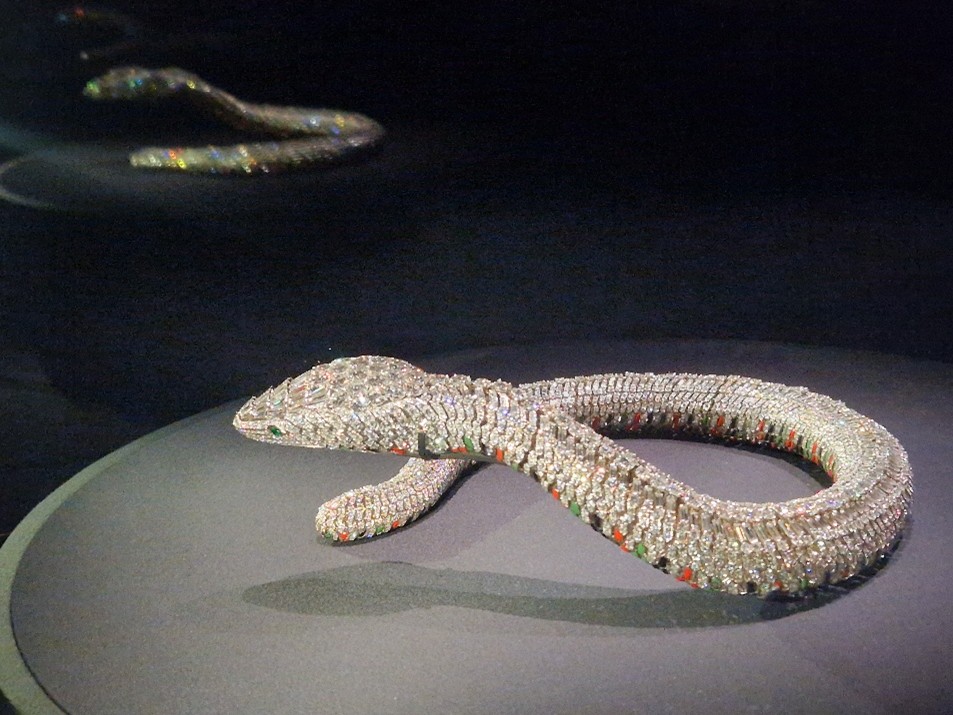
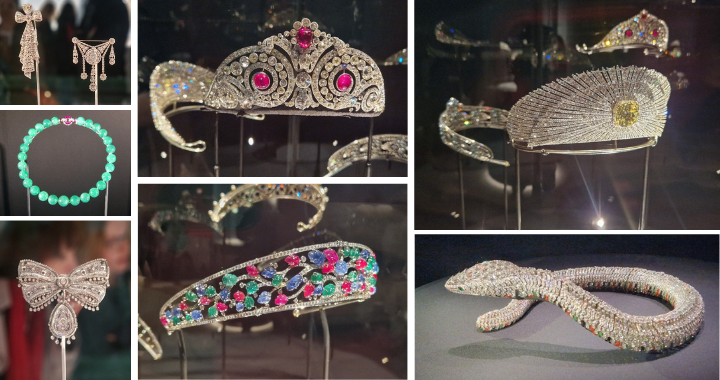
The Victoria & Albert Cartier Exhibition

The Victoria & Albert Museum Cartier exhibition

Where do I begin? How can one describe in a few words the magnificence that is this exhibition. Though a bit crowded (to be expected) it was still as jaw dropping as the Paris exhibition, I had the delight of seeing some 15 years ago.

The exhibition’s curators have chosen to take us through time, continent, through to watches and finish with a bang in the form of tiaras, both antique and modern. I will therefore endeavour to give you a tour in the same manner.

The earlier pieces from the beginning of the 20th Century are, naturally, inspired by the times in the shape of Belle Epoque garlands, bows and drapes.

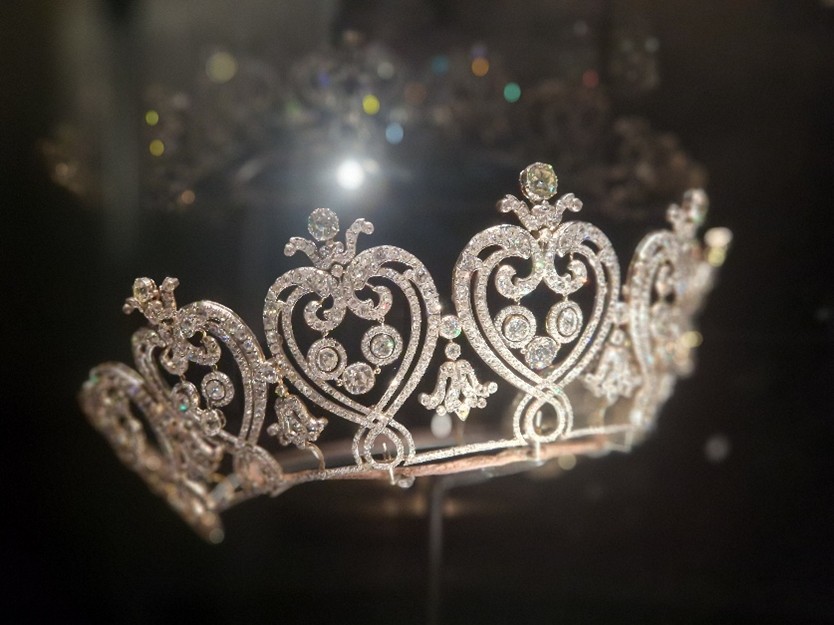
The Manchester Tiara, Cartier

The Manchester tiara was commissioned by the Dowager Duchess of Manchester who supplied Cartier with the 1,513 diamonds “for a design inspired by 18th century French architecture and ironwork. Born in NY from wealthy Cuban-American parents […] married into British aristocracy exchanging her wealth for a title.” It is set with diamonds and paste, mounted in silver and gold as was customary before platinum took over the jewellery industry by storm a few years later. This kicked off the Art Déco period.

This particular tiara was accepted by the HM Government in lieu of inheritance tax and allocated to the Victoria & Albert Museum, as were quite a few pieces found in this exhibition.
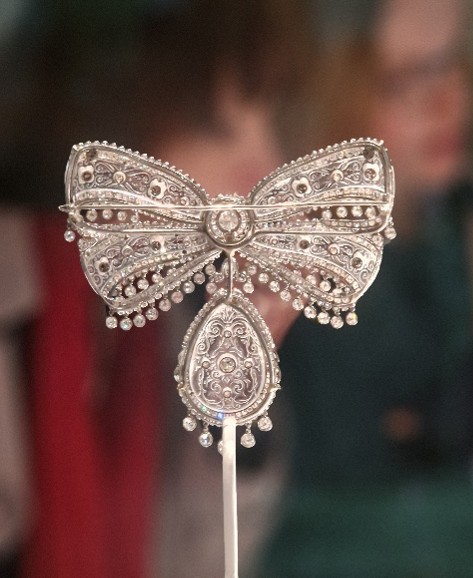
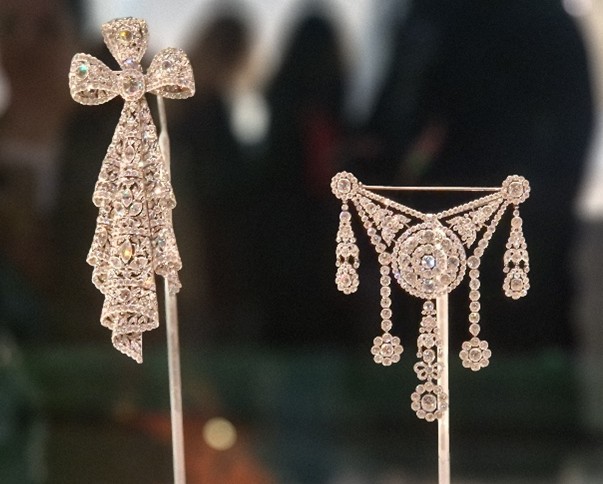
Other pieces of the era include these diamond-set bows, lace ribbon brooch and stomacher, all dating from 1909-1912, mounted in platinum and set with diamonds.

Diamond Set Bow
Diamond Set Bow
Lace ribbon brooch and stomacher

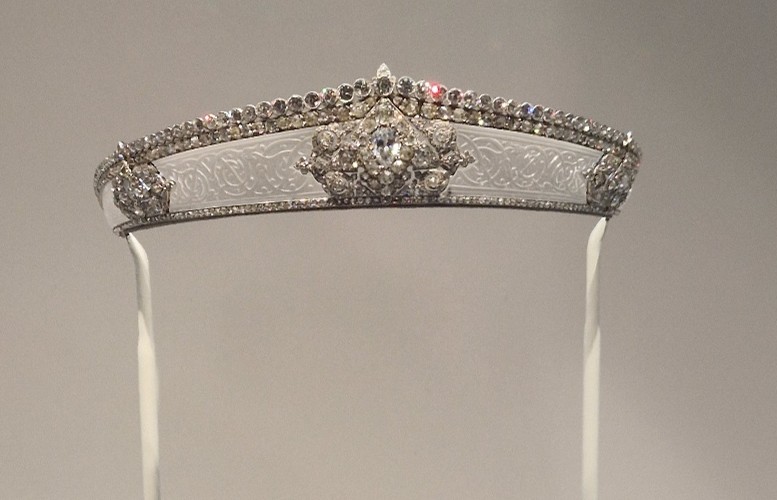
This tiara was made by Cartier in 1912, commissioned by Baron Pierre de Gunzburg (French banker and philantropist). It is an exquisite example of exceptionnal savoir-faire. This tiara is made of carved rock crystal (colourless quartz) and overlaid with diamonds.

Cartier Tiara, 1912
Cartier Tiara, 1912

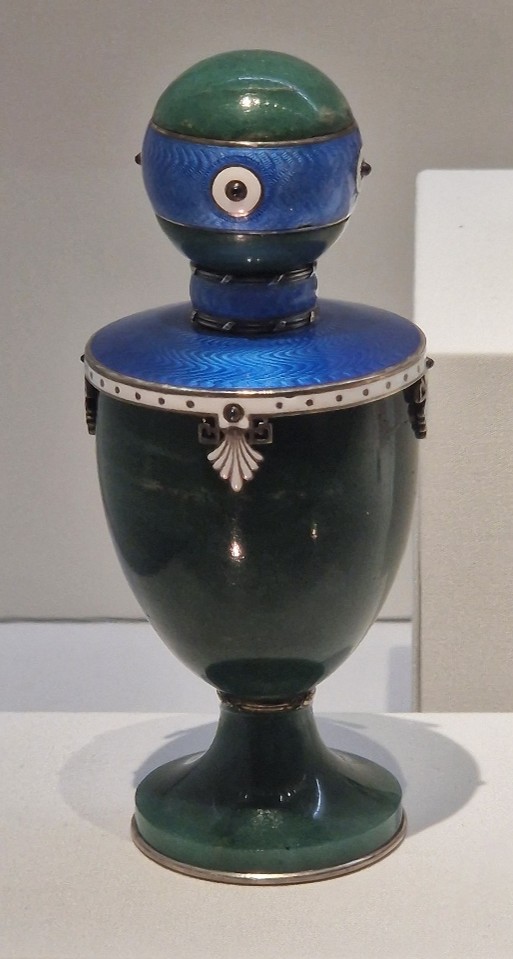
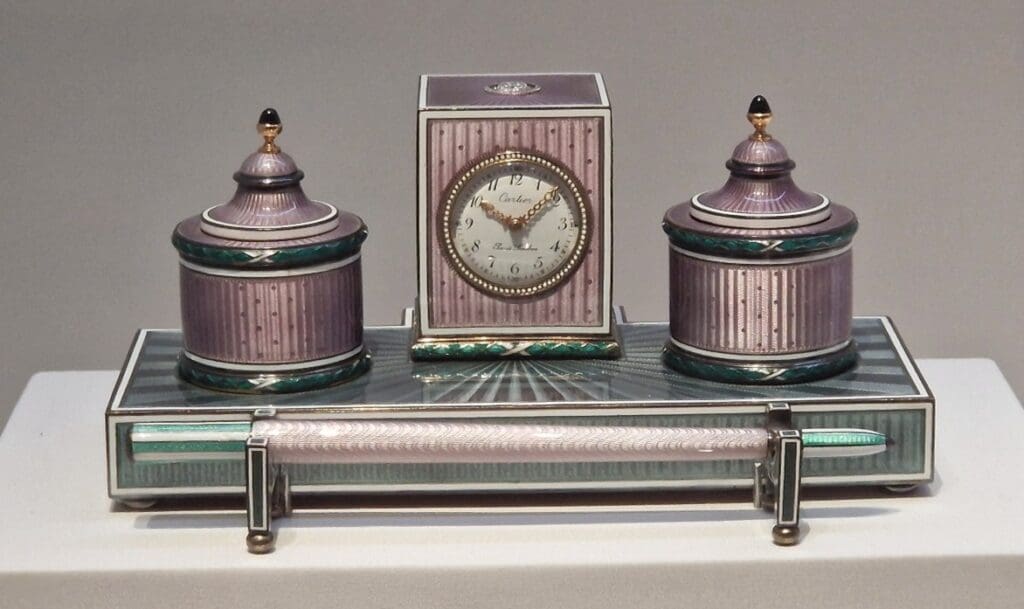
Cartier also perfected the craftmanship of more “practical” pieces such as this perfume burner. Made in 1907, it is set with aventurine quartz, guilloché enamel, sapphires and silver gilt.  The following year they created this desk clock on inkstand.

Cartier Perfume Burner
Cartier desk clock on inkstand

It is similarly-set with guilloché enamel, diamonds, sapphires, silver, gold, platinum and silver gilt.

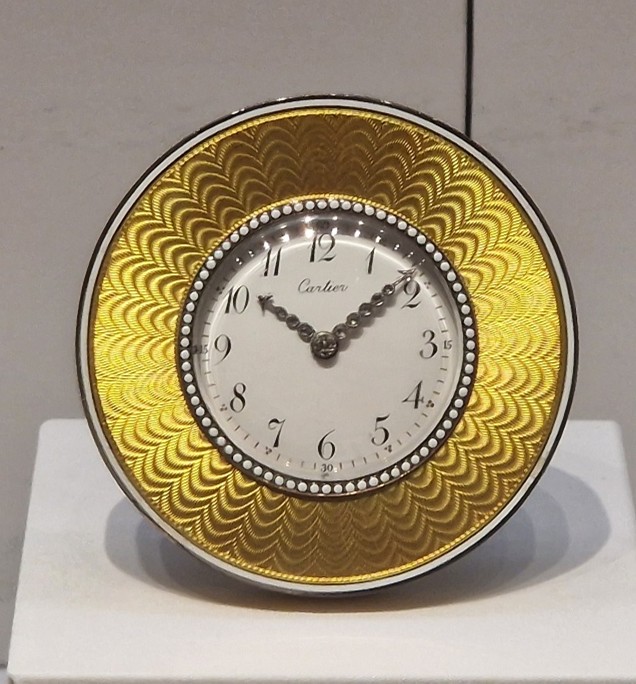
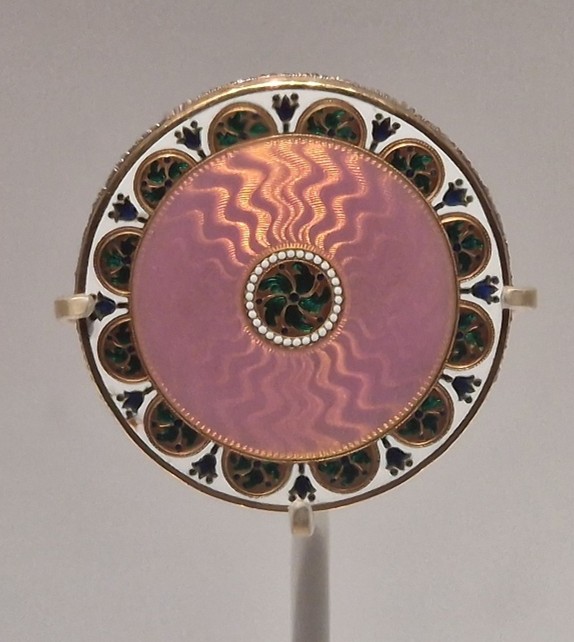
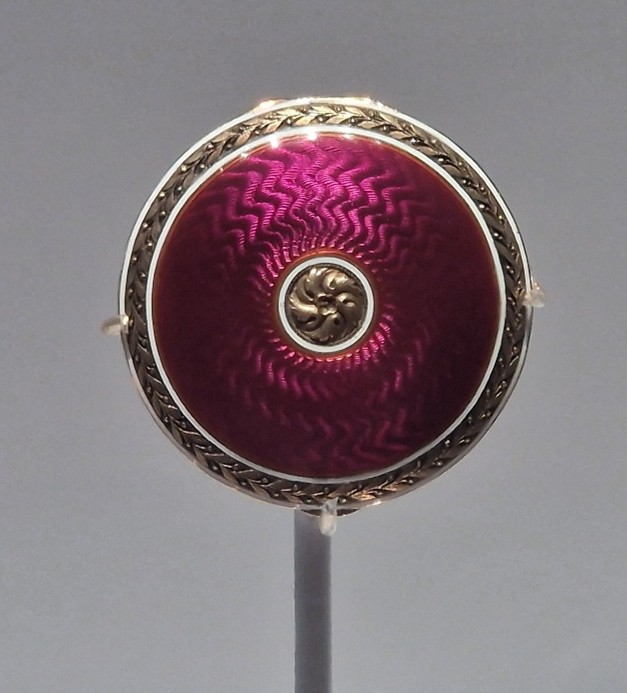
Three other wonderful examples of guilloché enamel are these three pieces:

Guilloché enamel
Guilloché enamel
Guilloché enamel

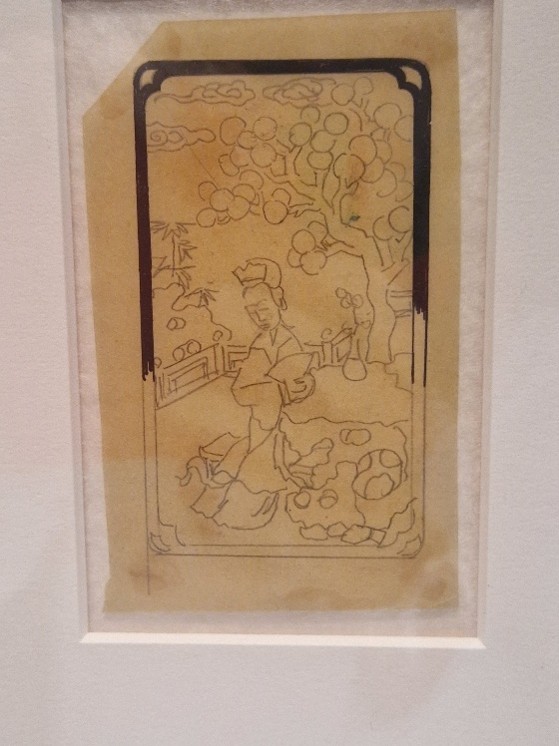
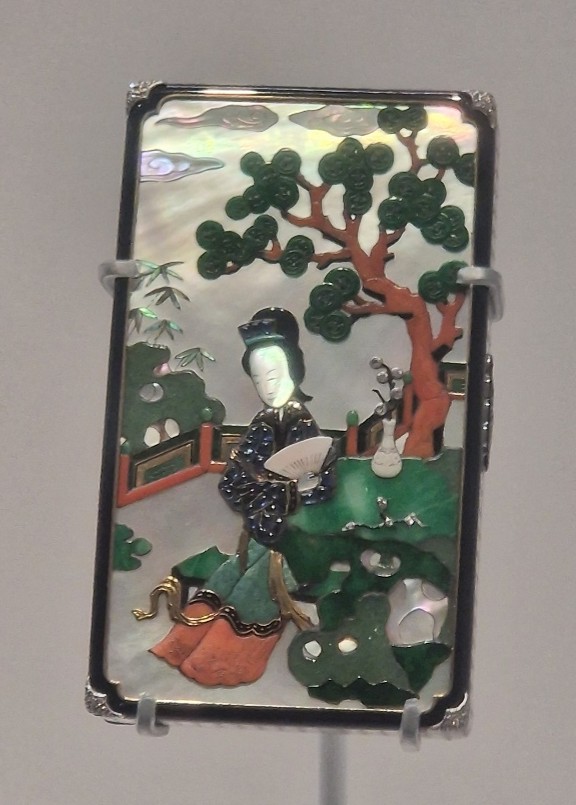
As we move in time, so do we move geographically. With long travels becoming more “common”, came new discoveries and new combinations of styles and texture, such as this Chinese Vanity case created in 1928.

Chinese vanity case
Chinese vanity case
Chinese vanity case

Other far away places include Egypt, put on the map with the discovery of Tutankhamun’s tomb in 1922.

These new designs, step away from fluid lines and nature-based motifs, giving way to geometric design as clean lines, contrast and new colours.

This is the Art Déco movement which ‘cast aside the dictates of the past’, says decorative arts historian Melissa Gabardi. Art Déco jewels were sleek and bold, characterised by sharp edges and regularity of surface, line and volume. Unorthodox combinations of stones were introduced, with many designs combining natural materials such as onyx, emeralds, rubies, jade, silver, ivory, lapis and rock crystal with manufactured ones such as plastic and glass.
It is no secret that this is my favourite period when it comes to jewellery design.

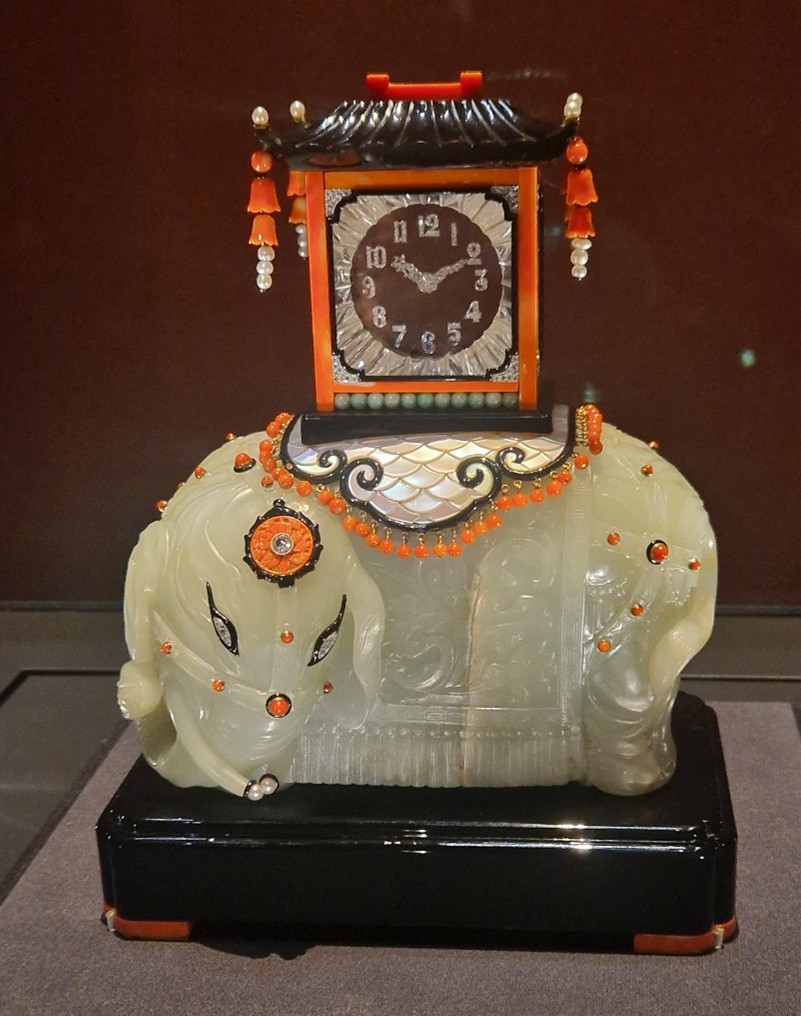
The below pieces illustrate this daring combination of semi-precious and precious gemstones, resulting in some magical design by the luxury brand.

Elephant Mystery Clock
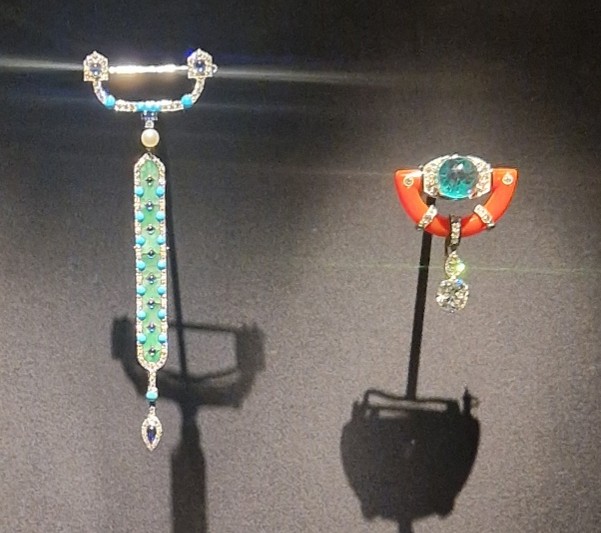
Jade and turquoise brooch, 1913; carved emerald, coral and diamond brooch, 1925
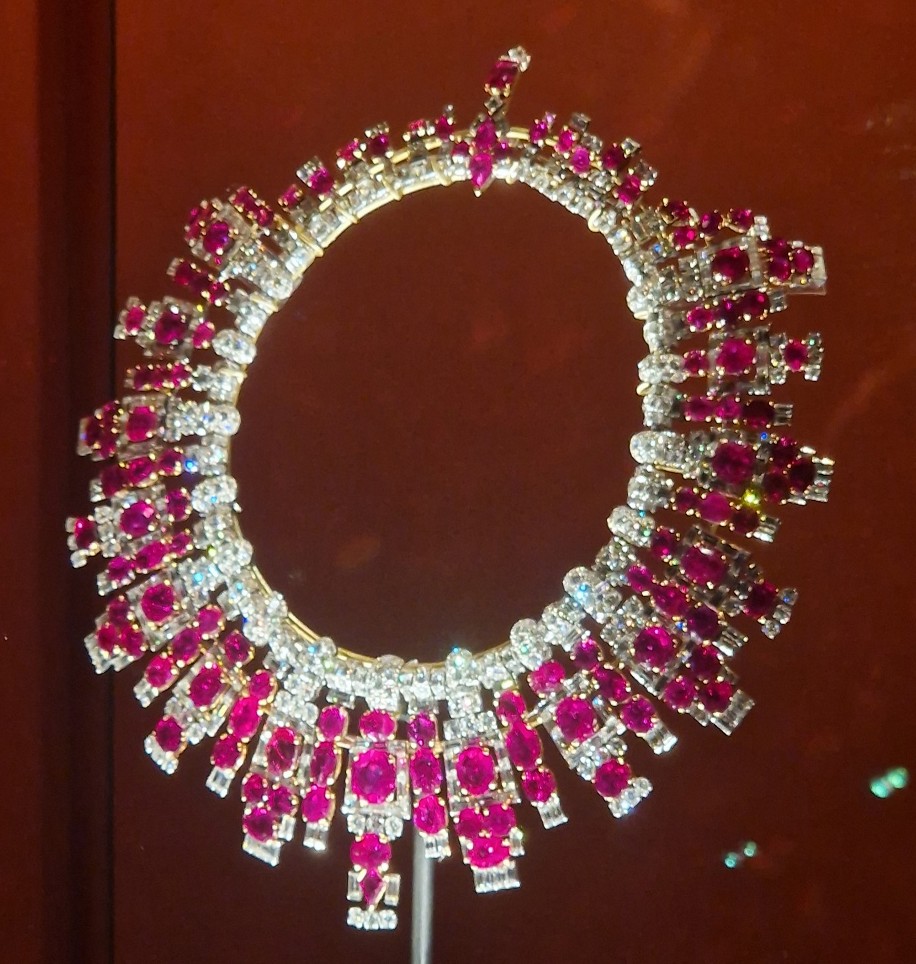
Cartier Ruby necklace

Renewed interest in Egyptian, Chinese and Japanese art offered European artists a new source of stylistic motifs. They adapted decorative elements particular to Asian jewellery, such as jade, coral, enamels, lacquer and pearls. Designs ranged from exact copies of dragons, pagodas and Chinese characters, to more liberal interpretations of Asian themes.

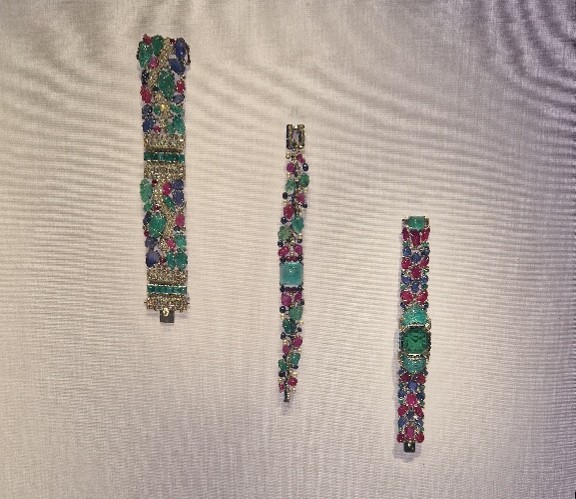
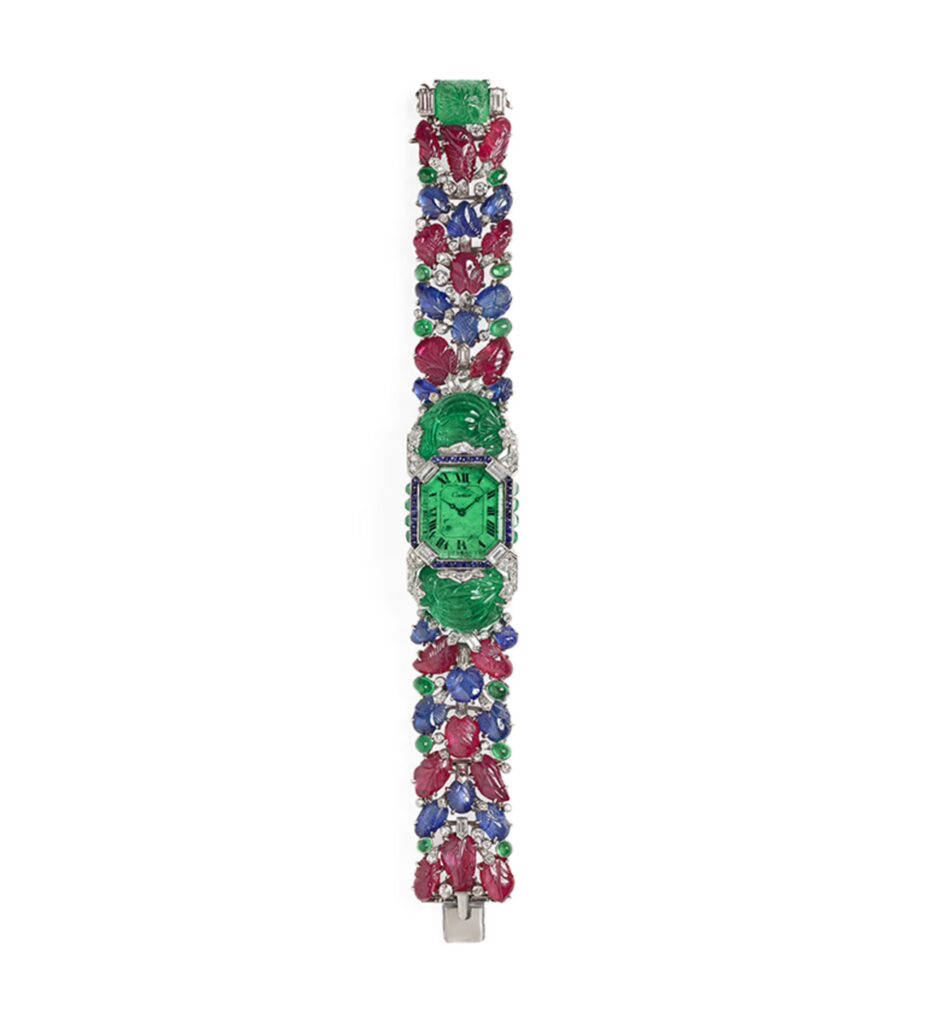
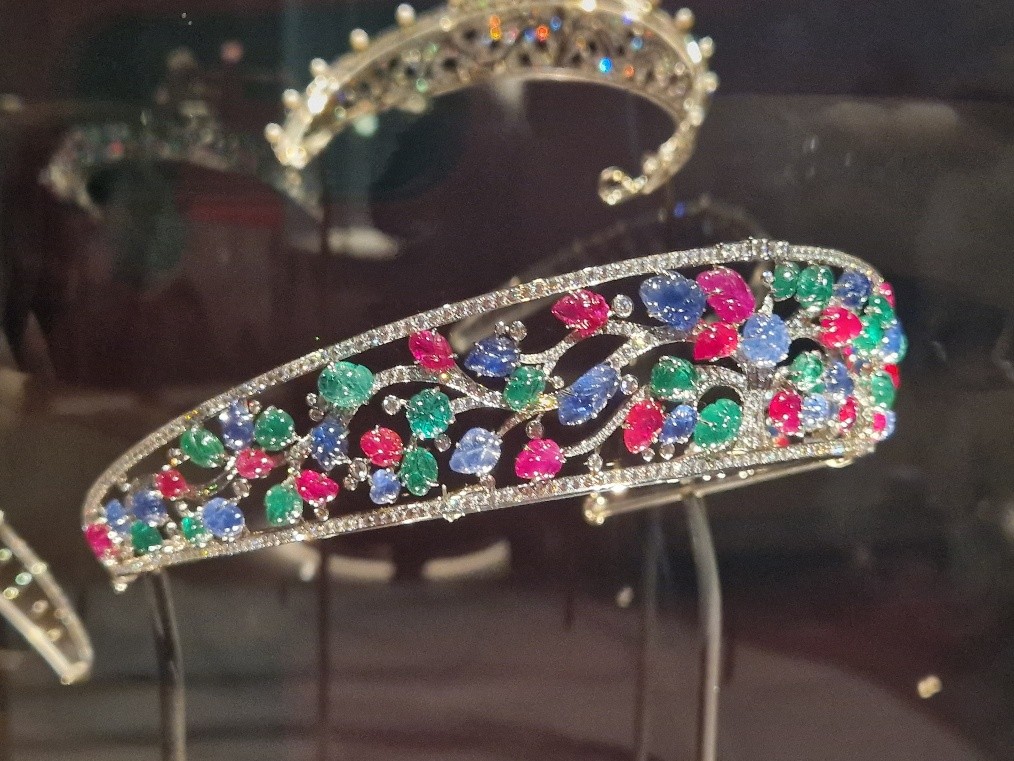
Keeping with the use of different materials and gems, the Cartier exhibition delighted us with a selection of Tutti Frutti jewels.

At the time of Art Déco jewellery creation, Jacques Cartier was running Cartier London and would return from his many far away travels with the most exquisite gems. These stones could be carved or made into cabochon. Cartier was the first to create these new colour and gem combinations and in the 1970s the style was named Tutti Frutti.

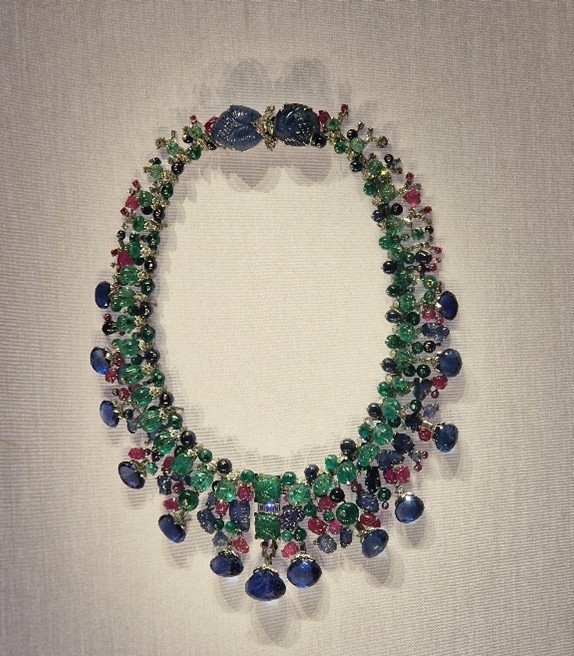
1928 Tutti Frutti necklace
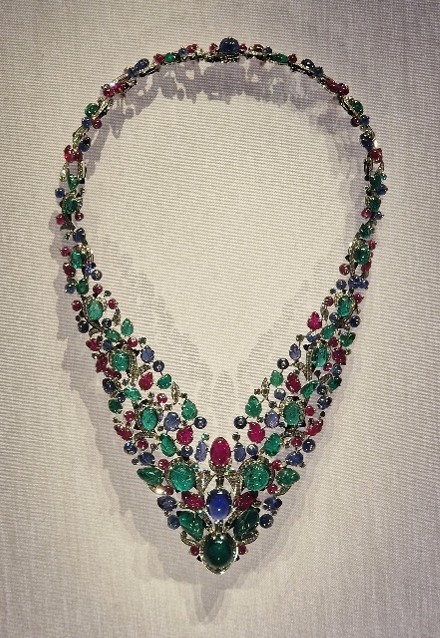
2024 Tutti Frutti necklace
Tutti Frutti bracelets, 1929, 1927 and a bracelet watch 1929.
Detail of the Tutti Frutti watch bracelet

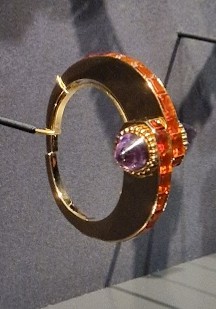
The daring and striking colour and gem combination expands to other gems such as quartz in this handcuff bracelet made of amethyst and citrine.

Handcuff bracelet, 1929
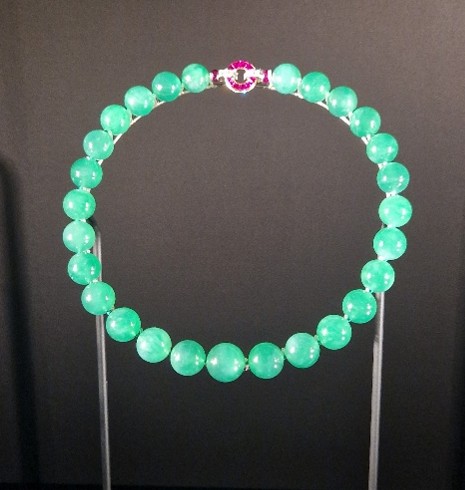
The Hutton-Mdivani jadeite necklace

Jade and ruby seemed the perfect alliance of West meets Far East in this sublime necklace made in 1934.

The exceptional colour and translucency of these matching 27 jadeite beads make this necklace one of the finest jade jewels ever made. In 1933, Alexis Mdivani, husband of American heiress Barbara Hutton, brought these beads to Cartier to add a diamond clasp, which Hutton swapped the following year for the current ruby mount.

This necklace now belongs to the Cartier collection along with several other pieces presented at the Victoria & Albert Museum. Over the years, private owners have sold their heirlooms and Cartier has been very pro-active in buying back all of their most prized pieces.

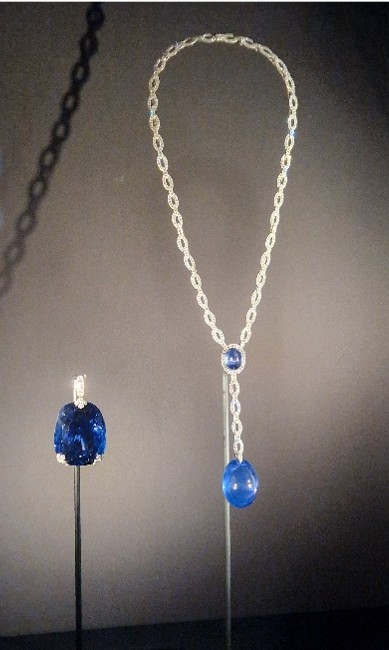
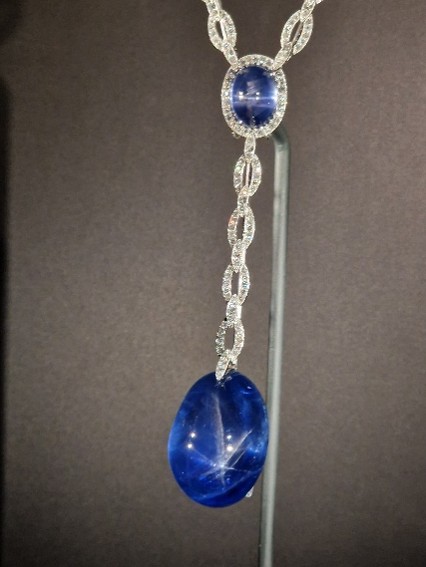
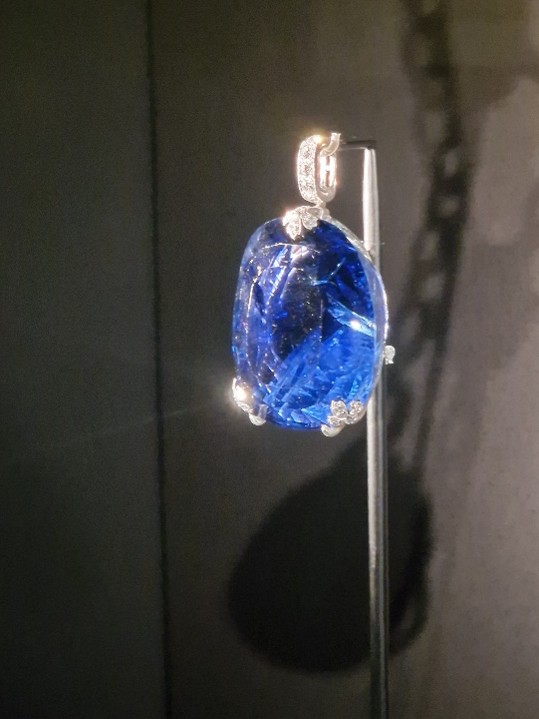
A few have the extraordinary chance of owning exquisite pieces such as this diamond and sapphire sautoir made in 1911. It is set with a 35.13 carat star sapphire and is part of a Swiss collection. The sapphire in the piece beside it, weighs 478 carats and was made in 1913. It belongs to the Qatar Museum.

Sapphire and diamond pendant and sautoir
Detail of the sautoir
Sapphire and diamond pendant

As we leave the room presenting some of the most spectacular gems, we step into the world of clocks and watches.

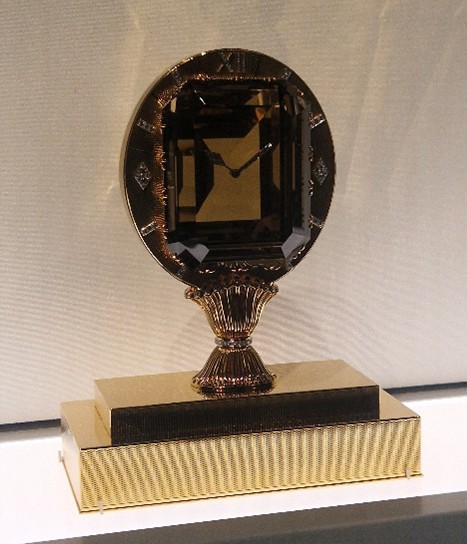
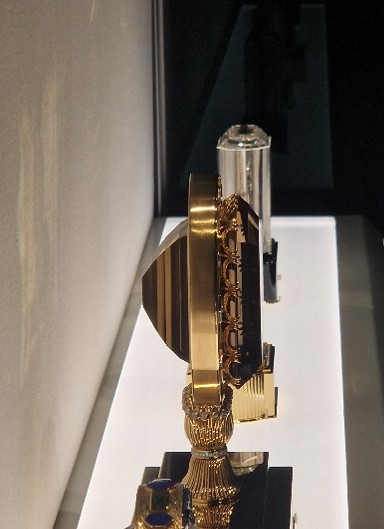
My favourite piece was this Mystery clock made in 1956 set with a single piece of smokey quartz.

1956 Mystery Clock
1956 Mystery Clock
Side view of clock
Side view of clock

As we step away from the more “wearable” we enter the last room dedicated to tiaras.
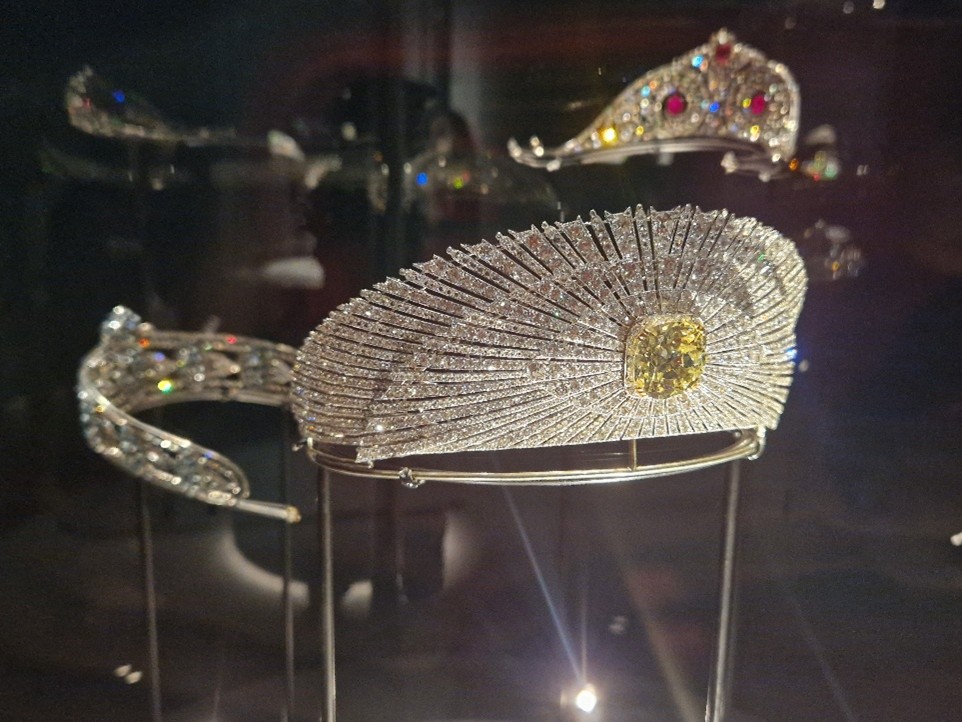
The Sun Tiara made in 1907, set with a Fancy Intense Yellow diamond weighing 32.58cts, part of the Al Thani collection.

The Sun Tiara made in 1907, set with a Fancy Intense Yellow diamond weighing 32.58cts, part of the Al Thani collection

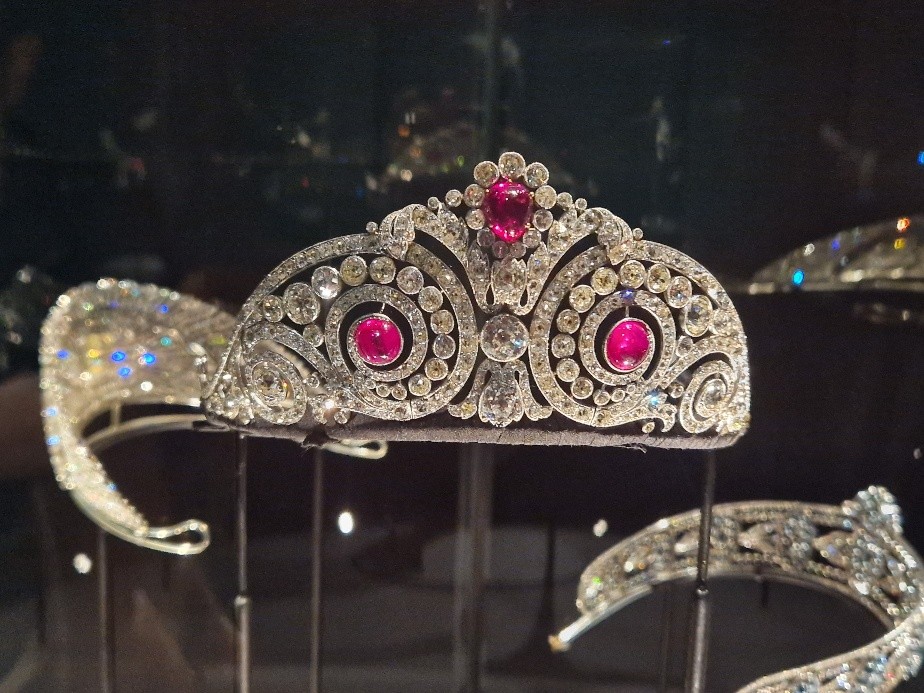
This tiara is set with diamonds and synthetic rubies. It now belongs to the Victoria and Albert Museum, after being allocated by HM Government in lieu of inheritance tax. The design and stones were supplied to Cartier by Alexandra Calvocoressi-Comnène, who was to wear it for her wedding to Robert Everts in 1913.

Cartier Diamond & Ruby Tiara
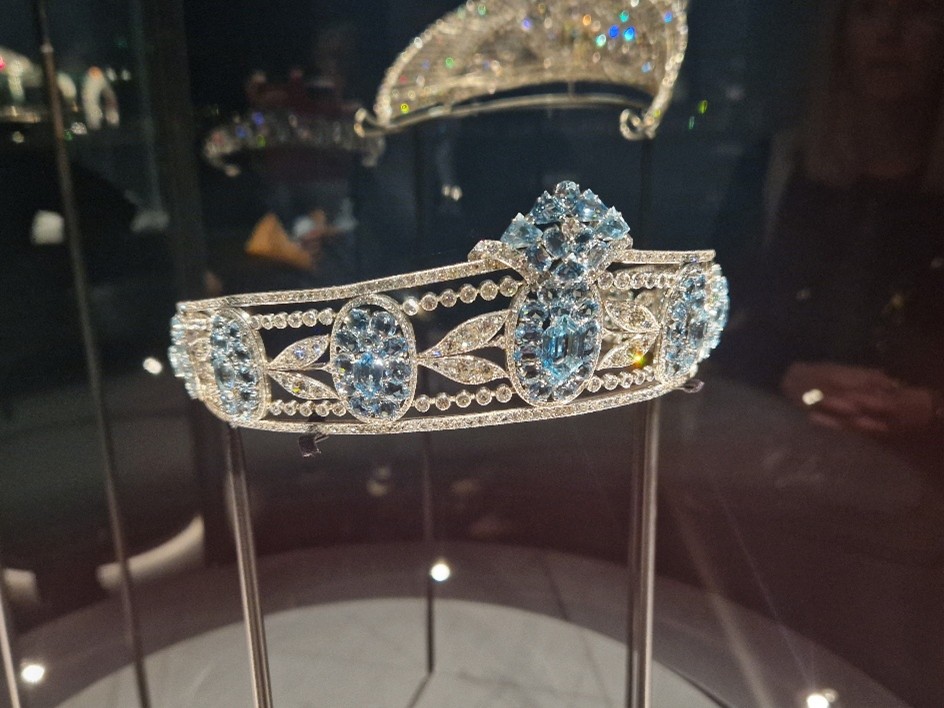
1938, aquamarine and diamond tiara, owned by the Qatar museum
Cartier Tutti Frutti Tiara

Tutti Frutti is still in demand as does this tiara prove. Made in 2018, it belongs to a private collection.

The above pieces are but a snippet of the wonderful creations over the last 100 years by Cartier. When I am fortunate enough to handle period pieces by this unique brand, I am reminded that each one of them has been carefully designed, curated, set with stones flown from the other side of the world, from sometimes perilous countries and nothing should be taken for granted when admiring extraordinary artwork, in whatever shape or form it may come.

I hope this preview has given you an appetite to discover the exhibition in its entirety. Hurry, few tickets remain available! 

Other highlights to discover include:  

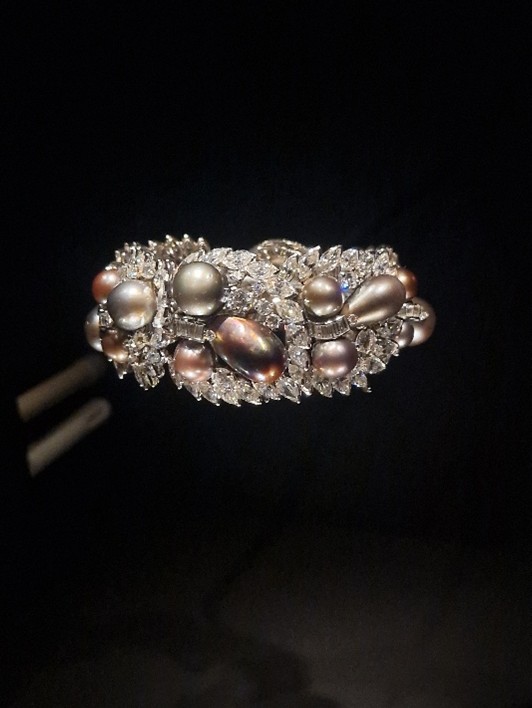
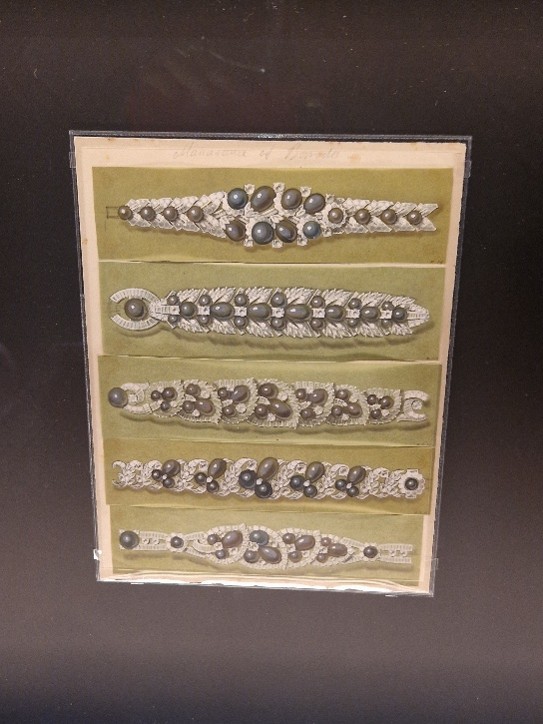
A diamond and pearl bracelet
Designs for diamond and pearl bracelet
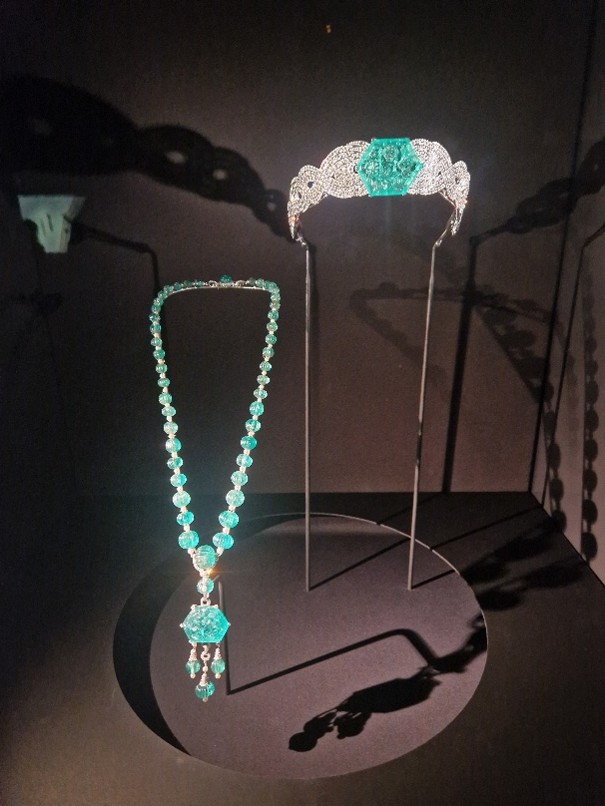
Carved emerald and diamond necklace and tiara
Made with 2,473 diamonds in the colour of Mexico, it was created in 1968 for film star Maria Felix. It now belongs to the Cartier collection.
Magdalena Odundo at Houghton Hall

Artist Spotlight: The work of Dame Magdalene Odundo

Dame Magdalene Odundo (Kenyan/ British, b. 1950) is arguably one of the most important artists working in Britain today and the definitive contemporary ceramicist of the modern era.

Odundo’s oeuvre typically consist of sculpture in clay and on occasion in glass. These forms simultaneously traditional and modern – equally unpretentious and layered with meaning. Her work is almost timeless – galleries exhibiting her pieces often choosing to display them alongside historical artifacts and objects from societies which she has taken inspiration from.

The creation of her work is a complicated process. The sculptural vessels are predominantly hand-built coiled pots, formed in terracotta, using a traditional technique learned in Nigeria. They are typically decorated in slip, multi-fired and polished. Her work is recognisable by the strength of the form and glazes – usually either almost metallic in burnished brown/ black or orange/ red oxide.

Odundo, has discussed the closeness the shapes of her work take to the human form – and that naming terms for pottery vessels such as ‘neck’ and ‘body’ make pots anthropomorphic – vessels have the exterior on show, whilst the interior is hidden, as individuals do.

In recent years Odundo’s status has been reflected by a significant number of dedicated exhibitions of her work. These exhibitions have included Magdalene Odundo: The Journey of Things held at The Hepworth Wakefield (February 2019 – June 2019) and Sainsbury Centre (August 2019 – December 2019); Magdalene Odundo in Cambridge at the Fitzwilliam Museum (December 2021 – June 2022); Magdalene Odundo: A Dialogue with Objects held at the Gardiner Museum, Canada (October 2023 – April 2024) and the exhibition currently being held at Houghton Hall, Norfolk (* until 29th September 2024).

Magdalene Odundo at Houghton Hall

Dame Magdalene Anyango Odundo was born in Nairobi in 1950 and spent her childhood in India, Nairobi, and Mombasa. She was primarily educated in Kenya by Irish nuns – and according to the artist had little knowledge of ceramics. The colonial education system invariably overlooking the chiefly female tradition of making pots for food preparation.

She initially trained in Kenya as a Commercial and Graphic Artist. She travelled to the UK in 1971 to continue her studies – she has lived and worked in England since this time.

Between 1971 – 1973 Odundo was a student at Cambridge College of Art. It was here she first discovered her passion for ceramics. As she revealed in a 2021 interview

“The first time I actually encountered clay I just literally fell in love with it”.    

Magdalene Odundo has discussed the importance of clay to her work, considering the connection between pottery and the earth – to quote “you come from it, and you go back to it”. She has referenced how ceramics have been used to produce vessels throughout human history and across civilisations. The corelation between the shapes she creates – the human form and therefore condition – are also pivotal.

She achieved a BA in Ceramics at West Surrey College of Art and Design (renamed University of Creative Arts) between 1973 – 6. Odundo became a University Professor at this institution in 2001 and Emirta Professor in 2016 and Chancellor of the institution. Magdalene Odundo is closely linked with Surrey and is based in Farnham.

During the early part of her career, Odundo, visited Kenya, Nigeria, and the Pueblo people in New Mexico to learn pottery building and glazing techniques. In 1976 The Hepworth Wakefield made the first acquisition on of her work by a UK institution – ‘Eniasulo (Water Carrier)’ (1974-6). She was awarded a Masters in Ceramics from the Royal College of Art in 1982. It was after her exhibition in the early 1980s that appreciation of her work became more widespread.

The Magdalene Odundo exhibition currently being displayed at Houghton Hall, Norfolk brings together several of Odundo’s important works in both ceramics and more unusually glass. The show is the first at Houghton dedicated to the work of a female artist and additionally a black artist. The exhibition aims to create a juxtaposition and a dialogue between the opulent interiors of the Palladian house and Odundo’s contemporary sculptures.

One of the most impactful pieces is a new work displayed as a dining table centrepiece in Houghton Hall’s Marble Parlour. The work was produced during Dame Odundo’s yearlong residency at Wedgwood, Stoke on Trent. The piece reflects upon Wedgwood founder Josiah Wedgwood’s campaigning for the abolition of slavery and work as a ceramicist. This large multi-tiered sculpture is atypical of Magdalene Odundo’s work.

To quote the artist

It is the first time I’ve used narrative and figure and ornament in my work, because my own work is very paired down, very plain. The discovery of all the ornaments and the figures within the Wedgwood tradition gave me a platform to use narrative and storytelling”.

Odundo uses Jasperware – instantly recognisable as Wedgwood in Black and Cane colours, first used in the 1770s. The lower two-tiers feature horrifying symbols of slavery, and figures, akin to of those depicted in the shocking 18th century Brook’s slave ship illustration. The upper tier has images of recent protest in Nairobi. Odundo was able to refer to the design in the Wedgwood archive, including the anti-slavery medallions.

For the Houghton Hall exhibition, her modern objects are placed in contrast with the antique and historic pieces, within interiors designed by William Kent for Robert Walpole.

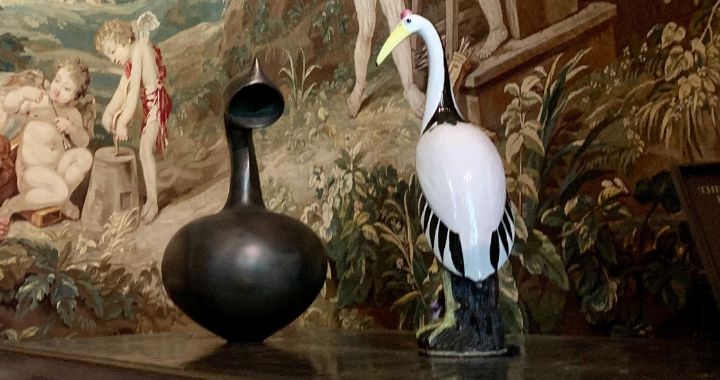
In the Green Velvet Bedchamber where typically a pair of Chinese porcelain cranes are on display – one has been replaced by Magdalene Odundo’s ‘Untitled’ (1995) – these two ceramic pieces seem to be in a direct dialogue with one another. The shape of Odundo’s vessel and black glaze complimented by the chinoiserie cabinet it sits upon.

In the Stone Hall seven objects are on display – five in the centre of the room raised on plinths – and a pair in orange glaze set within alcoves. Against the bright white stone, the black and orange glazed sculptures are shown to their best advantage.

The Magdalene Odundo exhibition is currently being held in parallel with one-hundred Anthony Gormley iron sculptures – installed around the estate.

The market for Dame Magdalene Odundo’s work has been very buoyant this century. In recent years demand and prices have increased dramatically.

To illustrate, it is worth looking at pieces which have appeared on the open market historically and have been offered again this decade. In September 2006 Bonhams London offered ‘A rare Vase Form’ executed by Odundo in 1986. (Lot 220, Bonhams, International Contemporary Ceramics, 19th September 2006) At that time the piece sold for £27,600 (including BP).

The same work described as ‘Untitled’ was offered in June 2021 at Sotheby’s London (Lot 32, British Art Evening Sale Modern/ Contemporary, 29th June 2021). This time the vessel sold for £378,000.

Notably, ‘Untitled’ (1984) was sold by Sotheby’s in June 2022. (Lot 2, British Art: The Jubilee Auction, Sotheby’s London, 29th June 2022). When first going under the hammer 15 years earlier at Bonhams NY the lot had been titled ‘Mixed Colour Flat-Topped Winged’ – achieving $45,000 (Lot 90, International Post-War and Contemporary Ceramic Art, Bonhams NY, 5th June 2007). In 2022 this work sold for a second time reaching £302,400!

In July 2021 Somerset auctioneers Lawrences of Crewkerne sold a ‘Terracotta Vessel’ produced by Magdalene Odundo in 1985. The work sold for a hammer price of £94,000 (Lot 27, 19th/ 20th Century Design, Ceramics…, Lawrences of Crewkerne, 19th July 2021). The same piece appeared at Sotheby’s less than three years later in June 2024. This time reaching a total of £240,000!

Over the past 18 months records for the artist work have been broken. In June 2023 Sotheby’s sold one of the most striking of her vessels ever offered at auction – Dame Magdalene Odundo’s ‘Untitled’ (1999). Against an estimate of £100,000 – 150,000, it reached £533,400.

For those wishing to view her work in person, it can be found in the collections of the Metropolitan Museum of Art in NY, Pallant House Gallery in Chichester and The British Museum, London.

The ‘Magdalene Odundo’ exhibition continues at Houghton Hall until late September. A solo exhibition of her work will open at the Thomas Dane Gallery, London on 9th October 2024 and displayed until 14th December 2024.