






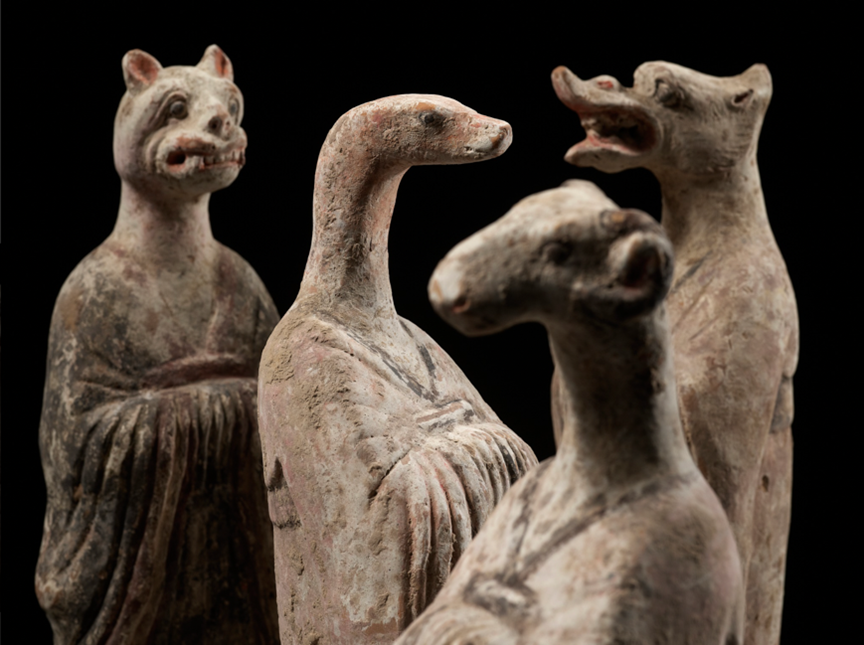
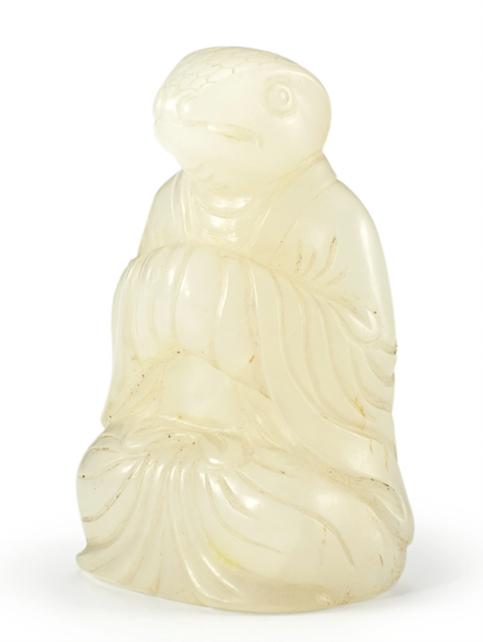
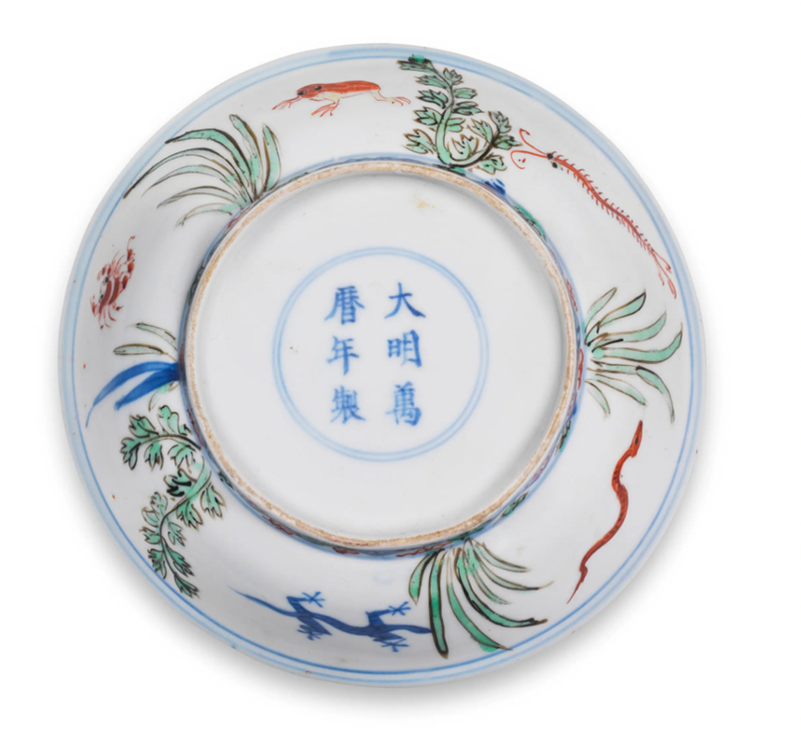
Lunar New Year, which begins on 10 February in 2024, is the largest festival in many East and Central Asian cultures. Lunar New Year typically falls on the second new moon following the winter solstice. In China, this festival is also called Chinese New Year or the Spring Festival. Each year highlights one of twelve animals in the Shengxiao, the Chinese Zodiac.
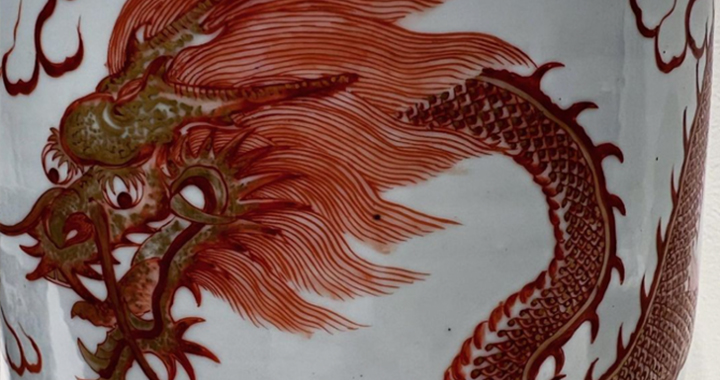
This year will be the year of the dragon, one of the most prevalent symbols in East and Central Asian material culture. People born in the year of the dragon are characterized as intelligent, lucky, and charismatic. Dragons have historically been depicted in forms such as embroidery, porcelain, sculpture, paintings, jade, ivory, and furniture.

Dragons are particularly popular in embroidery, one of East Asia’s oldest decorative arts traditions, originating in China during the late Neolithic period. From the first century CE, silk embroidery technology spread to Japan, Korea, and Central Asia. Throughout the centuries, Chinese symbols, imagery, and embroidery techniques continued to have significant influences on embroidery practices across Asia. Dragons, also originating in China, have a long history in East Asian art forms. Dragon imagery dates to at least the Zhou period (1046-256 BCE), where it functioned as a totem to which small agricultural clans prayed for rain and protection from fires. This is why many East Asian dragons, such as those depicted in the much later Meiji tapestry below, are often depicted in ponds or seas. Water dragons symbolize prosperity for the owner. While imperial robes are the most famous form of dragon embroidery today, everyday water dragons comprise a far larger quantity of objects that have survived. This is particularly a result of the Ming Dynasty’s (1368-1644) rapidly growing merchant class, which increased the demand for silk embroidery and continued into the Qing Dynasty (1644-1911).

In the late nineteenth and early twentieth centuries, there was unprecedented Western demand for Chinese and Japanese silk embroidery, as China and especially Japan opened foreign trade. Export markets were already popular within Asia and Europeans had long enjoyed fine examples of handwoven dragon embroideries. As foreign demand grew, China and Japan mass produced silk embroidery in export markets for the first time. Improved technology and the advent of embroidery factories also contributed to this rapidly increasing market, which catered to Western tastes. In the early 20th century, silk was China’s largest export commodity. By the 1930s, this demand subsided due to the rise of synthetic fibers. Today, regardless of the medium, dragons continue to enjoy popularity in Asia and throughout the world.

In East Asian cultures, the Year of The Dragon in the Zodiac is marked with power, energy and fortune, with strength and intelligence assured of those born during this period.
Whilst every symbol holds a special place in East Asian cultures, the dragon has always held a significant place in the nations folklore and history, with emperors associating themselves with the dragon as a symbol of imperial authority and strength.
The dragon has often been used for many decorative items throughout history in the art world and even further afield. At Doerr Dallas we thought we would talk you through some of the most glorious examples of this most auspicious figure.
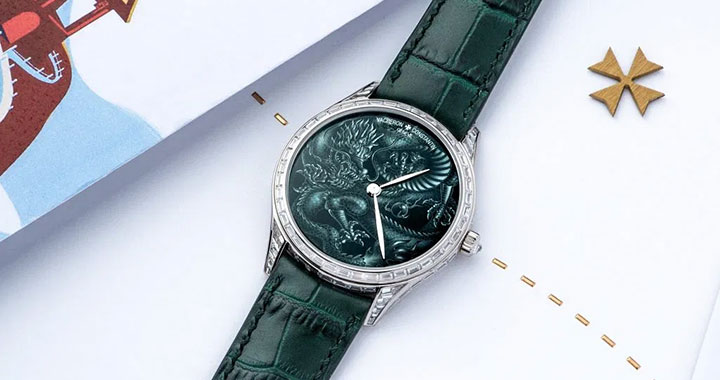
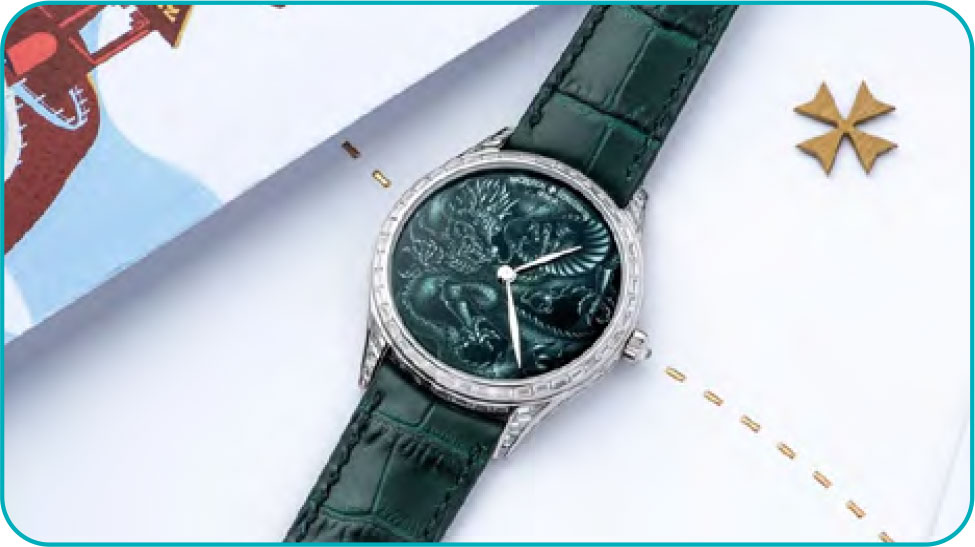
Vacheron Constantin, despite usually being a very conservative watch brand have recently introduced this impactful piece in a series of multicultural one-offs. Included in the stunning line-up is an ode to China, with a five-clawed dragon realised in grisaille enamel. The 16th century technique uses white enamel on a dark enamel base to emphasise the interplay of light and shadow without the use of vibrant colours.
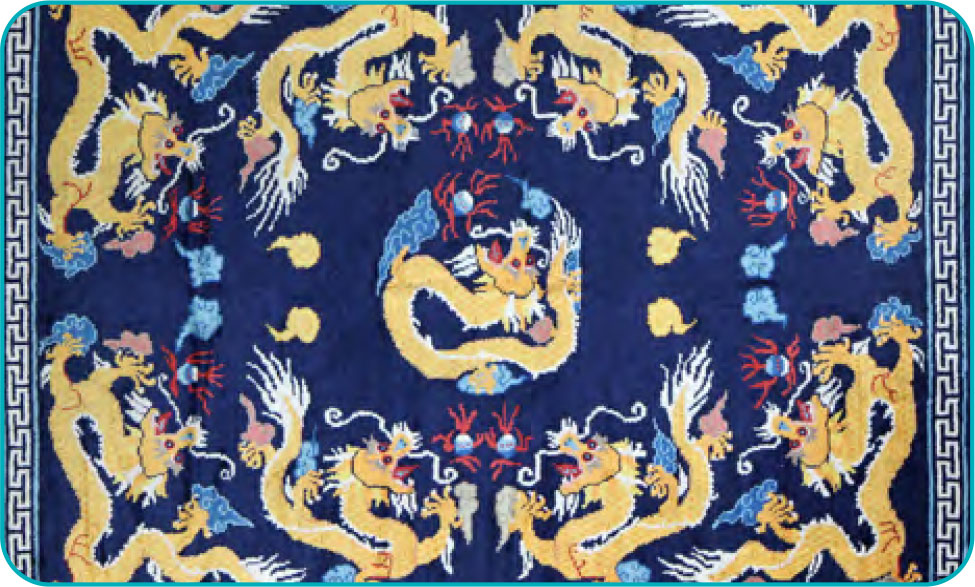
The carpets of the far east have always been fascinating to many people and this example is no different.
Stunning golden dragons on a deep indigo blue background with a classical T pattern border design, it is supposed that the figures from which they were derived, once symbolised thunder and clouds.
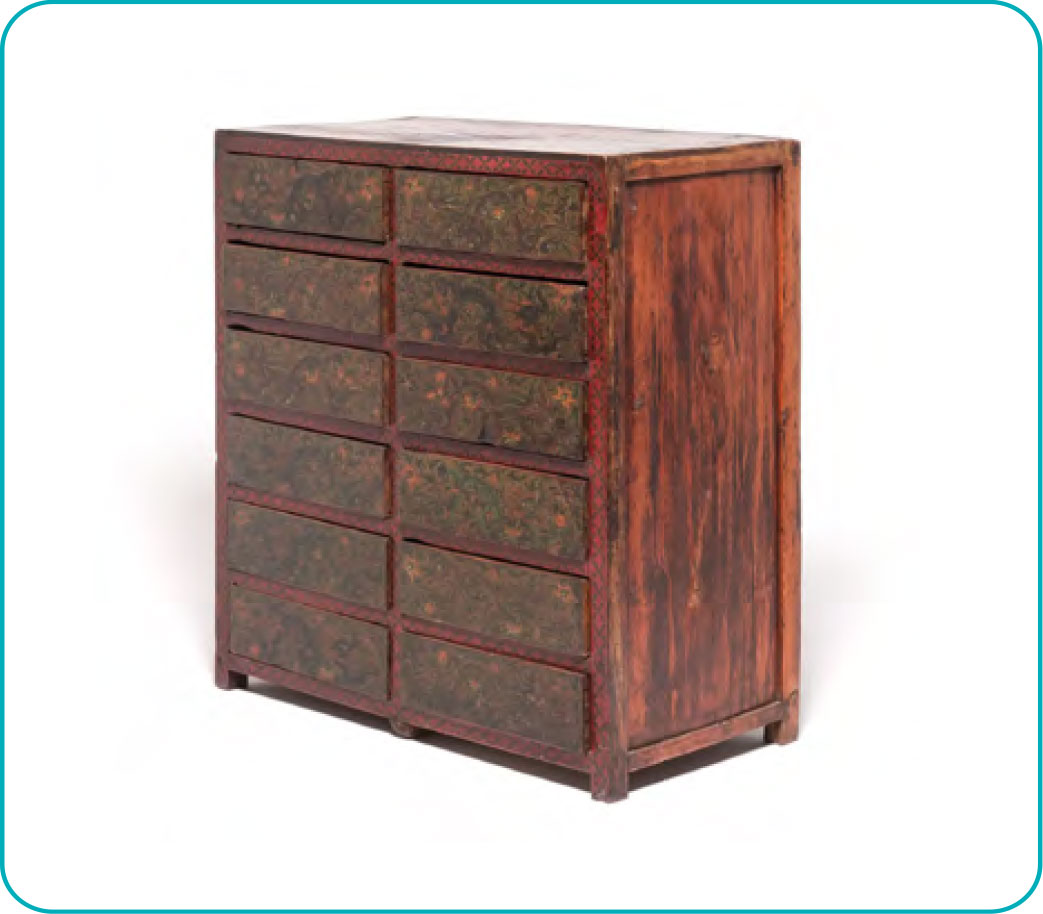
The number 12 figures prominently in Tibetan astrology, making this simple chest’s dozen drawers the perfect canvas to honour the year of the dragon. Tibetan astrology recognizes a 12-year cycle, characterized by 12 animals, including the dragons that wind their way on this expressively painted cabinet. The gessoed dragons symbolize ambition, dignity and success. Camouflaged by lush flowers and vines, each writhing dragon clutches in its claws a lotus flower, a symbol of purity and perfection, and a peach, a symbol of immortality.
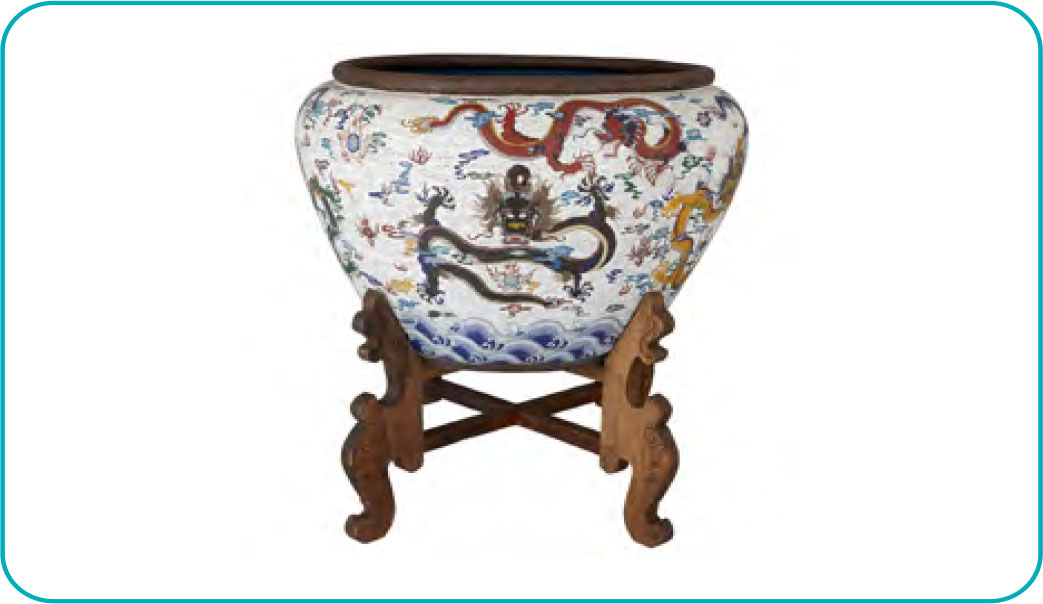
This monumental cloisonné enamel jardinière is a superb example of 20th century Chinese design. The jardinière is of traditional form, rising from a narrow foot to a flared shoulder and culminating in a rolled rim. The body is profusely adorned with cloisonné enamel designs over the white enamel ground: dragons, waves, floral patterns, and other motifs abound. The piece is supported by a wooden stand, each of the stand’s four legs ornately carved and finished.
So whilst the images of other Zodiac figures such as the Rat, Dog, Rabbit and others all have their fans, it’s clear that the Dragon really does hold a special place in the heart of the Chinese people and judging by the popularity of the items relating to it, all over the world.
To arrange a an asian art valuation, call us on 01883 722736 or email us on [email protected].

During the eighteenth and nineteenth centuries, Bencharong porcelain was considered Thailand’s most valuable ceramic ware and is still widely celebrated in Thai culture today.
First commissioned by the royal Thai court from the late Ayutthaya period (1351-1767), Bencharong wares were produced in a variety of shapes, colours, and sizes, featuring both religious and secular motifs.
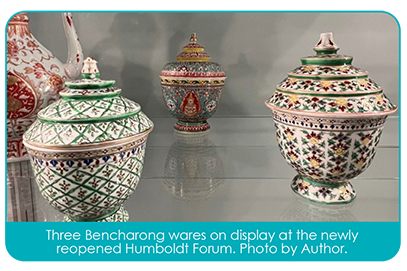
Three Bencharong wares on display at the newly reopened Humboldt Forum.
These pieces are instantly recognizable for their bright palette, geometric patterns, and frequent appearance of Thai Buddhist scenes. The name “Bencharong” means “five colours” in Thai; however, most Bencharong palettes range from three to eight colours.
The Bencharong palette first included yellow, black, white, red, and turquoise. Later, blue, orange, purple, and pink increasingly appeared.There is more than meets the eye, however, as this quintessentially “Thai” form was crafted entirely in China at Jingdezhen!
The most common theory for Bencharong’s name cites a literal translation from Bencharong’s Chinese Ming predecessor, wucai (“five colours” in Chinese). Another theory links the name to bencharongse, a Thai cotton dyeing technique with a similar five-colour palette, dating to the Sukhothai period (1238-1438).
Bencharong techniques closely resemble those of Ming and Qing wucai (sometimes called yingcai in the Qing Dynasty or famille verte, noire, or jaune). Like Bencharong, wucai was also glazed, double fired, and decorated with three-to-eight polychrome enamels.
The primary differences between domestic wuai and Bencharong are Bencharong’s different colour palette (particularly turquoise), which catered to Thai tastes, its lack of underglaze blue, and its enamel, which was more thickly applied.Bencharong enamels also cover the entire surface of the body, displaying no white porcelain, unlike many of their domestic Chinese counterparts.
Bencharong’s production history is difficult to reconstruct, as no commission records remain. However, recent excavations at Jingdezhen have revealed decorated Bencharong sherds, suggesting that Bencharong wares were both fired and decorated at Jingdezhen, during a period when some export wares were only fired at Jingdezhen and decorated after export.
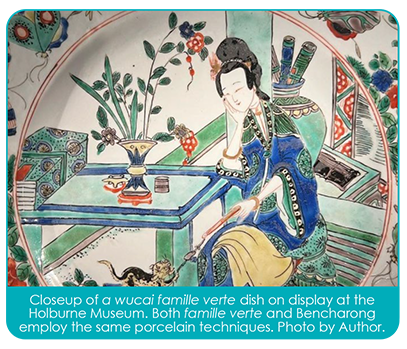
Closeup of a wucai famille verte dish on display at the Holburne Museum. Both familie verte and Bencharong emply the same porcelain techniques.
One useful technique to date Bencharong objects is by palette. Objects such as the one below (currently on display at the Humboldt Forum in Berlin) can be dated to the eighteenth century because nineteenth- century pieces often heavily feature pink or gold, a technique called Lai Nam Thong.
This piece also minimizes use of purple and blue, meaning that it was unlikely produced after 1800. When examining an object, don’t forget to examine the interior, which can provide useful clues! For example, turquoise interiors are only found in earlier Bencharong wares. Precise dating is typically unreliable, as Bencharong styles did not always align with Thai reigns.
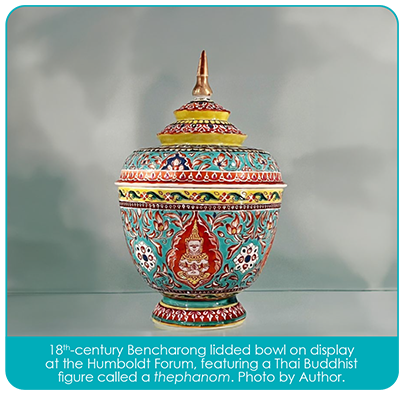
18th century Bencharong lidded bowl on display at the Humboldt Forum, featuring a Thai Buddhist figure called a thephanom.
Bencharong was often used as a dining ware, and therefore often came in matching sets.
Early Bencharong court wares also sometimes served as containers for cosmetics or medicine.
Initially, Bencharong was only produced for the Thai court, but high nineteenth-century demand necessitated expanded production for Thai nobility and merchants.
In the nineteenth century, King Rama II so admired Bencharong that he attempted to produce copies himself, as he was an amateur artist!
Bencharong decorations often reflect traditional artistic tastes across Thai media. Bencharong’s most common motifs include geometric patterns, Buddhist or Hindu iconography, mythic or literary creatures, and Thai flora and fauna.
The entire surface of the Buddhist lidded bowl at the Humboldt Forum is covered with polychrome enamels in red, navy, turquoise, white, yellow, and green, with floral bands and motifs surrounding Buddhist figures. These bands typically frame primary motifs and are either plain or subtly decorated.
The various floral patterns, particularly the yellow stem pattern at the top of the bowl, are commonly found in Buddhist Bencharong wares. The red band near the bottom of the bowl and repeated throughout the lid is a lai kruay cherng pattern (a funnel motif) depicting repeating tri-lobed flowers.
Given Buddhism’s predominance in Thailand, many Bencharong wares depict scenes specific to Thai Theravada Buddhism. This scene takes place in the Himaphan forest, a lower Buddhist heaven. At the center of the primary scene sits a thephanom on a red medallion shaped like a lotus petal, with his hands in anjali mudra.
The thephanom is a minor celestial being in Thai Theravada Buddhism, often mistaken by contemporary viewers for a Buddha. He wears jewellery and an ornate Thai headdress.
Although he is featured alone here, he is often surrounded by norasinghs, Thai Buddhist semi-deities who flank the thephanom and can be identified by their human upper body and lion/ deer mixture lower body.
Bencharong remains a popular form in museums and in private collections throughout the world, with a demand for a contemporary reproduction market in Thailand. Taking your Bencharong wares to a valuer may help you determine whether your objects are antiques or are contemporary reproductions.
Bencharong reveals a rich history of trade, religious activity at Thailand’s royal court, and upper-class desires to emulate royal tastes.
Further academic examination of the history of Bencharong may result in a better understanding of China’s historical relationship with Thailand, religious and secular imagery in Early-Bangkok Period art, merchant trade culture, and the upper class’ relationship with the royal Thai court.
Meanwhile, there is plenty Bencharong for us to enjoy in public collections, such as the Humboldt Forum, the V&A, and the British Museum!
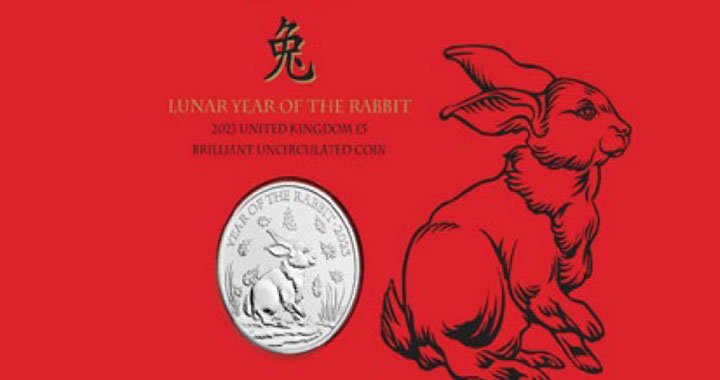
To celebrate the Chinese New Year and the start of the Lunar New Year on the 22nd January we thought we would look at the rabbit, our friendly bunny.
So, what might we expect from this new year?
The rabbit is a symbol of longevity, peace, and prosperity in Chinese culture. 2023 is predicted to be a year of hope. People born in a Year of the Rabbit are believed to be vigilant, witty, quick-minded, and ingenious.

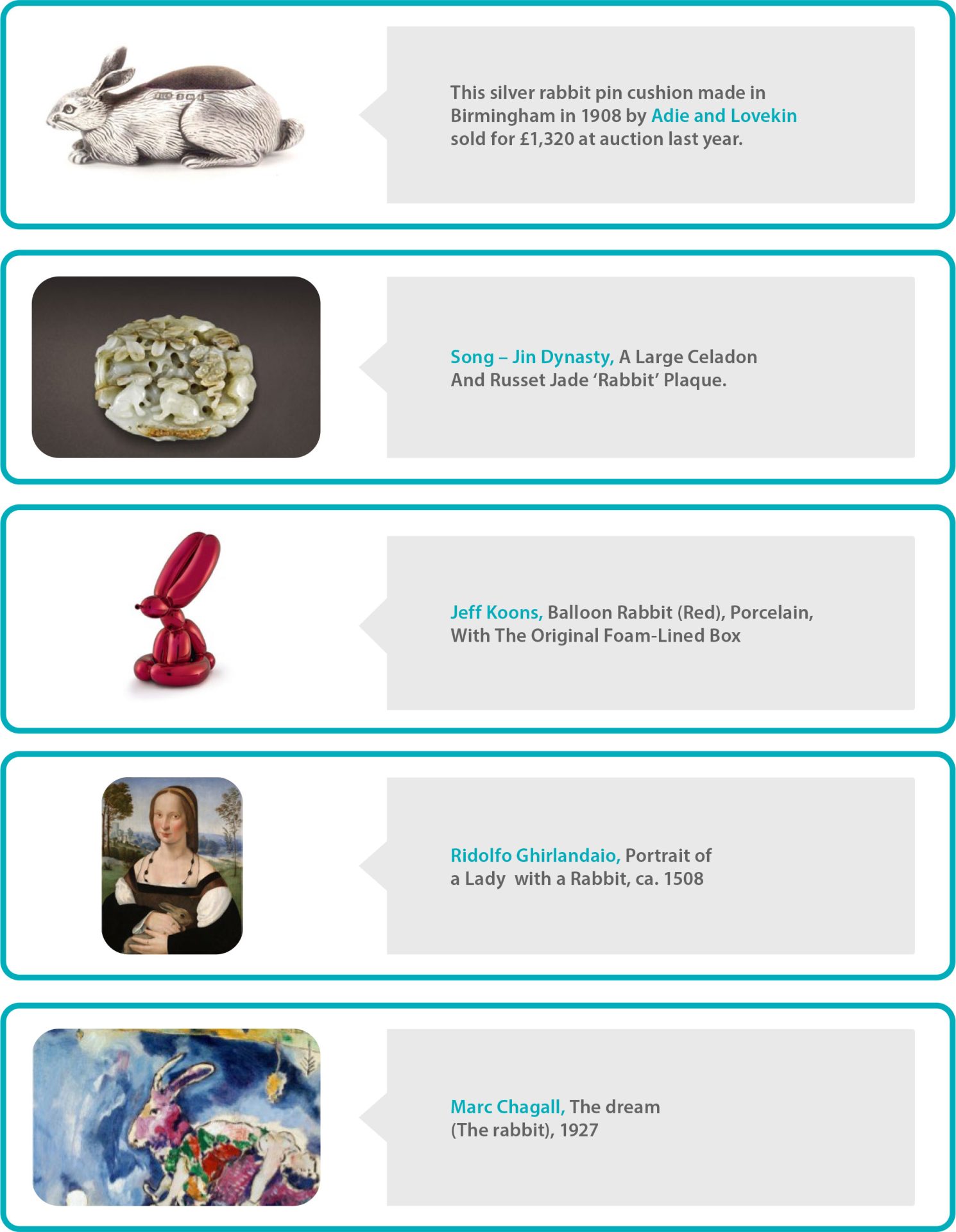
Rabbits have been seen as a symbol of sex and fertility since antiquity. In ancient Rome rabbits were frequently depicted as the animal of Venus. Conversely the rabbit was used by artists of the Middle Ages and Renaissance as a symbol of sexual purity and was often depicted alongside the Madonna and Child.

For those wanting to celebrate the Year of the Rabbit, you can purchase a £5 gold coin from The Royal Mint. If you have something more elaborate in mind, Christian Dior have produced a watch for this auspicious year, which retails at £29,000.


We could, however, simply celebrate the role of the rabbit in art over many centuries. See how the furry creature has inspired artists throughout the years.
Wishing everyone a Happy Year of the Rabbit.

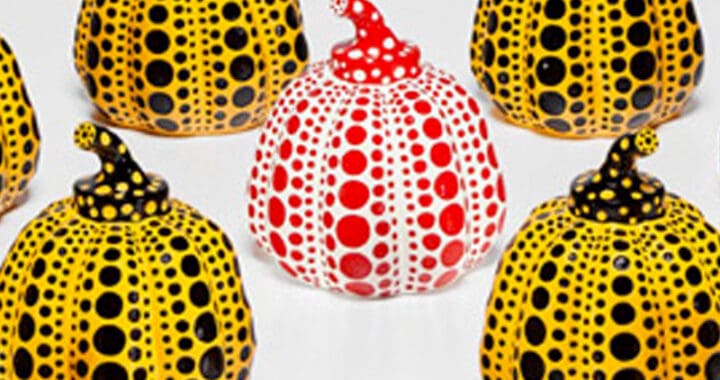
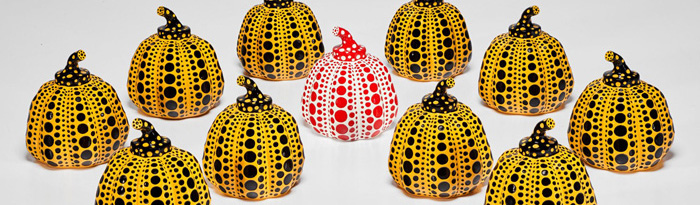
I would spend my £5,000 on a limited Edition by the Japanese Contemporary artist Yayoi Kusama ( born 1929).
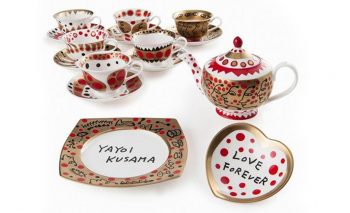
Yayoi Kusama tea set
I would choose one of her objects series, perhaps a Tea Set (above), or group of mini pumpkins (below) They are all colourful, tactile, fun, attractive, look great on display and invite curiosity. Plus, they offer an investment opportunity, as Kusama’s work has an international appeal and great originality. While still being recognisably her work it is like a strong international brand.
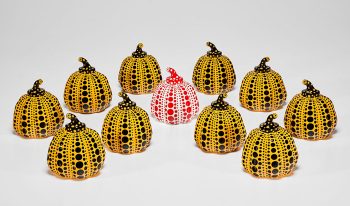
Yayoi Kusama – Eleven ceramic Pumpkins, one red and 10 yellow, 6 x 8 cm. estimate $2-3,000
Her work comes up for sale all the time, is widely available and sells well around the world. This is of key importance with art investment; the more countries you can sell in the better your chances are of some financial uplift on your purchase price.
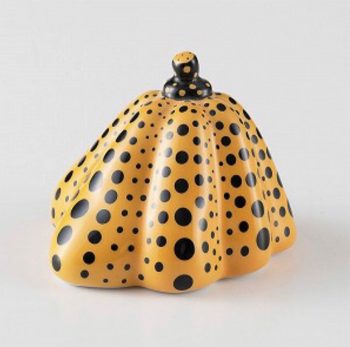
Yayoi Kusama mini pumpkin
I have chosen a few examples which I would buy in a heartbeat, all are coming up for auction somewhere around the world currently and the estimates are all under £5,000.