


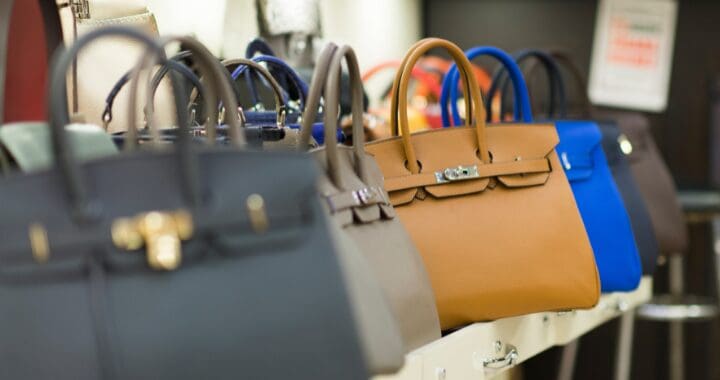
The counterfeit handbag market is no longer just a collection of cheap, bad knockoffs sold on street corners, it has evolved into a sophisticated underground empire. Today, counterfeit handbags make up roughly 12% of all global sales, while brands like Louis Vuitton consistently top the list as the most heavily faked, accounting for over 33% of counterfeit items. Unfortunately, no high-end brand is safe. The fake industry heavily targets iconic brands like Hermes, Gucci, Chanel, Prada, Dior, and many more.

Being able to spot some of the telltale signs and knowing what to look out for can really save you some money. So here are some things to look for if you decide to purchase a second-hand handbag.
Not just a number
A handbag’s serial number, date code, or authenticity stamp acts as its unique identifier. It can often tell you many helpful facts about your handbag and it can serve as a useful tool for spotting a fake. Rather than just random strings of digits, high-end fashion houses use highly specific, proprietary formulas where the letters and numbers tell a precise story of where and when the bag was manufactured. Counterfeiters frequently make fatal mathematical or logical errors here. For instance, stamping a code that decodes to a factory in France for a bag that was exclusively made in Italy, or using a date code that places the manufacturing year long after the specific model was discontinued. Beyond the sequence itself, the physical execution is a giveaway.
The fashion houses also use precise, deeply embossed heat stamps, uniform font styles, and exact alignment, whereas fakes often give themselves away with crooked lines, generic font types, or numbers that are cheaply laser-etched onto the surface rather than stamped into the leather.

Stitching
If the serial number is a handbag’s DNA, the stitching and hardware are its structural fingerprints. Authentic luxury houses maintain flawless engineering standards: stitching is meticulously uniform, featuring a precise number of stitches per inch, and is typically executed using heavy-duty, coated threads sewn at a subtle, angled slant rather than a perfectly flat, machine-straight line. Counterfeiters often slip up here, leaving behind frayed ends, uneven spacing, or loose loops that reveal cheap mass production.
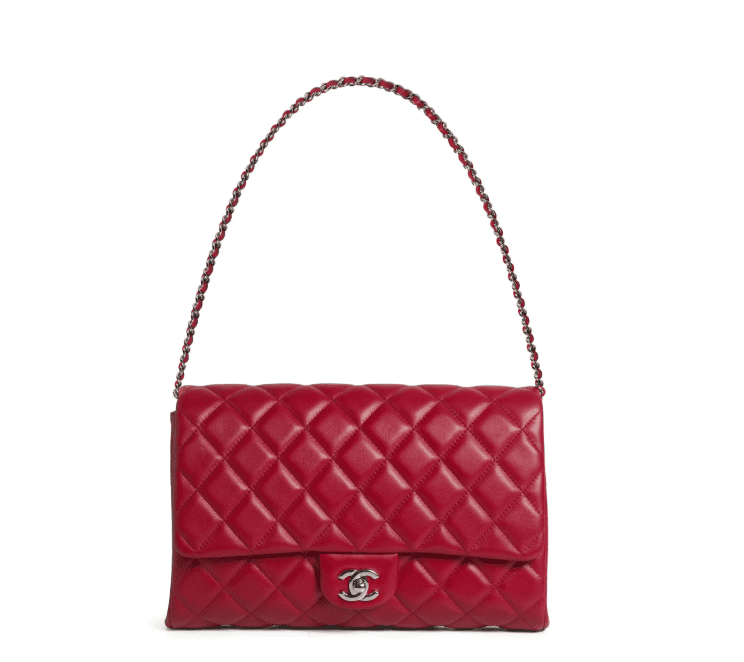
When it comes to the iconic Chanel Classic Flap, the diamond quilting isn’t just an aesthetic choice but has a very exact number of stitches depending on the style. To maintain the structured, elegant loft of the bag without it looking puffy or deflated, Chanel requires an exceptionally high stitch density. On an authentic Classic Flap, there are at least 9 to 11 stitches per single side of each diamond quilt (and often up to 10–12 stitches per inch across the bag).

Counterfeiters almost always use a lower stitch count typically 7 or 8 stitches per diamond side because fewer stitches allow them to mass-produce the bags much faster and at significantly reduce labour costs.
This difference in stitch count completely alters the physical characteristics of the bag, providing two glaring red flags for your potential purchase:
The “Puffy” vs. “Flat” Illusion: Because fakes use fewer, longer stitches, the thread doesn’t anchor the leather tightly to the internal lining. This causes the diamonds on a fake bag to look overly bulging, puffy, and inflated. An authentic Chanel diamond is relatively flat, firm, and subtly understated.
The Alignment Test: Chanel’s high stitch count ensures that the diamond pattern aligns seamlessly across the entire bag. When the front flap is closed, the lines of the diamonds on the flap should match the lines on the body of the bag perfectly. The rear pocket must also seamlessly line up with the back of the bag. Because counterfeiters cut corners on the stitch count, their geometric maths is thrown off, causing the diamonds to visually jag, disconnect, or mismatch at the seams. This is also the same for the alignment on Louis Vuitton’s monogramed canvas.
Hardware
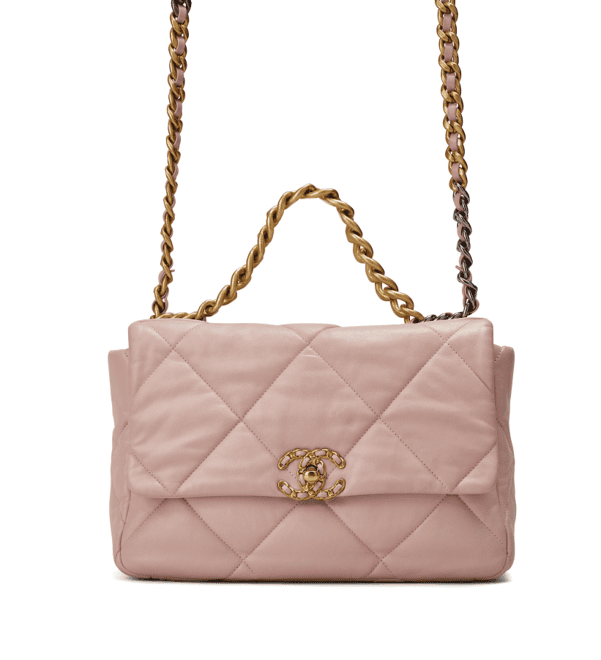
The hardware offers an even clearer contrast because high-end brands use solid, heavy metals like brass, palladium, and gold plating that feel substantial in your hand and remain completely silent when moved. In contrast, counterfeit bags frequently rely on lightweight aluminium or plastic composites coated in a shiny, overly yellow “gold” flash plating that flakes, scratches easily, and rings with a hollow, tinny sound. The clasp on a Chanel classic should push up in your hand as its turned, this is not something you find in the fakes. Furthermore, authentic zippers slide with buttery smoothness and feature clean, deeply engraved brand logos, whereas fake hardware often feels stiff, catches on the fabric, and shows jagged, shallow, or blurry font stampings.
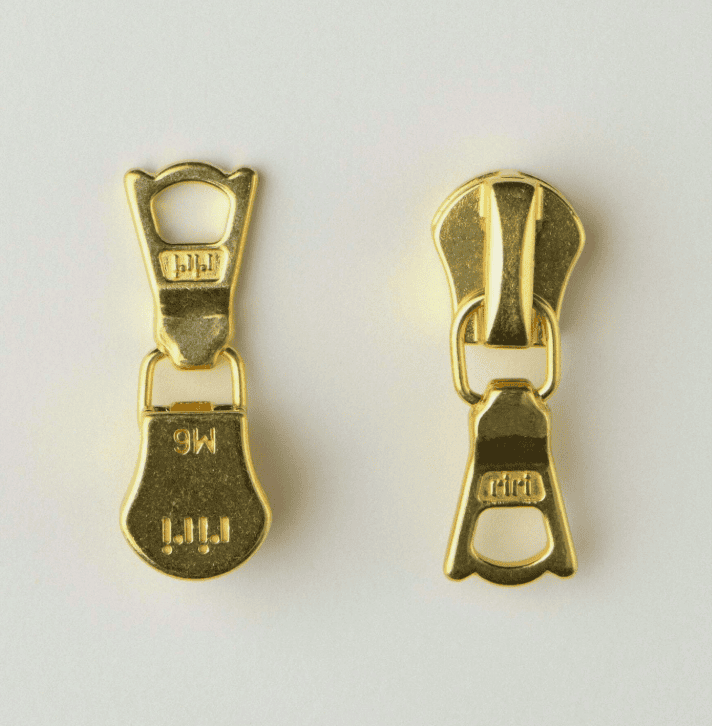
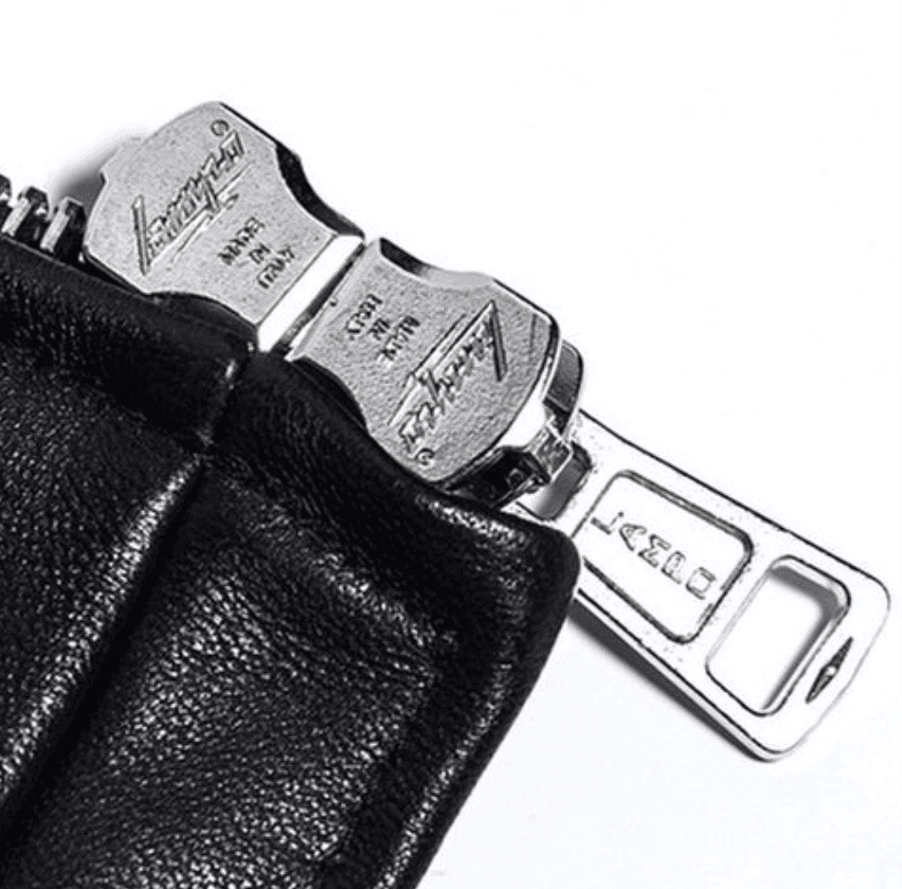
Another overlooked weapon in a handbag authenticator’s arsenal isn’t just the leather or the logo, but the tiny brand name stamped on the underside of the zipper slider. True luxury houses rarely manufacture their own zippers; instead, they source them from an elite trio of ultra-premium hardware manufacturers:
Riri (the Swiss-engineered pinnacle of luxury favoured by Hermès, Fendi, and Bottega Veneta), Lampo (the historic Italian artisan choice for Chanel, Prada, and Gucci), and YKK (specifically their high-end, individually polished Excella line, frequently utilised by Louis Vuitton). Because genuine Riri or Lampo zippers can cost up to ten times more than standard commercial zippers, counterfeiters almost always use cheap, generic versions. When they do attempt to replicate luxury zippers, they routinely make subtle, errors that are easy to spot if you know what to look for:
The Riri Logo: On a genuine Riri zipper, the inner sides of the letter “M” inside the logo cutout are perfectly parallel, the corners are slightly rounded, and the back features a highly distinct, uniform dot pattern. Fakes often feature sharp, blocky lettering or entirely smooth backs.
Lampo: Authentic Lampo zippers feature branding in raised relief with incredibly crisp, sharp edges particularly on the inclined line of the letter “L” and a tiny, distinct registered trademark symbol (®) positioned exactly to the upper right of the “O”. Counterfeiters usually get this wrong, producing blurry, shallow, or unevenly spaced engravings. If a handbag claims to be a brand-new Chanel or Prada but relies on an unbranded zipper slider, or if the luxury logo is poorly etched into cheap metal, the bag is unequivocally a fake. Zippers simply don’t lie.
Dust covers, cards and raincoats
When spotting a counterfeit, buyers often spend so much time analysing the bag itself that they completely overlook the packaging. Counterfeiters know that most consumers toss the dust cover, box, and care cards into a closet, so they rarely invest the time or money required to replicate them accurately. As a result, the accessories are frequently the easiest place to catch a fake. An authentic luxury dust bag is treated with the same meticulous quality control as the handbag it protects. Counterfeit dust bags, on the other hand, can be made from cheap, lightweight synthetic polyesters or thin, scratchy non-woven fabrics that crease sharply and feel paper-like.
Authenticity Cards and Booklets are one of a counterfeiter’s favourite tools to trick unsuspecting buyers, but they regularly fail the execution test. This is where the serial number can assist you as there are many places online where you can look up the serial number and it will tell you what the authenticity card should look like. For example, the typography and text which changes over time are often incorrect for the date of the handbag. Many top-tier luxury houses including Chanel (starting in 2021), Louis Vuitton, Chloé, and Salvatore Ferragamo have completely phased out physical authenticity cards. They now embed hidden, encrypted NFC microchips directly inside the lining of the bag. If someone tries to sell you a brand-new Classic Flap from 2024–2026 accompanied by a plastic authenticity card, the card itself is proof that the bag is a fake.

While memorising specific stitch counts and hardware weights can help you spot low-quality fakes, the modern era of “super-clones” has made DIY authentication an incredibly risky gamble. Today, counterfeiters use high-precision 3D scanning and master-level leatherwork to replicate high-end bags down to the millimetre, often using the exact same tanneries and thread counts as the original luxury houses. Because these advanced replicas can easily bypass a casual visual inspection, protecting a valuable collection requires the objective eye of a professional appraiser or authentication expert.
Get in touch with our team today to arrange a valuation of your handbags by calling us on 01883 722736 or email us at [email protected].
